
You climb into bed after a long day, but the room doesn’t help you unwind. The lighting is too harsh, the bedding feels flat, and something about the space just doesn’t invite you to relax. If that sounds familiar, you’re not alone — a lot of bedrooms are designed for sleeping, not for actually feeling restful.
A cozy bedroom does more than look nice. It changes how your body and mind respond to the space. Soft textures, warm light, and a few thoughtful details can turn a plain room into a place you genuinely want to spend time in. This guide walks through 25 cozy bedroom ideas you can use no matter your budget, square footage, or design experience — plus color palettes, lighting tips, small-space solutions, and a simple formula to tie it all together.
What Makes a Bedroom Feel Cozy and Relaxing?
A cozy bedroom comes down to a handful of ingredients working together. Soft bedding and layered textiles give the room a sense of comfort you can feel just by looking at it. Warm lighting — think lamps instead of overhead fixtures — softens the mood instantly. Calming colors like warm neutrals or muted earth tones keep the space feeling grounded rather than stimulating.
Natural materials such as wood, linen, and wool add texture without visual noise. Comfortable furniture invites you to actually use the room, not just pass through it. Personal touches, from photos to favorite books, make the space feel like yours. And clutter control matters just as much as decor — a calm room needs open surfaces and breathing room, not just pretty objects.
25 Cozy Bedroom Ideas for a Relaxing Retreat
1. Layer Your Bedding for Extra Comfort
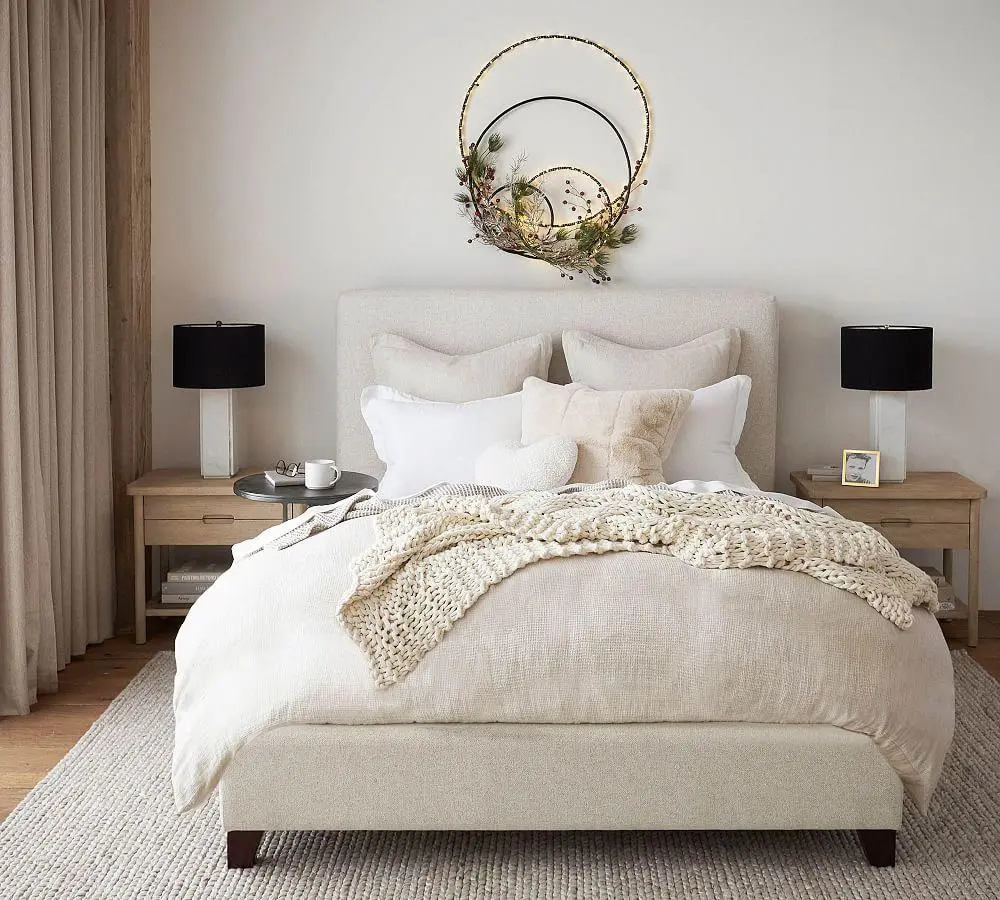
Layered bedding is one of the fastest ways to make a bed look and feel inviting. Instead of a single flat comforter, combine a fitted sheet, a lightweight duvet, a textured throw, and a few pillows in varying sizes. The mix of weights and textures gives the bed visual depth and makes it feel more substantial, almost like a hotel bed you don’t want to leave.
Try a linen duvet cover in warm white, a waffle-weave throw in oatmeal, and a wool blanket folded at the foot of the bed. Mixing materials — cotton, linen, wool — keeps the layers from looking flat or matchy.
Styling tip: Fold your top blanket in thirds and drape it across the lower third of the bed instead of covering the whole surface.
2. Add a Soft Throw Blanket for Instant Warmth
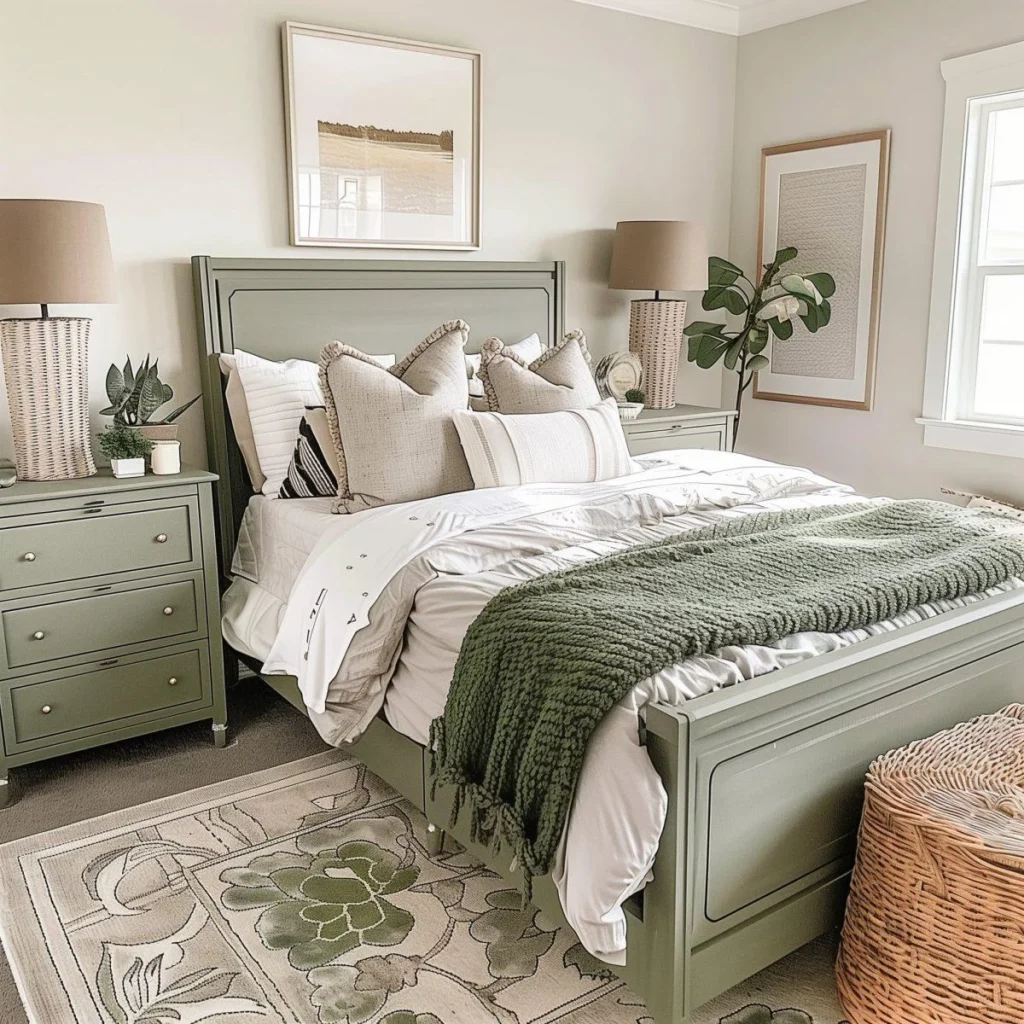
A throw blanket is a small addition that does a lot of visual and physical work. Draped over the corner of the bed or across a reading chair, it signals comfort before anyone even touches it. Chunky knit throws, brushed fleece, and sherpa-lined blankets all add texture that flat bedding can’t.
Choose a color that contrasts gently with your bedding — a rust-colored throw on a cream duvet, for example, or a sage green one on warm gray sheets. Avoid throws that match your bedding exactly, since contrast is what makes them stand out.
Styling tip: Drape the throw in a loose, slightly asymmetrical fold rather than a perfectly straight line — it reads as more natural and lived-in.
3. Style Decorative Pillows With Intention
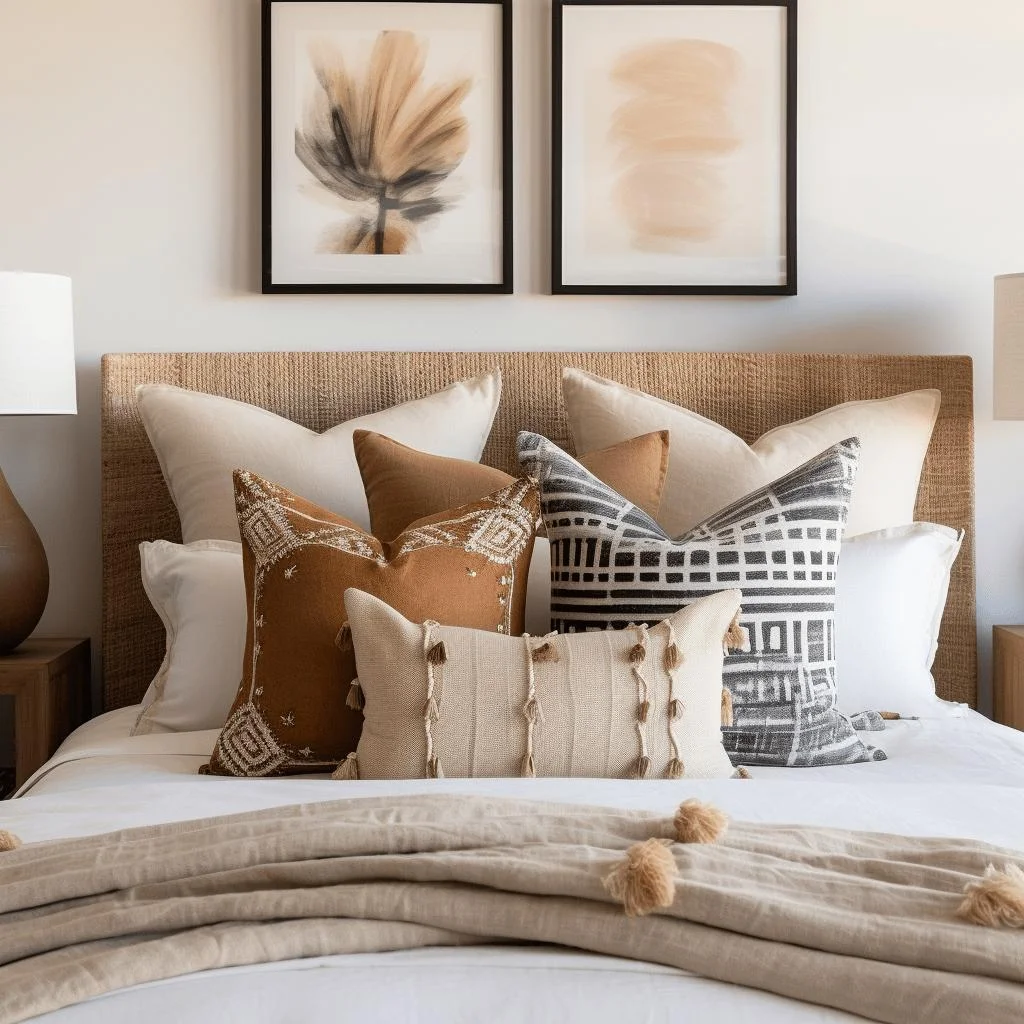
Pillows are often the first thing people notice about a bed, and they’re one of the easiest ways to add color, pattern, and texture without a big investment. The trick is restraint — too many pillows can make a bed feel cluttered instead of cozy.
A good starting formula is two standard sleeping pillows, two decorative pillows in a slightly larger size, and one accent pillow in a contrasting texture like velvet or bouclé. Stick to two or three colors that complement your bedding rather than competing with it.
Styling tip: Fluff pillows by squeezing the sides toward the center instead of patting the top, so they keep a rounded, plush shape.
4. Choose a Warm Neutral Color Palette
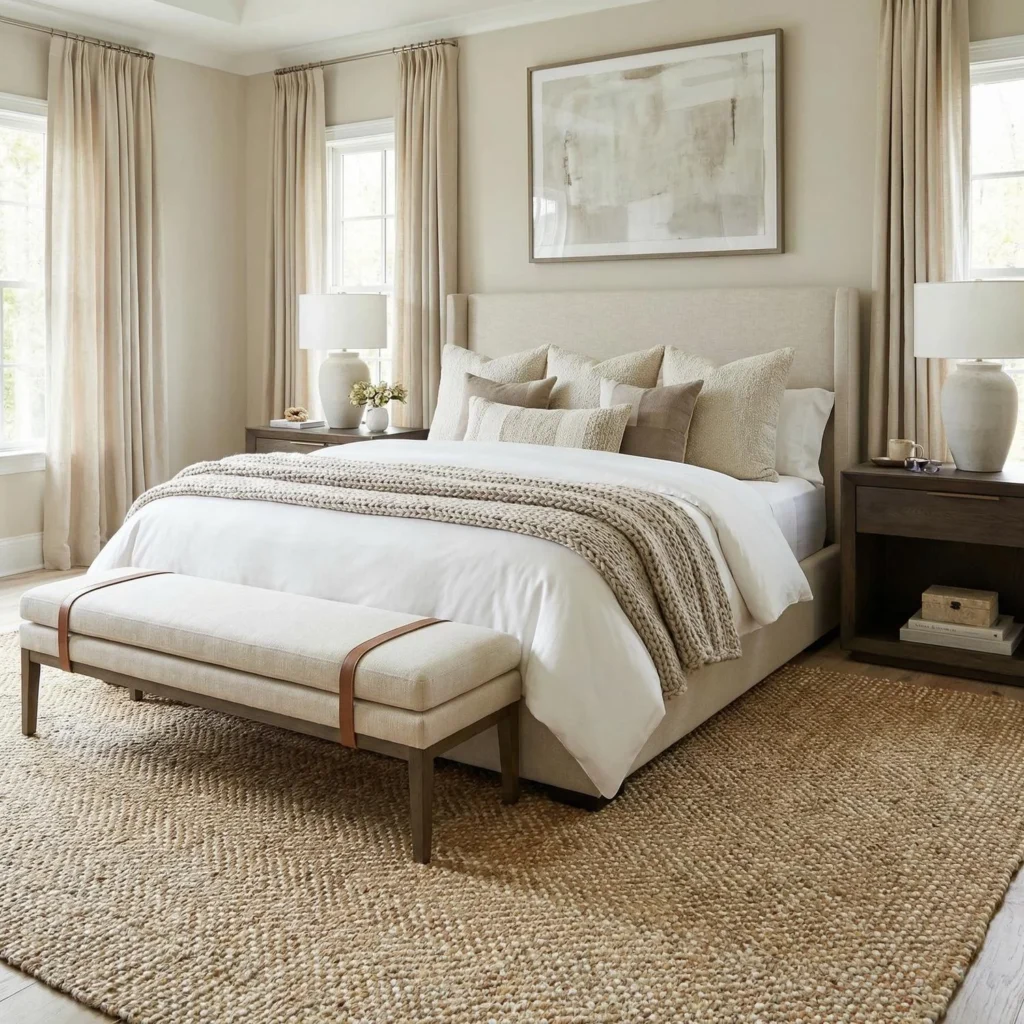
Warm neutrals — cream, oatmeal, warm white, soft beige — create a backdrop that feels calm without being boring. Unlike stark white or cool gray, warm neutrals have an underlying tone that keeps the room from feeling clinical.
Paint walls in a warm greige or soft taupe, then bring in bedding in ivory or sand. Add a jute or wool rug in a similar tone so the whole room feels cohesive rather than segmented into separate color blocks.
Styling tip: Test paint swatches at different times of day, since warm neutrals can shift dramatically under artificial light versus daylight.
5. Bring in Earthy, Grounding Colors
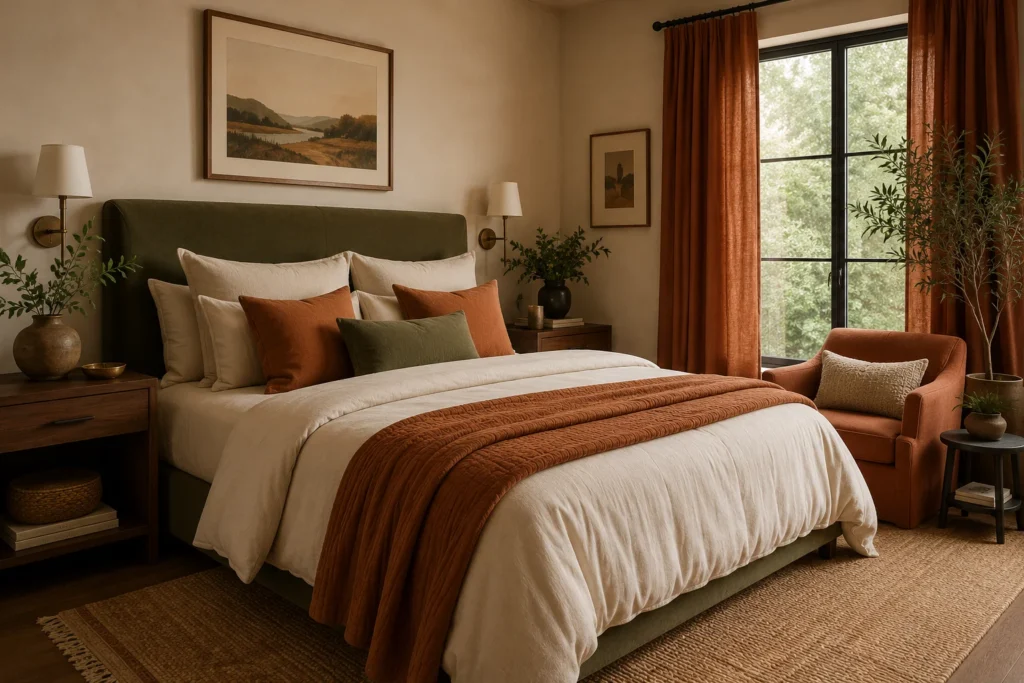
Earthy tones like terracotta, clay, olive, and rust add warmth and personality without overwhelming the senses. These colors work especially well as accents — a terracotta throw pillow, an olive green headboard, or rust-toned curtains.
Because earthy colors are naturally muted, they pair easily with warm neutrals and wood tones. A room with cream walls, a walnut nightstand, and a rust accent chair feels layered and intentional rather than themed.
Styling tip: Introduce earthy colors through textiles first, since they’re easier to change than paint if you want to experiment.
6. Prioritize Soft, Ambient Lighting
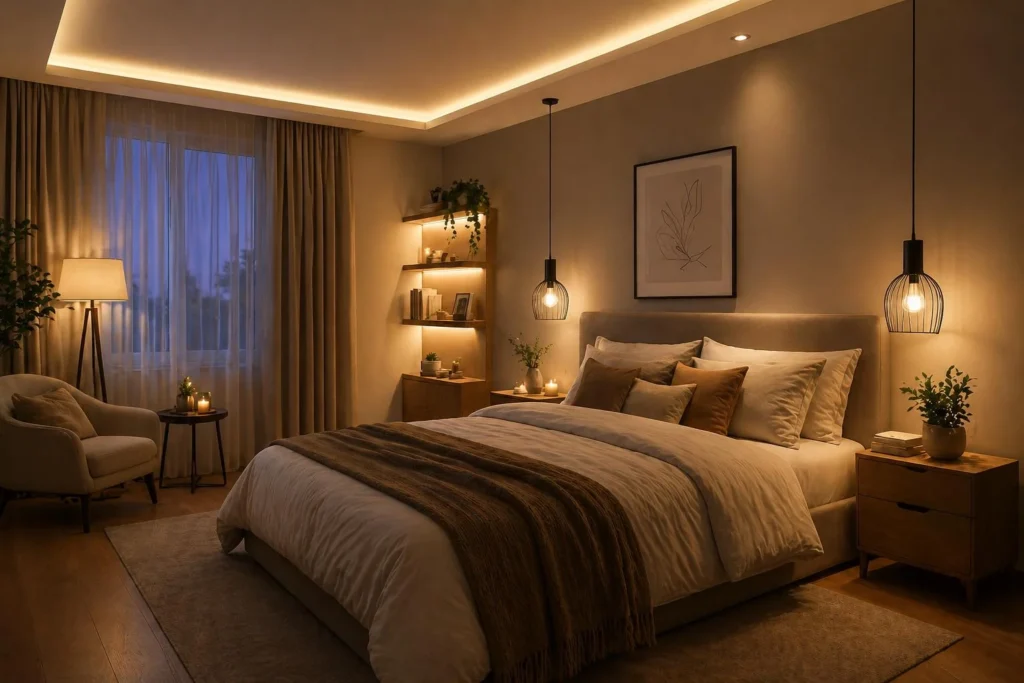
Overhead lighting tends to be harsh and shadowless, which works against a relaxing atmosphere. Soft, ambient lighting — multiple smaller sources instead of one bright fixture — creates a warmer, more layered feel.
Combine a bedside lamp, a floor lamp in a reading corner, and maybe a plug-in wall sconce. Each source should have a warm-toned bulb, ideally between 2700K and 3000K, which mimics candlelight rather than daylight.
Styling tip: Turn off your overhead light completely in the evening and rely only on lamps — you’ll notice an immediate shift in mood.
7. Add Bedside Lamps With Warm Bulbs
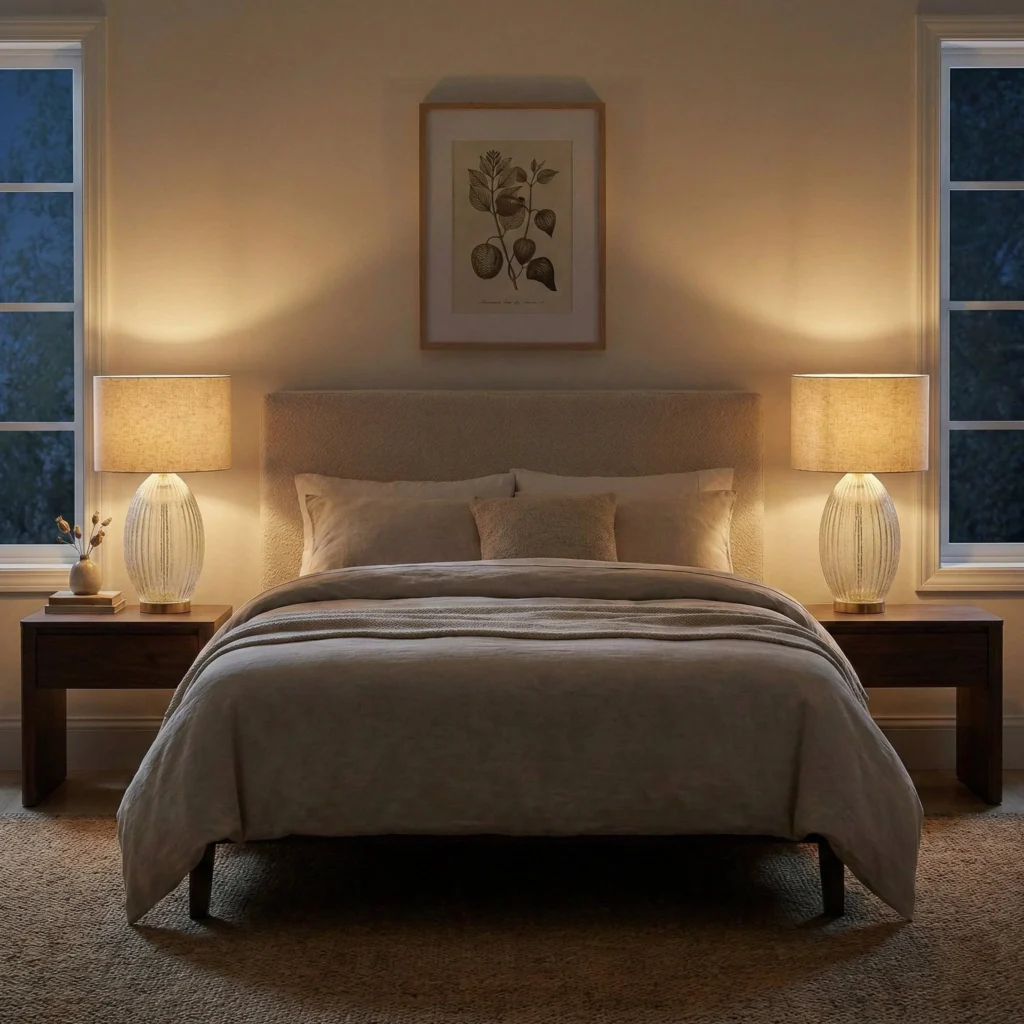
Bedside lamps do more than provide reading light. They frame the bed, add height and symmetry to your nightstands, and give the room a soft glow that overhead lighting can’t replicate.
Look for lamps with fabric or paper shades, which diffuse light more gently than exposed bulbs. A ceramic or wood base adds warmth, while a simple linen shade keeps the look timeless.
Styling tip: Match your lamp shades in tone but let the bases differ slightly — it keeps the nightstands from feeling too matched.
8. Use String Lights or Accent Lighting Sparingly
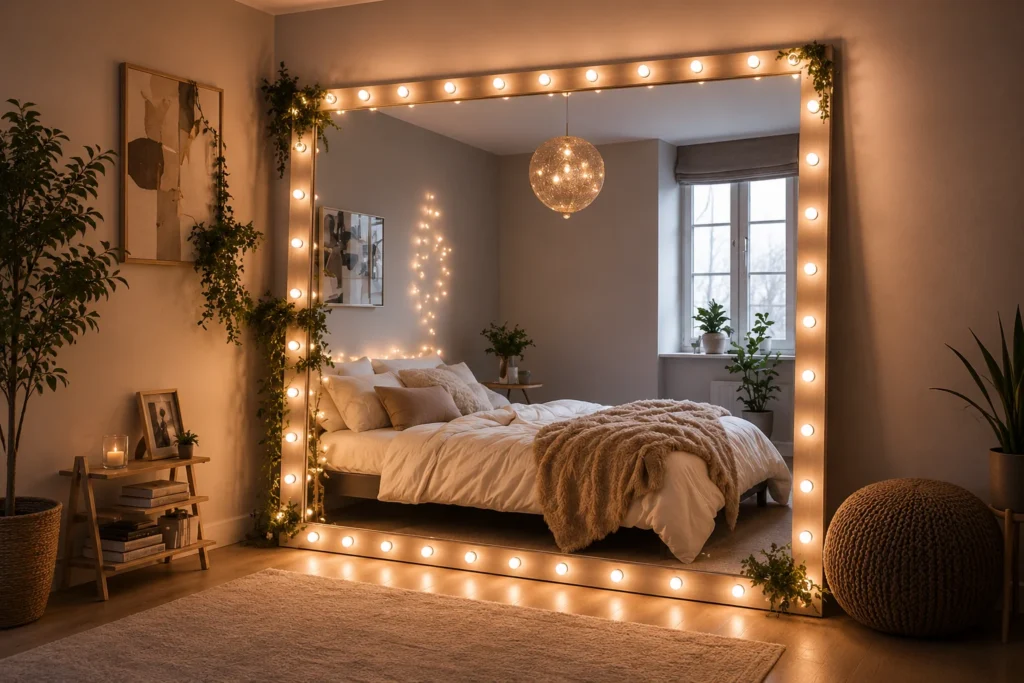
String lights and accent lighting can add a soft glow when used with restraint. Rather than draping them everywhere, try a single strand along a headboard, behind a mirror, or around a window frame.
Warm white LED string lights look more intentional than cool-toned ones, which can read as dorm-room decor rather than a styled space. Battery-operated or plug-in options both work, depending on outlet access.
Styling tip: Tuck the light strand behind furniture or trim so the cord itself stays hidden and only the glow shows.
9. Anchor the Room With a Soft Area Rug

A rug adds warmth underfoot and visually anchors the furniture in the room. Without one, a bedroom can feel unfinished, even if everything else is styled well.
Choose a rug large enough that at least the front two-thirds of the bed sits on it — a rug that’s too small will make the room look disjointed. Wool and jute rugs add texture, while a plush shag rug feels especially soft for bare feet on cold mornings.
Styling tip: Layer a smaller patterned rug over a larger neutral one for extra texture without overwhelming the room.
10. Choose Curtains That Soften the Room
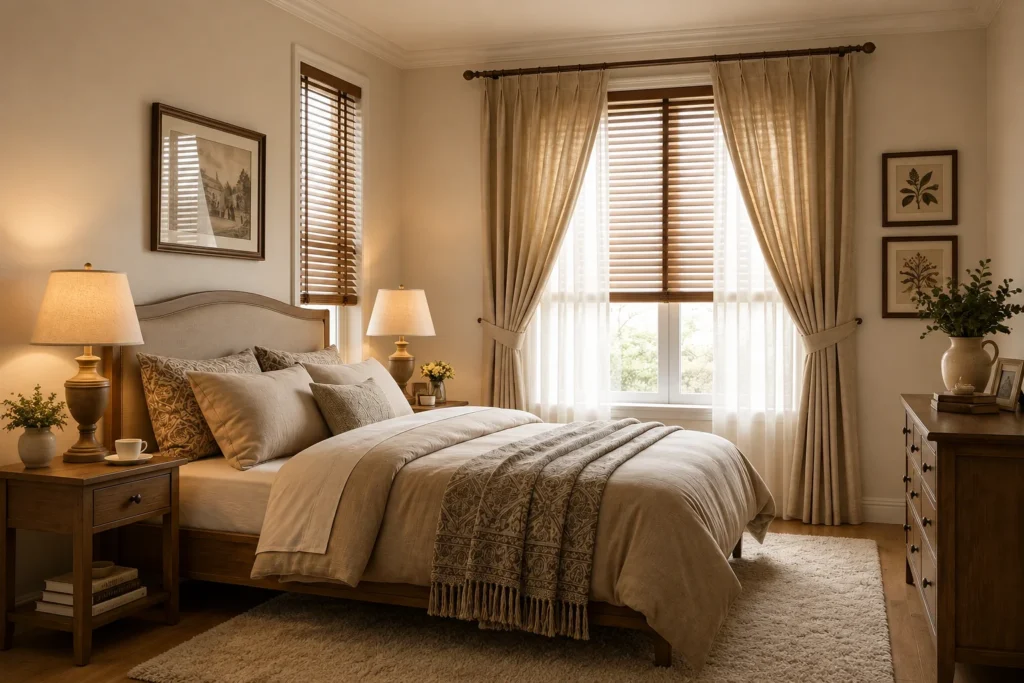
Curtains do more than block light — they soften hard window lines and add a sense of fullness to the room. Heavier fabrics like linen or cotton blends drape better and feel cozier than thin, sheer panels.
Hang curtains close to the ceiling and wider than the window frame itself. This makes the window look larger and the ceiling feel higher, both of which contribute to a more relaxed, spacious feel.
Styling tip: Choose curtains in a color that’s slightly darker or lighter than your wall color, not an exact match, so they read as an intentional layer.
11. Bring in Natural Wood Furniture
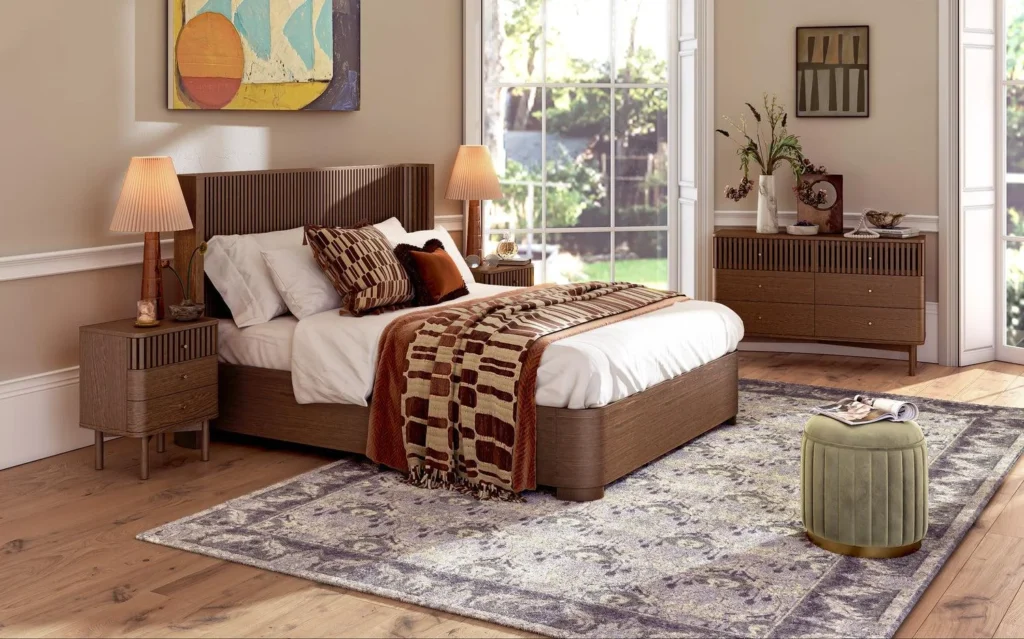
Wood furniture adds warmth that painted or metal pieces often lack. A wood bed frame, nightstand, or dresser introduces organic texture and grounds the room, especially when paired with softer textiles.
Mixing wood tones is fine as long as they share similar undertones — pairing a warm walnut nightstand with a warm oak dresser works better than mixing warm and cool tones in the same space.
Styling tip: If your existing furniture doesn’t match, unify the look with matching hardware or a shared finish on accessories like lamps and frames.
12. Add Rattan or Woven Textures
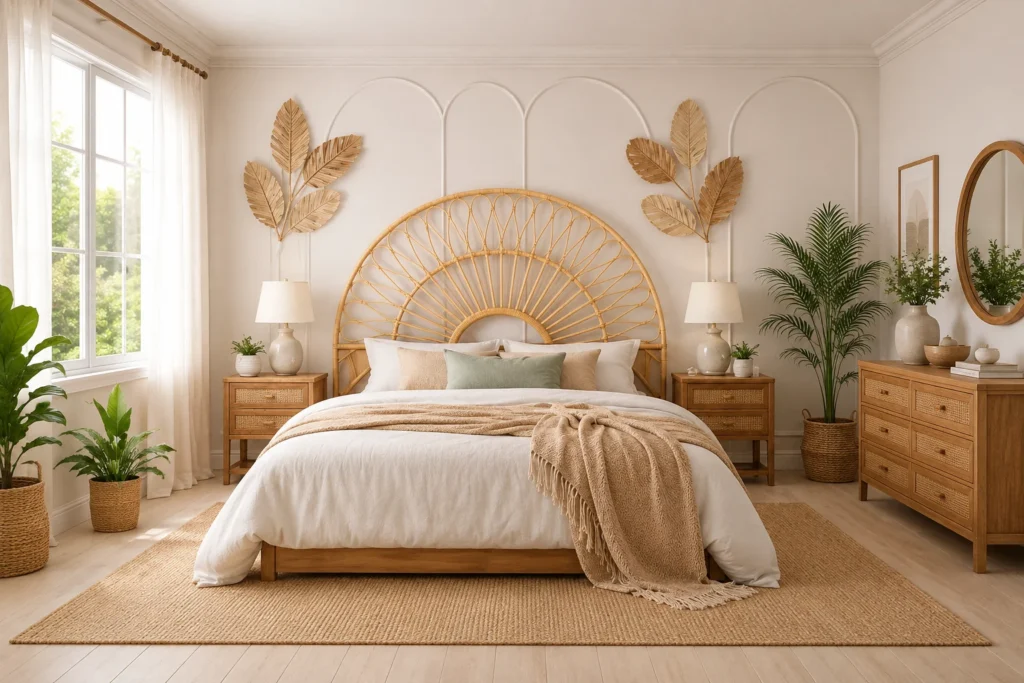
Rattan and woven materials bring a relaxed, natural feel that pairs beautifully with soft textiles. A rattan headboard, woven pendant light, or seagrass basket for storage all add texture without adding visual clutter.
These materials work particularly well in rooms that already lean neutral, since the natural fiber adds interest without introducing new colors.
Styling tip: Use one or two woven pieces rather than several, so the texture reads as a deliberate accent instead of a full theme.
13. Invest in an Upholstered Headboard
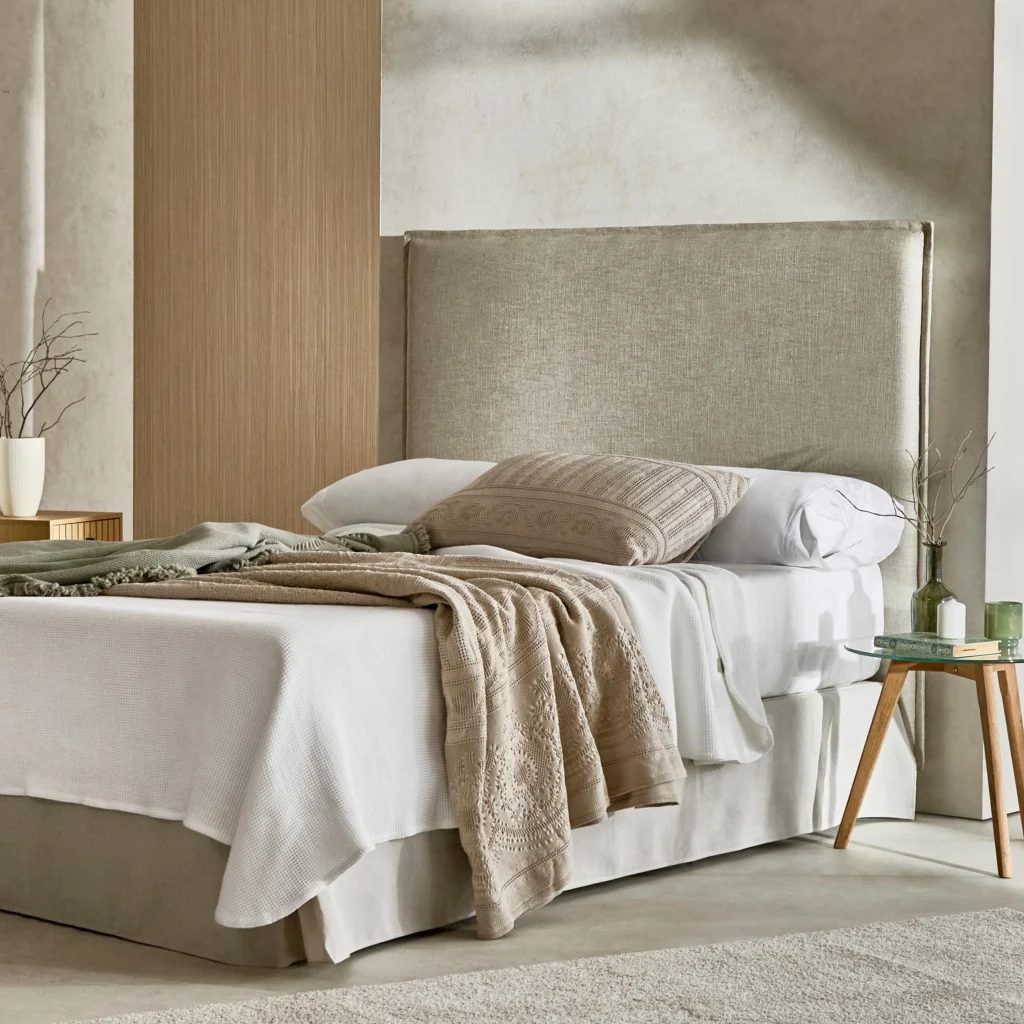
An upholstered headboard instantly softens a bedroom’s overall feel. Unlike a hard wood or metal frame, upholstery adds a plush, tactile element right where you rest your head and back.
Linen and boucle fabrics in warm neutral tones tend to age well and stay versatile if you redecorate later. A channel-tufted or slightly curved headboard also adds a subtle design detail without feeling overly formal.
Styling tip: If a new headboard isn’t in the budget, an upholstered headboard cushion that attaches to an existing frame offers a similar effect for less.
14. Add a Comfortable Seating Spot
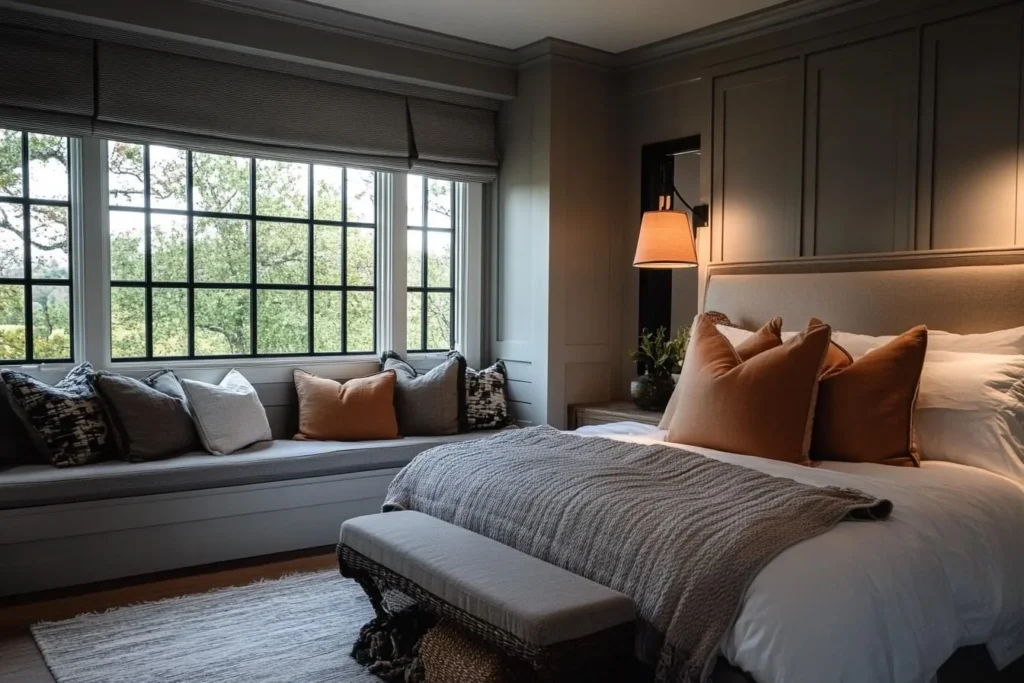
A chair or bench gives the bedroom a second purpose beyond sleeping, and it adds an inviting focal point. Even a small accent chair in a corner makes the room feel more like a retreat than just a place to sleep.
Choose a chair with a soft, textured fabric — bouclé, corduroy, or velvet all add tactile warmth. A small side table next to it turns the spot into a place you’ll actually use for coffee, reading, or winding down at night.
Styling tip: Angle the chair slightly toward the window or a piece of art rather than squaring it off with the wall — it feels more intentional.
15. Create a Small Reading Corner
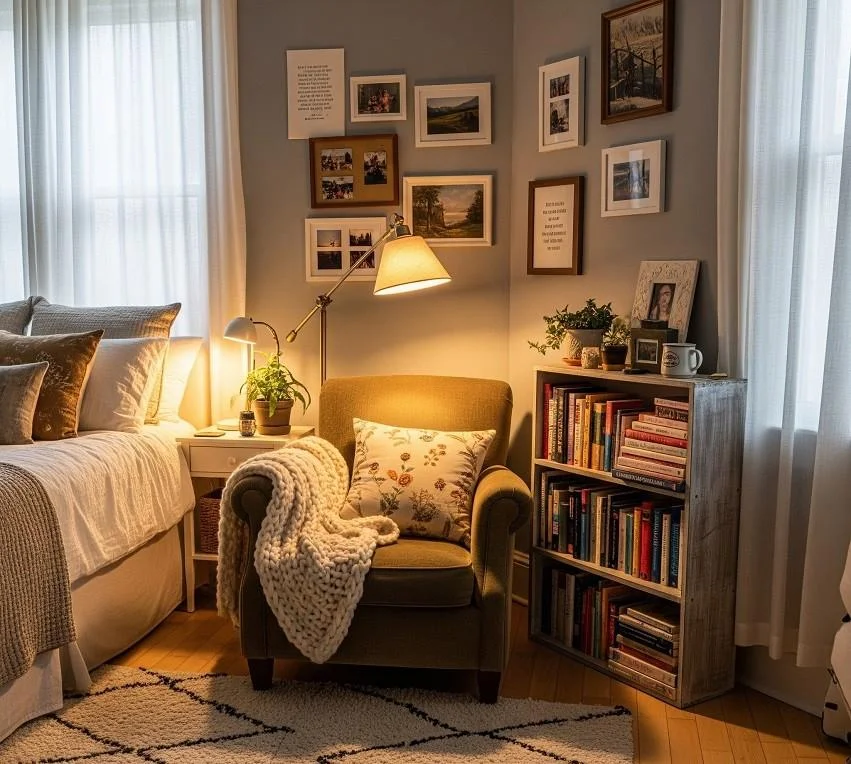
A reading corner doesn’t need much space — just a comfortable chair, a good light source, and a small table for a book or mug. This kind of nook gives the bedroom a sense of purpose beyond sleep and encourages slower, screen-free moments.
Position the chair near natural light if possible, and add a floor lamp for evening reading. A small stack of books or a woven basket nearby keeps the area functional and personal.
Styling tip: Keep the reading corner distinct from the bed by using a different rug or texture underfoot, which helps define it as its own zone.
16. Bring in Indoor Plants
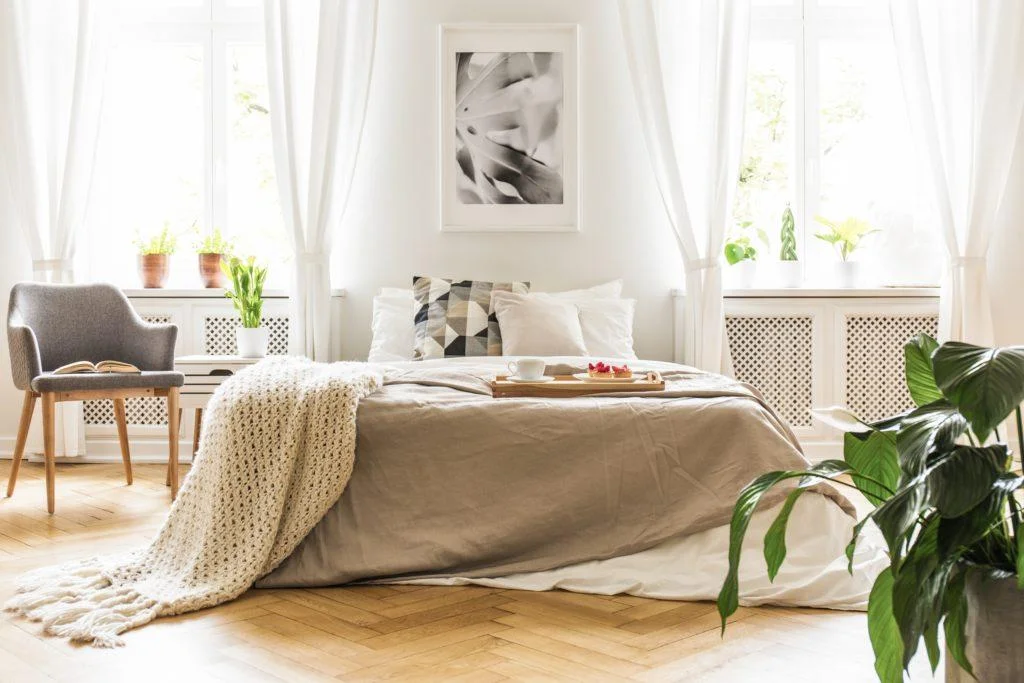
Plants add life, color, and a sense of calm to a bedroom. Even one or two well-placed plants can soften hard edges and bring a natural element into an otherwise static room.
Low-maintenance options like pothos, snake plants, or ZZ plants tolerate lower light and irregular watering, which makes them practical for bedrooms that don’t get much direct sun. A woven or ceramic planter adds texture that complements the rest of the room.
Styling tip: Vary plant heights by placing one on the floor and another on a dresser or shelf, so the greenery doesn’t sit at a single flat level.
17. Choose Warm, Meaningful Artwork
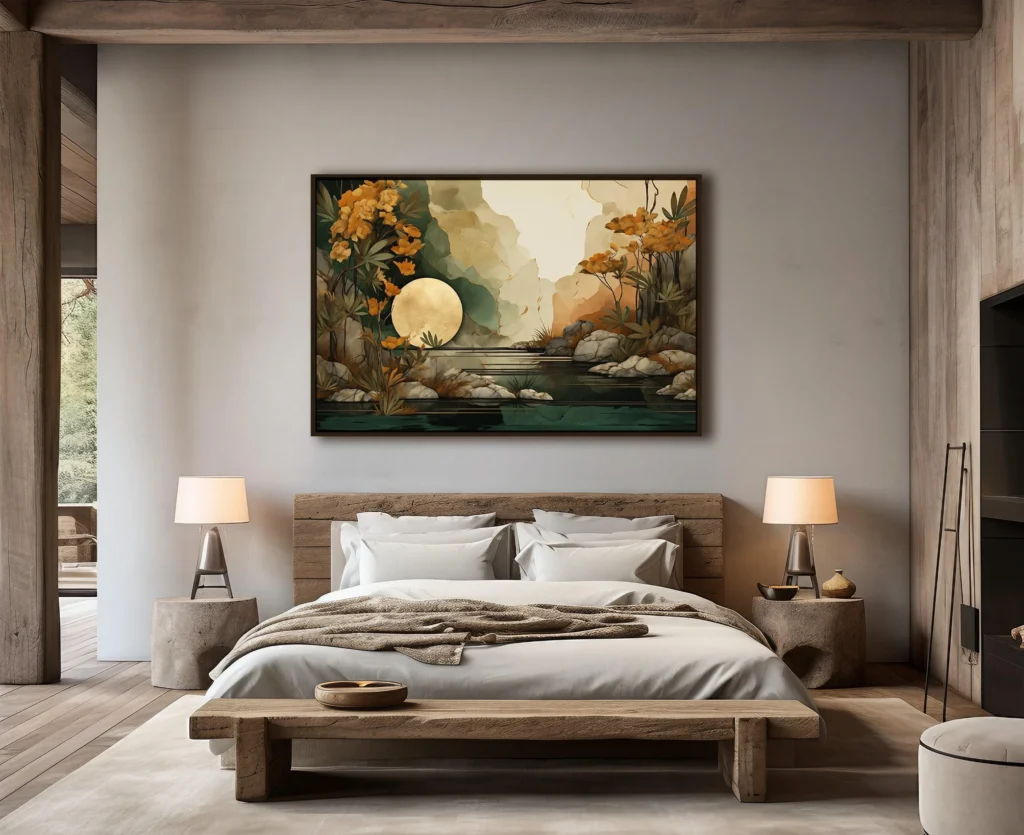
Artwork sets the emotional tone of a room. Soft, warm-toned prints — landscapes, abstract pieces, or botanical illustrations — tend to feel more calming than bold graphic art, which can read as energizing rather than restful.
A single large piece above the bed creates a strong focal point, while a small gallery wall of three or four pieces adds personality without overwhelming the space. Choose frames in wood or matte black to keep the look grounded.
Styling tip: Hang artwork so the center sits at eye level when standing, roughly 57 to 60 inches from the floor, for the most natural proportion.
18. Keep Bedside Styling Minimal
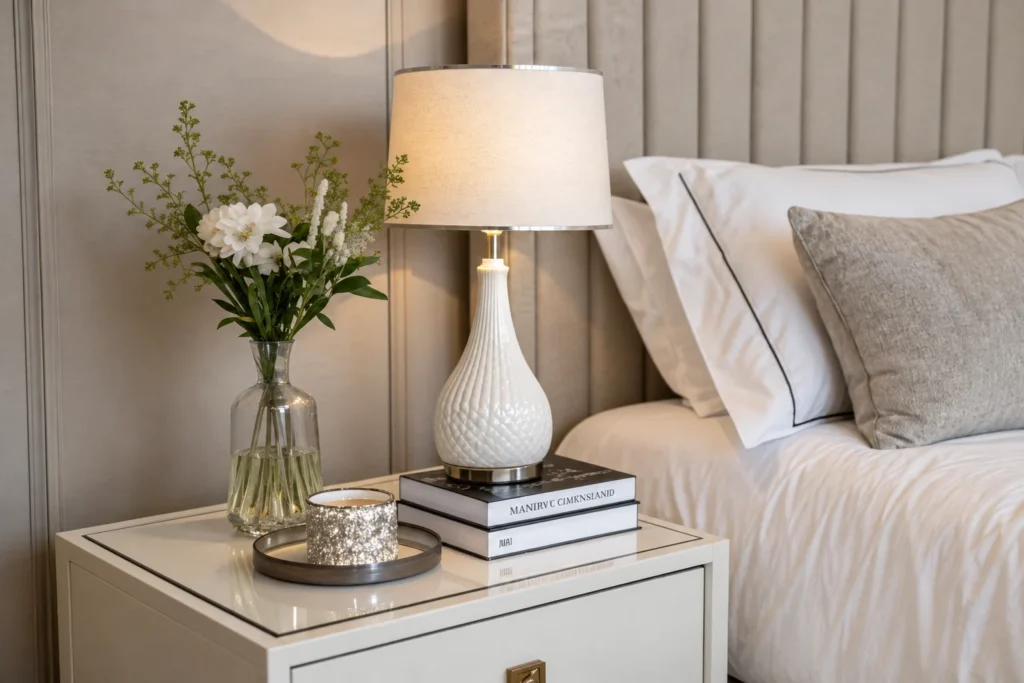
A cluttered nightstand undercuts an otherwise cozy room. Keeping bedside styling simple — a lamp, a small stack of books, a candle, and maybe a small dish for jewelry — creates a calmer visual landing spot right next to where you sleep.
Group items by height, with the lamp as the tallest piece, so the arrangement doesn’t look scattered. Leave a little empty space on the surface rather than filling every inch.
Styling tip: Swap out one small object on your nightstand every season to keep the space feeling fresh without redecorating the whole room.
19. Use Candles and Subtle Decorative Accents
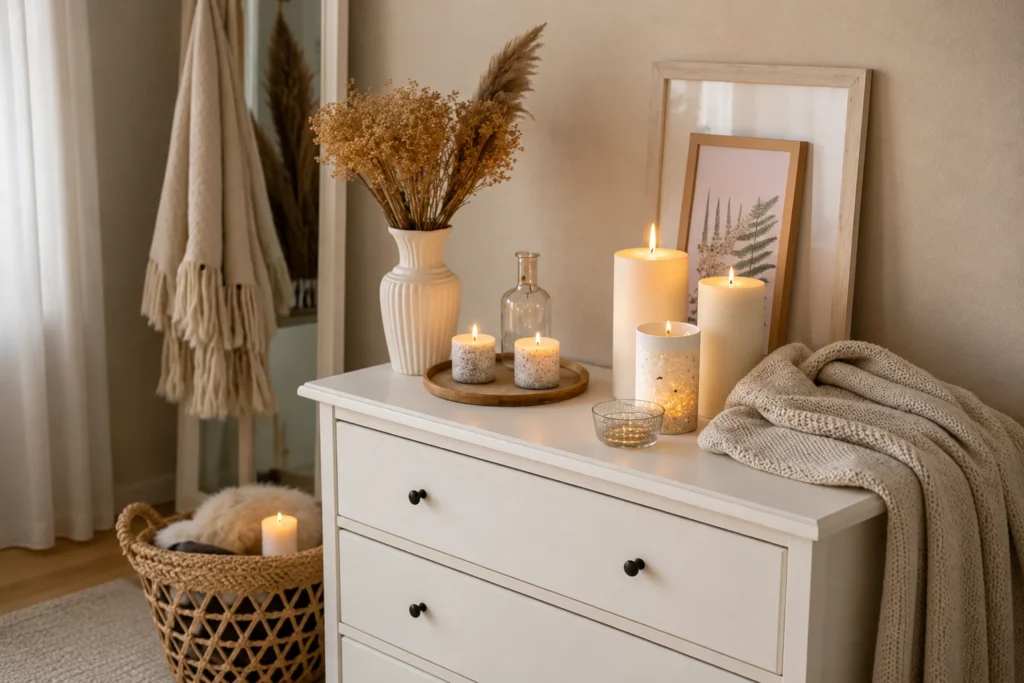
Candles add warmth, scent, and soft flickering light that no lamp can fully replicate. Even unlit, a candle in a ceramic or glass holder adds a decorative touch to a nightstand or dresser.
Choose warm, subtle scents like sandalwood, vanilla, or amber rather than strong florals, which can feel overpowering in a small space. Group two or three candles of different heights for a more natural, collected look.
Styling tip: If open flames aren’t practical, flameless LED candles offer a similar warm glow without the safety concern.
20. Maximize Small Bedroom Layouts
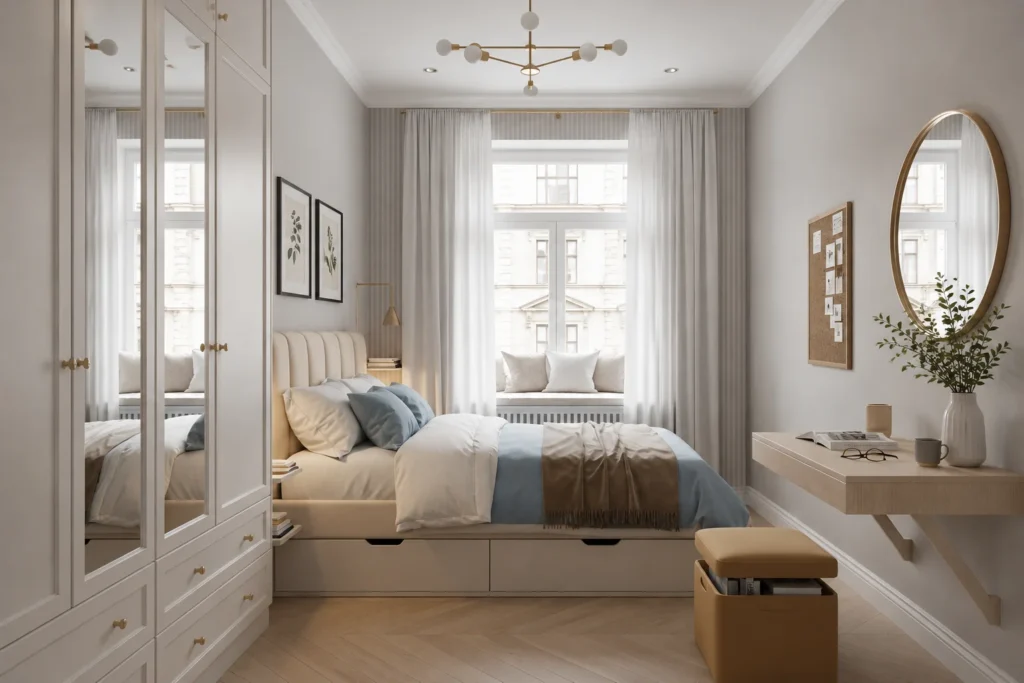
In a small bedroom, furniture placement matters as much as decor. Push the bed against the largest wall, and choose nightstands or a dresser that’s proportional to the room rather than oversized for a bigger space.
Multi-purpose furniture — a storage ottoman, a bed frame with built-in drawers, or a slim console that doubles as a desk — helps the room function without feeling cramped. Keep pathways clear so the space still feels open.
Styling tip: Float furniture a few inches away from the walls instead of pushing everything flush, which can actually make a small room feel more spacious.
21. Try a Cozy Minimalist Approach
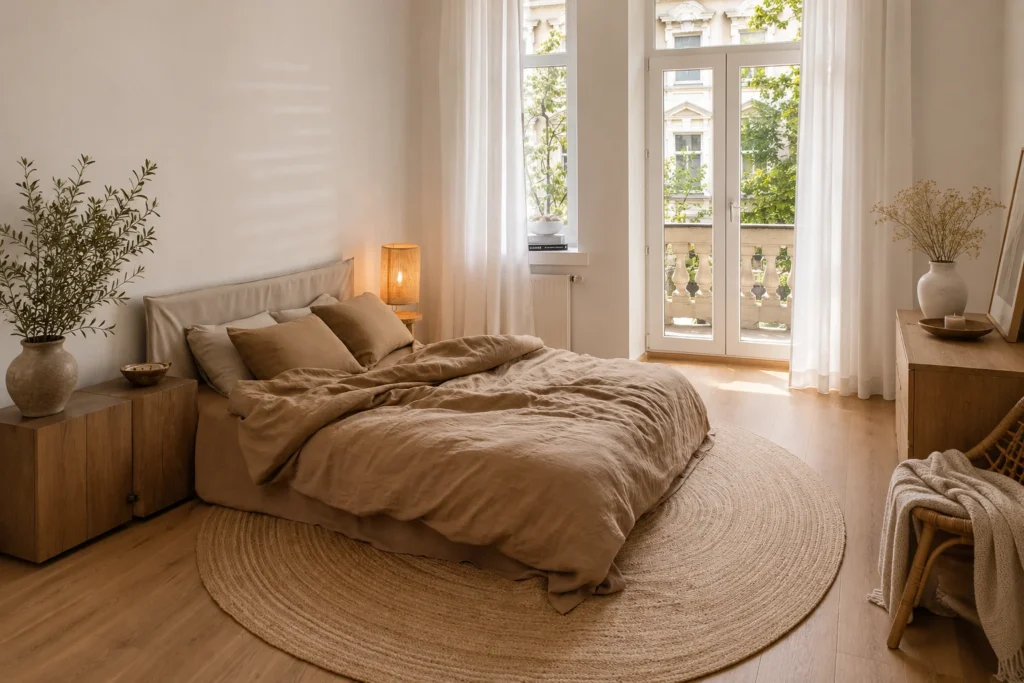
A cozy minimalist bedroom focuses on fewer, higher-quality pieces rather than layers of decor. This works well for people who want a calm space without a lot of visual clutter.
Stick to a simple color palette, one or two textures, and a small number of intentional accessories. A linen duvet, a wood bed frame, and a single piece of art can feel just as warm as a more heavily styled room, as long as the materials themselves have texture and warmth.
Styling tip: When in doubt, remove one item rather than add one — minimalist coziness relies on editing, not accumulating.
22. Add Boho-Inspired Textures and Layers
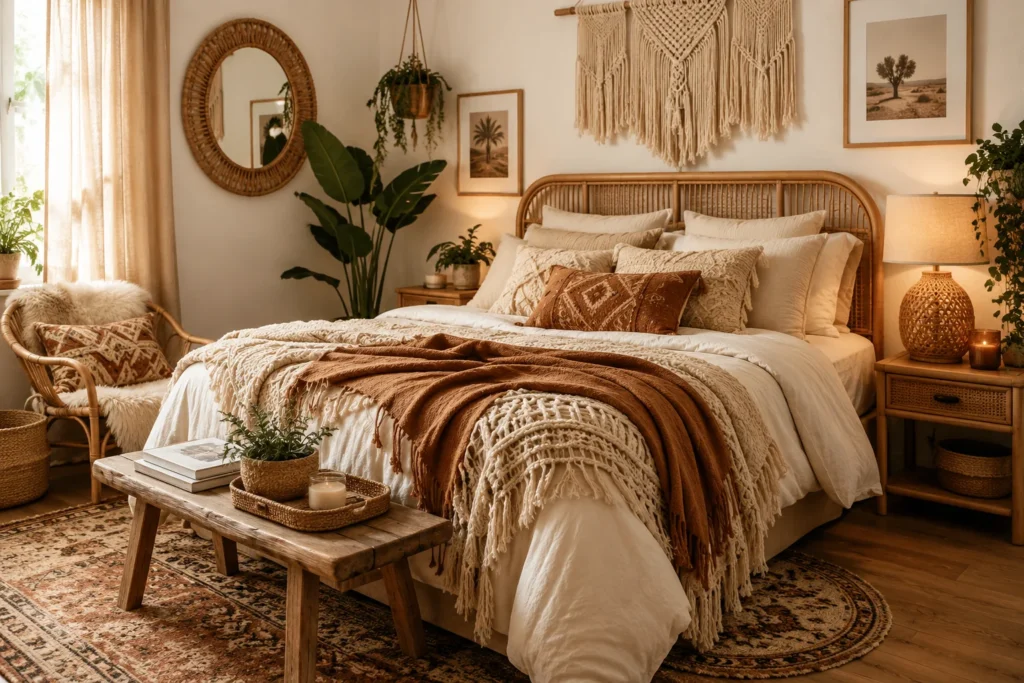
A boho-inspired bedroom leans into natural materials, layered textiles, and a slightly relaxed, collected feel. Macrame wall hangings, woven baskets, and mixed patterns all contribute to this look.
Balance the eclectic elements with a neutral base — cream walls or bedding — so the room doesn’t feel visually busy. Adding one or two plants reinforces the natural, organic feel that defines this style.
Styling tip: Repeat one color or material across multiple boho accents, like rattan in both a lamp base and a mirror frame, to keep the look cohesive.
23. Borrow Hotel-Inspired Styling Tricks
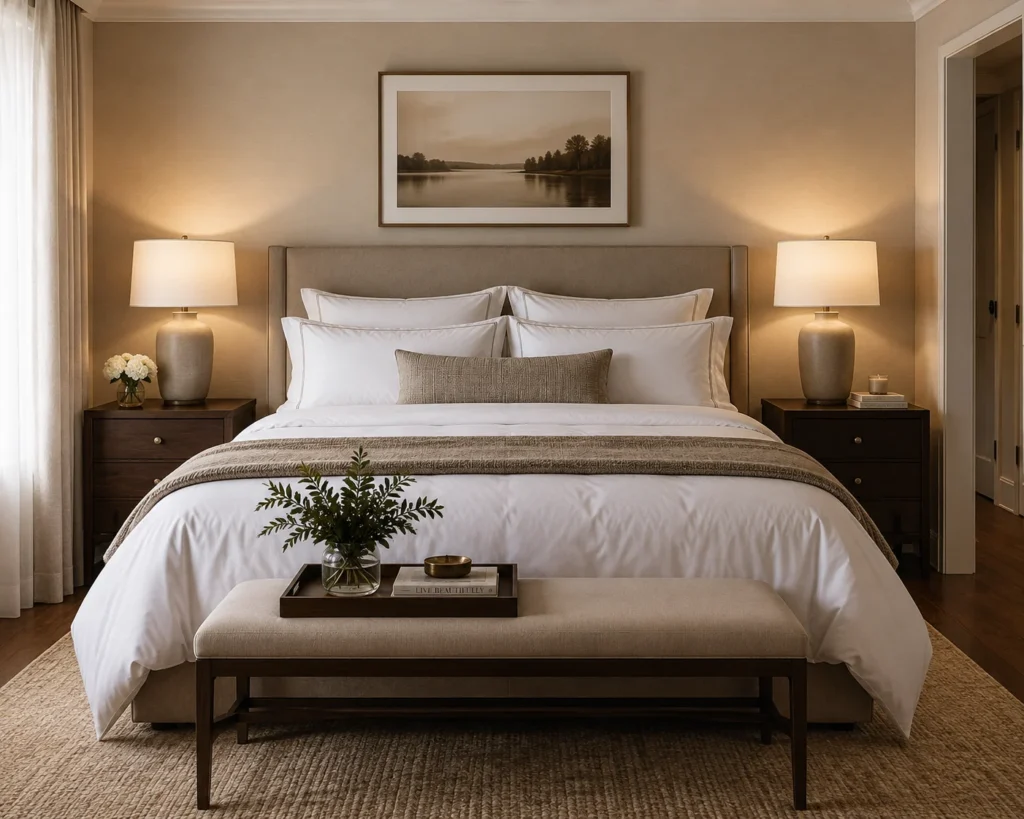
Hotel bedrooms often feel more relaxing than home bedrooms because they’re simple, uncluttered, and consistently styled. Crisp white or warm neutral bedding, a folded throw at the foot of the bed, and symmetrical nightstands all contribute to that polished, calm feeling.
Removing anything that doesn’t need to be in the bedroom — laundry baskets, exercise equipment, extra furniture — goes a long way toward recreating that hotel-like simplicity.
Styling tip: Match your two nightstand lamps exactly, the way hotels do, for an instantly more polished and calm look.
24. Refresh the Room on a Budget
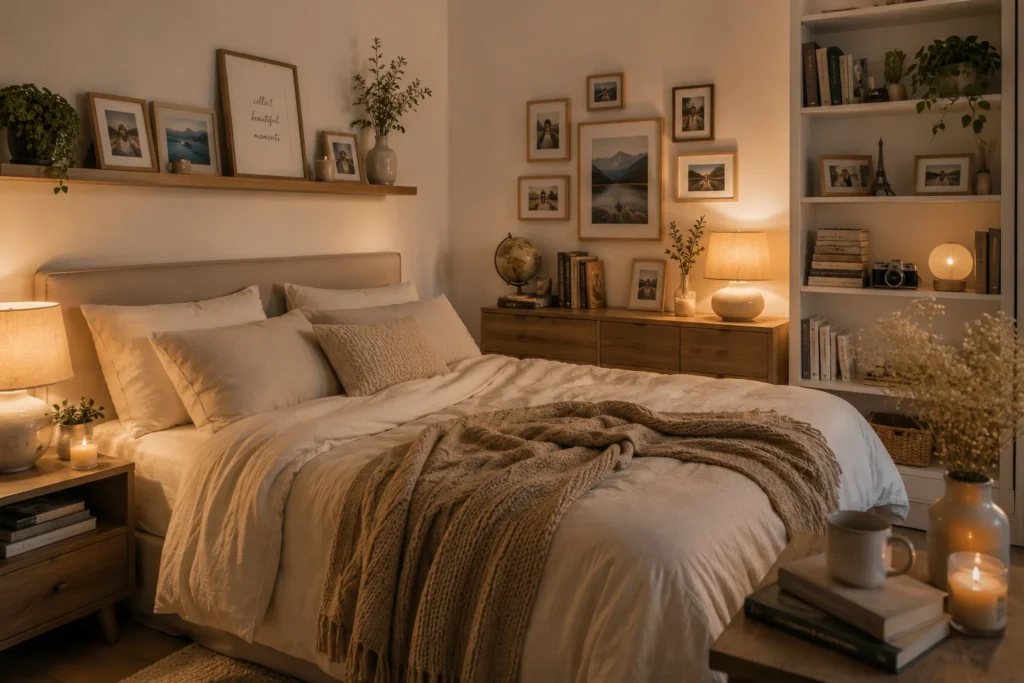
A cozy bedroom doesn’t require an entirely new furniture set. Rearranging your existing layout, swapping pillow covers, or adding a secondhand chair can shift the whole feel of the room without a major expense.
Thrifted frames, DIY artwork, and repurposed baskets for storage all add character while keeping costs low. Even changing curtains or adding a plant can make an outsized difference for very little money.
Styling tip: Start with lighting and textiles before furniture — they’re usually the cheapest changes with the biggest visual impact.
25. Add Personal Touches That Make It Feel Like Home
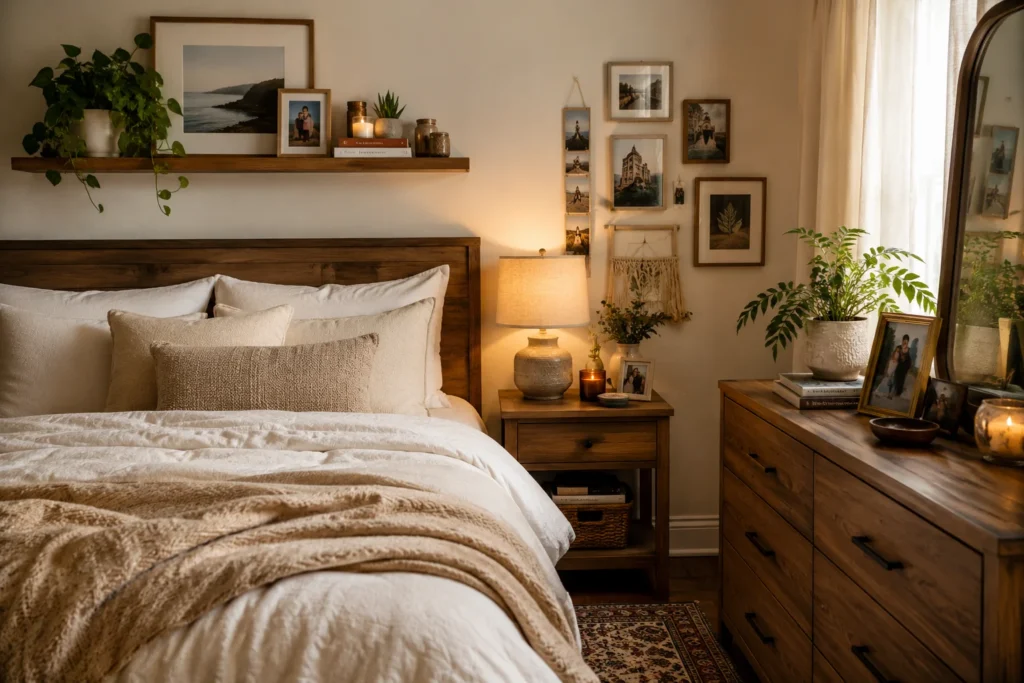
The final layer of a cozy bedroom is the personal one. Photos, travel souvenirs, favorite books, or a piece of art you made yourself all add warmth that store-bought decor can’t fully replicate.
These details don’t need to be prominently displayed — a small shelf, the top of a dresser, or a corner of the nightstand is enough. What matters is that the room reflects who actually lives in it.
Styling tip: Rotate personal items occasionally so the space continues to feel current rather than static.
Best Colors for a Cozy Bedroom
Color has a direct effect on how relaxing a bedroom feels. Warm neutrals like cream, warm white, beige, and taupe create a calm foundation that works with almost any style. Soft brown and terracotta add depth without darkening the room too much, while muted green and dusty rose bring in gentle color without feeling bold or stimulating. Warm gray and soft blue can also work well, as long as they lean warm rather than cool or stark.
The key is combining these colors so the room feels balanced rather than flat or overwhelming. For example, try warm white walls with oatmeal bedding, linen curtains in a soft taupe, and a terracotta throw pillow as an accent. Or pair soft beige walls with dusty rose bedding, warm gray curtains, and a muted green plant or throw for contrast. Keeping one dominant neutral and one or two accent colors usually creates the most cohesive, calming result.
How to Create Warm and Relaxing Bedroom Lighting
Good bedroom lighting relies on layers rather than a single source. Bedside lamps provide close, functional light for reading, while a floor lamp in a corner adds height and softness to the room. Wall sconces are a good option if surface space is limited, and they free up your nightstands for other decor.
Ambient and accent lighting — like a lamp with a fabric shade or a small accent light behind a mirror — fill in the gaps between brighter fixtures, creating a softer overall glow. Warm-toned bulbs, generally in the 2700K to 3000K range, make a noticeable difference compared to cooler, bluer light, which can feel more like an office than a bedroom.
If your fixtures allow it, dimmers give you control over brightness depending on the time of day. Candles, whether real or flameless, add one more layer of warm, flickering light that’s especially nice in the evening. Using several smaller light sources instead of one bright overhead fixture is one of the simplest ways to make a bedroom feel calmer.
How to Make a Small Bedroom Feel Cozy Without Looking Crowded
Small bedrooms benefit from furniture that’s proportional to the space. A bulky bed frame or oversized dresser can make even a decent-sized room feel cramped, so measure carefully before buying new pieces. Using vertical space — tall bookshelves, wall-mounted shelves, or hooks — keeps the floor open while still giving you storage.
Under-bed storage bins are especially useful in small rooms, since they use space that would otherwise go to waste. Light, warm colors on the walls and bedding help the room feel more open, and a well-placed mirror can visually double the sense of space by reflecting light around the room.
Multi-purpose furniture, like a storage ottoman or a nightstand with drawers, reduces the number of separate pieces you need. Wall-mounted lighting, rather than table lamps, frees up nightstand space entirely. Finally, keep surfaces uncluttered and use textiles strategically — one good rug and one or two textured pillows will do more for coziness than a dozen small decorative objects competing for attention.
How to Create a Cozy Bedroom on a Budget
You don’t need a full renovation to make a bedroom feel cozier. Start by rearranging your existing furniture — sometimes a fresh layout alone changes how a room feels. Adding new pillow covers or an extra throw blanket is an inexpensive way to update the look of your bed without buying new bedding entirely.
Secondhand furniture, whether from a thrift store, marketplace listing, or a family member’s basement, can add character for a fraction of retail cost. Thrifted or DIY artwork gives you something personal to hang without a big investment, and rearranging your existing lighting — moving a lamp, adding a warmer bulb — costs little to nothing.
Inexpensive plants, whether from a grocery store or a plant swap with a friend, add life to the room cheaply. Swapping out curtains for a warmer color or heavier fabric can shift the whole mood of the space. And don’t overlook what you already own — restyling your bookshelf, grouping existing accessories differently, or simply decluttering can make a bedroom feel noticeably calmer without spending anything at all.
Cozy Bedroom Decorating Mistakes to Avoid
Too many decorative items. A crowded dresser or overloaded gallery wall can make a room feel chaotic instead of cozy. Edit down to your favorite pieces and give them room to breathe.
Poor lighting. Relying only on a single overhead fixture creates flat, harsh light. Add at least one or two lamps for a softer glow.
Too many colors. More than two or three main colors can make a room feel busy. Stick to a simple palette with one or two accent tones.
Overcrowded furniture. Too many pieces in a small space blocks flow and makes the room feel smaller. Keep only what you actually use.
Matching everything too perfectly. A room where every item matches exactly can feel sterile. Mix textures and slightly varied tones instead.
Ignoring texture. A room with only smooth, flat surfaces can feel cold even with warm colors. Add knits, linen, or wood to bring in tactile variety.
Wrong-size rug. A rug that’s too small floats awkwardly under the bed. Choose one large enough to extend under at least the lower two-thirds of the bed.
Cluttered bedside area. Chargers, tissues, and random objects pile up quickly. Keep only a lamp, a book, and one or two small items on each nightstand.
The Simple Cozy Bedroom Formula
If you want an easy way to remember what makes a bedroom feel cozy, use this formula:
Softness + Warm Lighting + Layered Textures + Calming Colors + Personal Details = Cozy Bedroom
Softness comes from your bedding, pillows, and throws — the parts of the room you physically touch. Warm lighting means swapping harsh overhead light for lamps and warm-toned bulbs. Layered textures involve mixing materials like linen, wool, wood, and rattan so the room doesn’t feel flat. Calming colors are your warm neutrals and muted earth tones, used as a foundation rather than an afterthought. Personal details are the finishing touch — the photos, books, and small objects that make the space feel like yours.
You don’t need every element perfected at once. Start with one or two parts of the formula, and build from there as your budget and time allow.
Frequently Asked Questions
1. How can I make my bedroom feel more cozy?
Focus on layering soft textiles, softening your lighting with lamps instead of overhead fixtures, and choosing warm, calming colors. Adding a few personal touches, like photos or favorite objects, also helps the room feel more like your own relaxing retreat rather than a generic space.
2. What colors make a bedroom feel warm and relaxing?
Warm neutrals like cream, beige, and taupe create a calm base. Earthy accent colors — terracotta, muted green, dusty rose, or soft brown — add warmth without overwhelming the space. Avoid stark white or cool gray tones, which tend to feel more clinical than cozy.
3. How can I make a small bedroom cozy?
Choose furniture sized appropriately for the room, use vertical storage to keep floors clear, and stick to light, warm colors. A well-placed mirror and multi-purpose furniture, like a storage ottoman, also help a small bedroom feel calm rather than cramped.
4. What type of lighting is best for a cozy bedroom?
Layered lighting works best — a bedside lamp, a floor lamp, and maybe a wall sconce, all with warm-toned bulbs around 2700K to 3000K. Avoid relying on one bright overhead light, since it creates flat, harsh illumination instead of a soft, relaxing glow.
5. How can I make my bedroom cozy without spending much money?
Rearrange your existing furniture, swap in new pillow covers, or add a thrifted throw blanket. Small changes like adjusting your lighting, adding an inexpensive plant, or restyling what you already own can make a noticeable difference without a big budget.
6. How can I make my bedroom look like a relaxing retreat?
Combine soft, layered bedding with warm lighting and a calming color palette. Keep surfaces uncluttered, add one or two personal touches, and borrow simple hotel-inspired habits like matching lamps and minimal nightstand styling for a polished, restful feel.
Create a Cozy Bedroom You’ll Love Coming Home To
A cozy bedroom comes down to a few consistent choices: soft, layered textiles; warm, thoughtful lighting; a calming color palette; and small personal details that make the space feel lived-in. None of this requires a full renovation or a big budget. Often, the most noticeable changes come from small adjustments — a new throw blanket, a warmer light bulb, a decluttered nightstand.
If you’re not sure where to start, pick one or two cozy bedroom ideas from this list and build from there. You don’t need to do everything at once to feel a difference. Over time, these small, intentional choices add up to a room that actually feels like a retreat — one you look forward to coming back to at the end of the day.
SEO Information
SEO Title
25 Cozy Bedroom Ideas for a Relaxing Retreat
Meta Description
Discover 25 cozy bedroom ideas for a relaxing retreat, including warm colors, soft lighting, layered textiles, and budget-friendly styling tips.
URL Slug
/cozy-bedroom-ideas/
Primary Keyword
cozy bedroom ideas
Secondary Keywords
- cozy bedroom decor
- cozy bedroom design
- relaxing bedroom ideas
- warm bedroom ideas
- cozy bedroom aesthetic
- cozy bedroom decorating ideas
- comfortable bedroom ideas
- peaceful bedroom ideas
- small cozy bedroom
- cozy bedroom lighting
- cozy bedroom colors
- cozy bedroom furniture
- bedroom makeover ideas
- cozy bedroom retreat
- warm and inviting bedroom
Search Intent
Readers are searching for practical, inspirational ideas to make their bedroom feel warmer, cozier, and more relaxing, regardless of budget or room size.
Pinterest Optimization
5 Pinterest Pin Titles
- 25 Cozy Bedroom Ideas for a Relaxing Retreat
- Warm and Cozy Bedroom Ideas for Every Budget
- Small Bedroom? Here’s How to Make It Feel Cozy
- Cozy Bedroom Makeover Ideas You Can Actually Afford
- Relaxing Bedroom Ideas: Colors, Lighting, and Layered Textures
5 Pinterest Pin Descriptions
1. Looking for cozy bedroom ideas that actually work? This guide covers 25 practical ways to make your bedroom feel warmer and more relaxing, from layered bedding to soft lighting and calming colors. Perfect for renters, small spaces, and anyone ready for a simple bedroom makeover without a full renovation.
2. A cozy bedroom doesn’t have to be expensive. Discover budget-friendly bedroom decorating ideas, including thrifted furniture, DIY artwork, and simple lighting swaps that make a big visual difference. These relaxing bedroom ideas work for apartments, small rooms, and full-size primary bedrooms alike.
3. Small bedroom, big cozy potential. Learn how to layer textures, choose warm colors, and maximize small-space layouts so your bedroom feels calm instead of cramped. This guide includes practical furniture tips, lighting ideas, and styling tricks for small and awkward room shapes.
4. From warm bedroom colors to soft ambient lighting, this guide breaks down exactly what makes a bedroom feel like a cozy retreat. Includes a simple decorating formula, common mistakes to avoid, and 25 specific ideas you can start using today.
5. Ready for a bedroom that actually feels relaxing? These cozy bedroom ideas cover everything from layered bedding and warm lighting to boho and hotel-inspired styling. Whether you’re decorating on a budget or starting a full bedroom refresh, you’ll find practical ideas here.
15 Pinterest Keywords
- cozy bedroom ideas
- cozy bedroom decor
- relaxing bedroom ideas
- warm bedroom aesthetic
- small bedroom ideas
- bedroom makeover on a budget
- cozy bedroom lighting ideas
- neutral bedroom decor
- boho bedroom ideas
- minimalist cozy bedroom
- bedroom color palette ideas
- cozy reading corner bedroom
- small apartment bedroom ideas
- hotel style bedroom decor
- budget bedroom decorating ideas
Image / Visual Content Plan
Image 1: Warm neutral bedroom with layered bedding and a folded throw blanket Section: Introduction Alt Text: Cozy neutral bedroom with layered bedding and warm lighting
Image 2: Close-up of decorative pillows arranged on a bed in varying textures Section: Idea 3 – Style Decorative Pillows With Intention Alt Text: Layered decorative pillows on a cozy bedroom bed
Image 3: Bedroom with warm terracotta and cream color palette Section: Best Colors for a Cozy Bedroom Alt Text: Terracotta and cream color palette in a cozy bedroom
Image 4: Bedside lamp glowing softly in a dim bedroom Section: Cozy Bedroom Lighting Alt Text: Warm bedside lamp lighting in a cozy bedroom
Image 5: Small bedroom with under-bed storage and vertical shelving Section: Small Bedroom Section Alt Text: Small cozy bedroom with under-bed storage and shelving
Image 6: Rattan headboard paired with woven baskets and a jute rug Section: Idea 12 – Add Rattan or Woven Textures Alt Text: Rattan headboard and woven textures in a cozy bedroom
Image 7: Small reading nook with an accent chair, floor lamp, and side table Section: Idea 15 – Create a Small Reading Corner Alt Text: Cozy bedroom reading corner with accent chair and floor lamp
Image 8: Budget bedroom makeover with thrifted furniture and DIY artwork Section: How to Create a Cozy Bedroom on a Budget Alt Text: Budget-friendly cozy bedroom makeover with thrifted decor
Image 9: Boho-inspired bedroom with macrame wall hanging and layered textiles Section: Idea 22 – Add Boho-Inspired Textures and Layers Alt Text: Boho cozy bedroom with macrame and layered textiles
Image 10: Minimal nightstand styled with a lamp, candle, and small stack of books Section: Idea 18 – Keep Bedside Styling Minimal Alt Text: Minimal cozy bedroom nightstand styling with lamp and candle
Internal Linking Strategy
1. Suggested Anchor Text: small bedroom ideas Suggested Future Article: Small Bedroom Ideas Best Placement: Small Bedroom Section
2. Suggested Anchor Text: neutral bedroom color palette Suggested Future Article: Neutral Bedroom Ideas Best Placement: Best Colors for a Cozy Bedroom
3. Suggested Anchor Text: minimalist bedroom styling Suggested Future Article: Minimalist Bedroom Ideas Best Placement: Idea 21 – Try a Cozy Minimalist Approach
4. Suggested Anchor Text: dreamy bedroom inspiration Suggested Future Article: Dreamy Bedroom Ideas Best Placement: Introduction
5. Suggested Anchor Text: cozy living room styling Suggested Future Article: Cozy Living Room Ideas Best Placement: Conclusion
6. Suggested Anchor Text: small apartment decorating ideas Suggested Future Article: Small Apartment Decor Best Placement: How to Create a Cozy Bedroom on a Budget
7. Suggested Anchor Text: budget home decor tips Suggested Future Article: Budget Home Decor Ideas Best Placement: How to Create a Cozy Bedroom on a Budget
8. Suggested Anchor Text: bedroom wall decor ideas Suggested Future Article: Bedroom Wall Decor Best Placement: Idea 17 – Choose Warm, Meaningful Artwork