
If your bedroom feels more like a hallway with a bed in it, you’re not alone. Small bedrooms come with real challenges: not enough floor space, nowhere to put clothes, and a layout that seems to fight you no matter how you arrange the furniture. The good news is that small bedroom ideas don’t have to involve knocking down walls or spending a fortune. With the right furniture choices, smarter storage, a workable layout, better lighting, and a little vertical thinking, even a tiny room can feel calm, functional, and surprisingly spacious. In this guide, you’ll find 21 practical ideas you can actually use, whether you’re renting a studio apartment, sharing a room, or working with an oddly shaped bedroom that never seems to fit anything right.
How Can I Maximize a Small Bedroom?
Start with furniture that actually fits your room’s scale instead of pieces designed for bigger spaces. Choose multifunctional items, like a bed with drawers underneath or a desk that folds against the wall, so each piece earns its spot. Push your storage upward with floating shelves and tall dressers instead of wide ones that eat up floor space. Use the area under the bed for bins or storage boxes, and keep the floor as clear as possible so the room feels open. Swap floor lamps for wall-mounted lighting, organize your closet with dividers and stackable bins, and add a mirror to bounce light around the room. Finally, stick to a cohesive color palette and clear out anything you don’t use, since visual clutter shrinks a room just as much as physical clutter does.
21 Small Bedroom Ideas That Maximize Every Inch
1. Choose a Bed With Built-In Storage
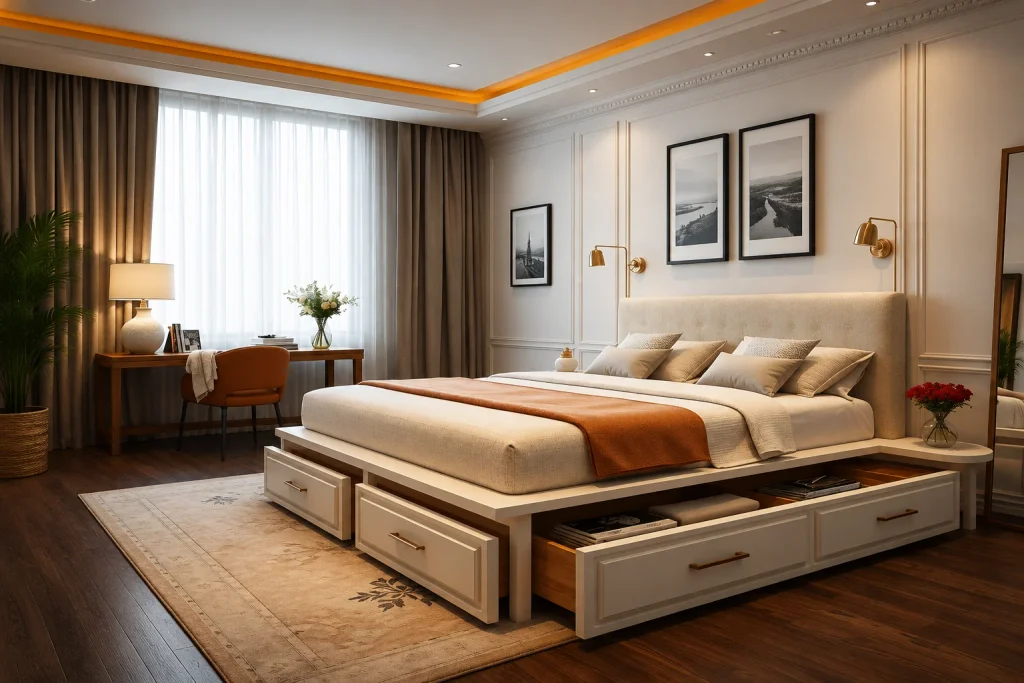
A storage bed does double duty by giving you a place to sleep and a place to stash extra linens, off-season clothes, or shoes, all without adding another piece of furniture to the room. This works because it uses space that would otherwise sit empty under the mattress. Look for beds with drawers on one or both sides, or a lift-up frame with a hinged base. For example, a platform bed with three drawers can easily replace a small dresser. Styling tip: label each drawer’s contents in your head (or on paper) so you’re not digging through all three every time you need something specific.
2. Use the Space Underneath the Bed
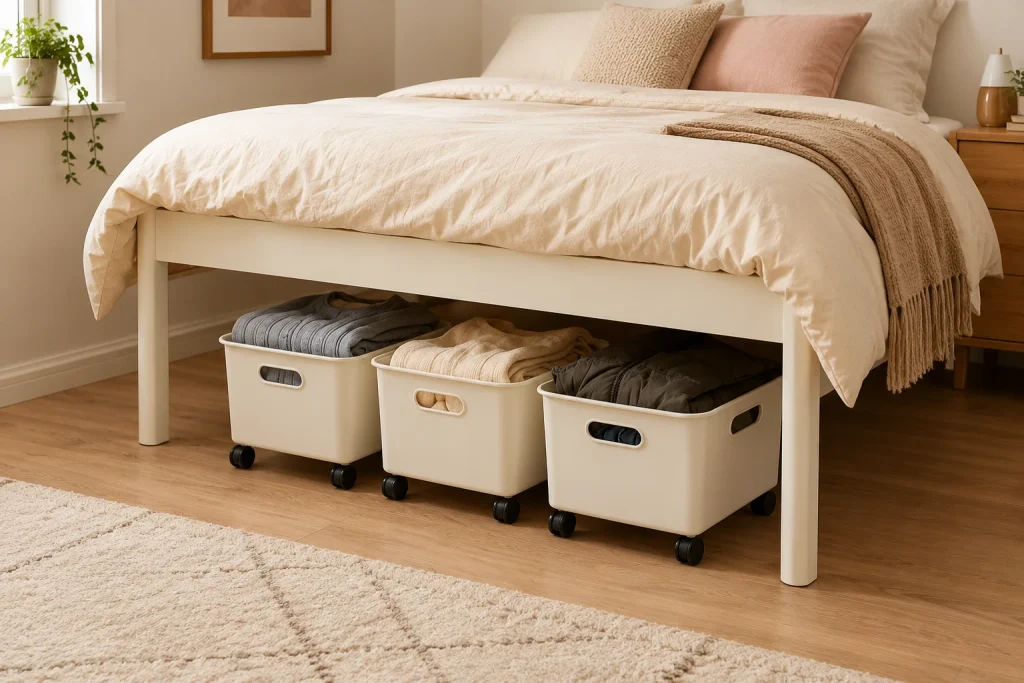
Even without a storage bed frame, the gap under a standard bed is one of the most overlooked storage spots in a small bedroom. It works because that space is otherwise wasted, hidden by a bed skirt or frame. Slide in flat storage bins, vacuum-sealed bags for bulky items, or rolling drawers designed for under-bed use. A queen bed with 8 inches of clearance can typically fit two large bins with room to spare. Tip: reserve this space for items you use seasonally, like winter blankets, so you’re not constantly bending down to access daily items.
3. Choose Furniture That Fits the Room’s Scale
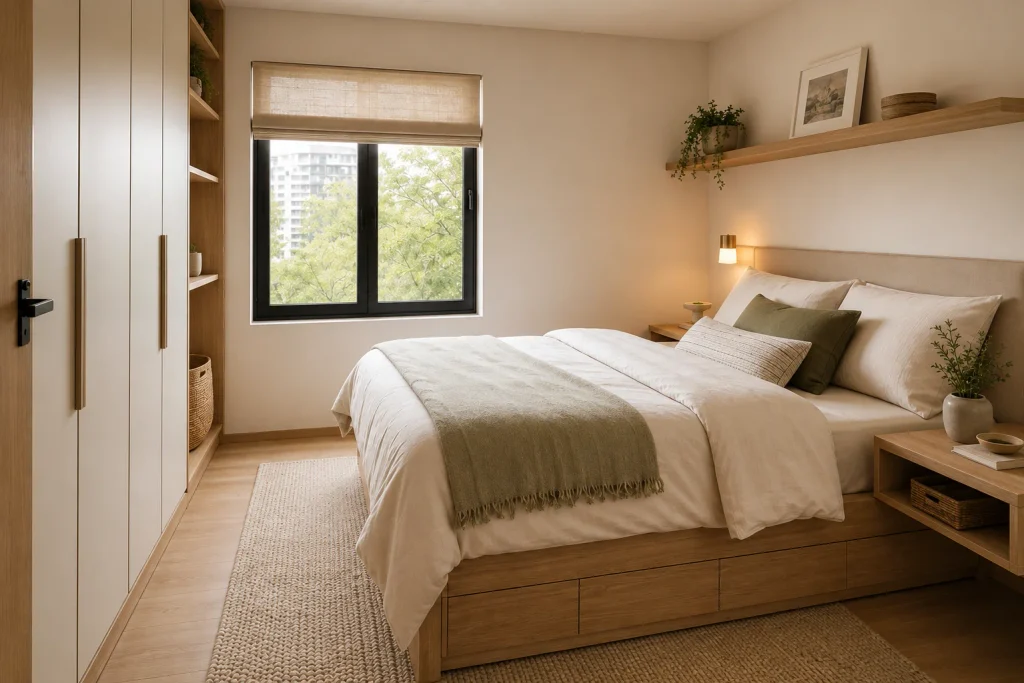
Oversized furniture is one of the biggest reasons small bedrooms feel cramped, even when there’s technically enough square footage. Right-sized furniture works because it leaves breathing room around each piece instead of crowding every wall. Before buying anything, measure your room and leave at least two feet of walking space around the bed. For example, a full-size bed often works better than a queen in a narrow room, even if it feels like a downgrade. Tip: use painter’s tape on the floor to map out furniture dimensions before you commit to a purchase.
4. Use a Narrow Bedside Table
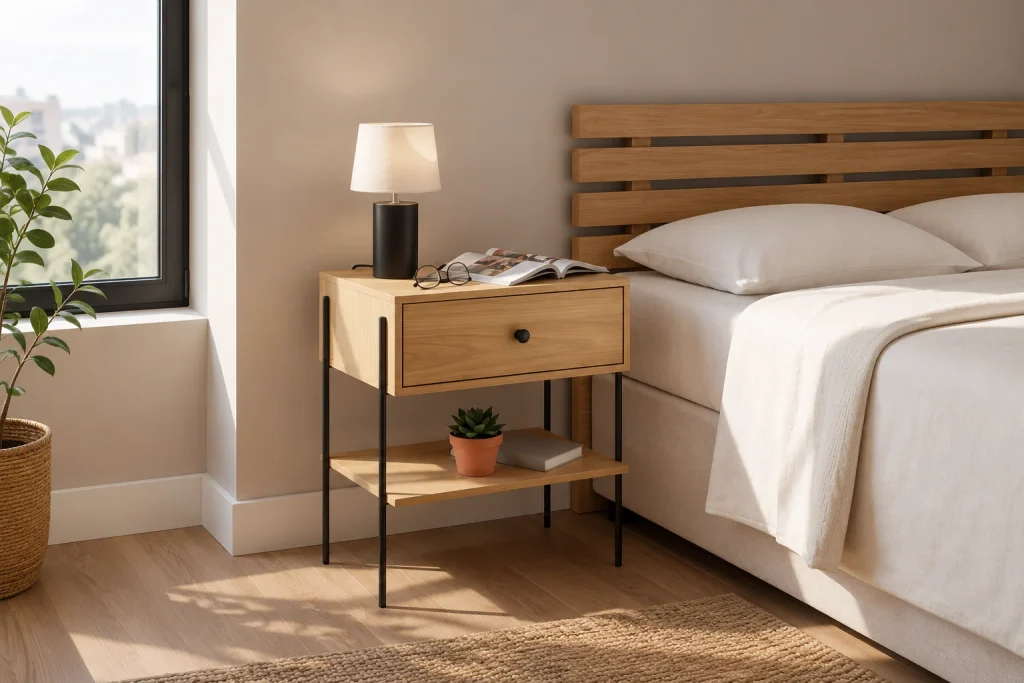
A slim nightstand gives you a landing spot for a lamp, glasses, and a phone without eating into your walking path. It works because narrow profiles reduce visual bulk while still offering functional surface space. Look for tables under 14 inches deep, or consider a wall-mounted shelf as a stand-in. A narrow table with one drawer, for instance, keeps small items hidden but accessible. Tip: choose a nightstand with legs rather than a solid base, since visible flooring underneath makes the whole area feel lighter.
5. Install Floating Nightstands
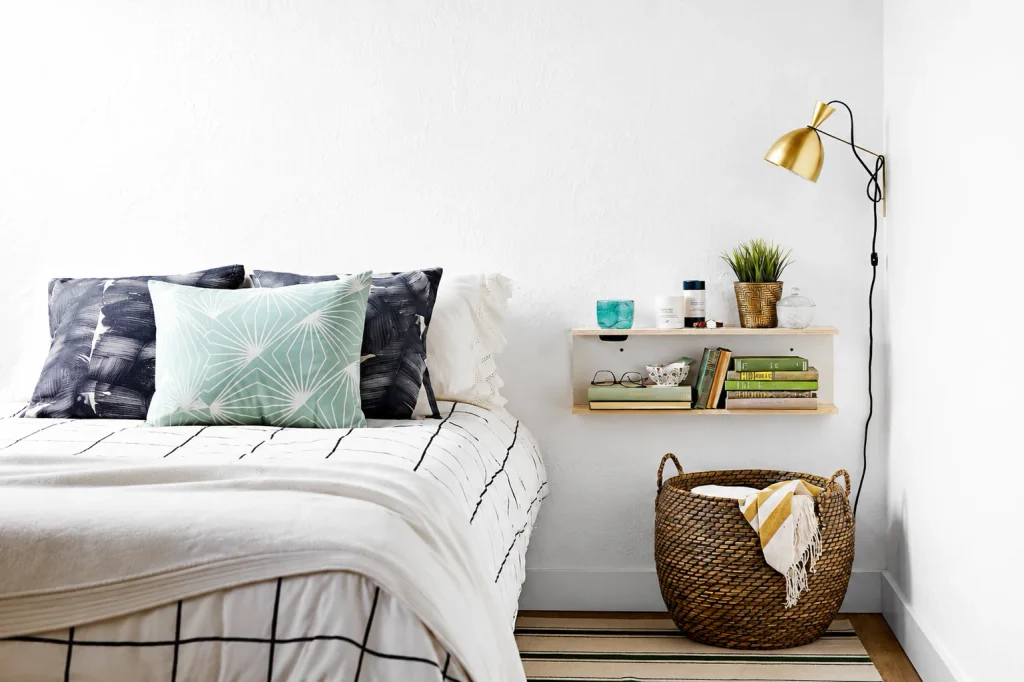
Floating nightstands mount directly to the wall, which frees up the floor space a traditional nightstand would normally occupy. This works particularly well in narrow bedrooms where every inch of walkway matters. Install a small floating shelf or wall-mounted cube on each side of the bed at a comfortable reach-in height. For example, a single floating shelf with a small basket underneath can hold a lamp and a book. Tip: keep the shelf shallow, around 8 to 10 inches, so it doesn’t become a bump-into hazard in a tight space.
6. Make Use of Vertical Wall Space
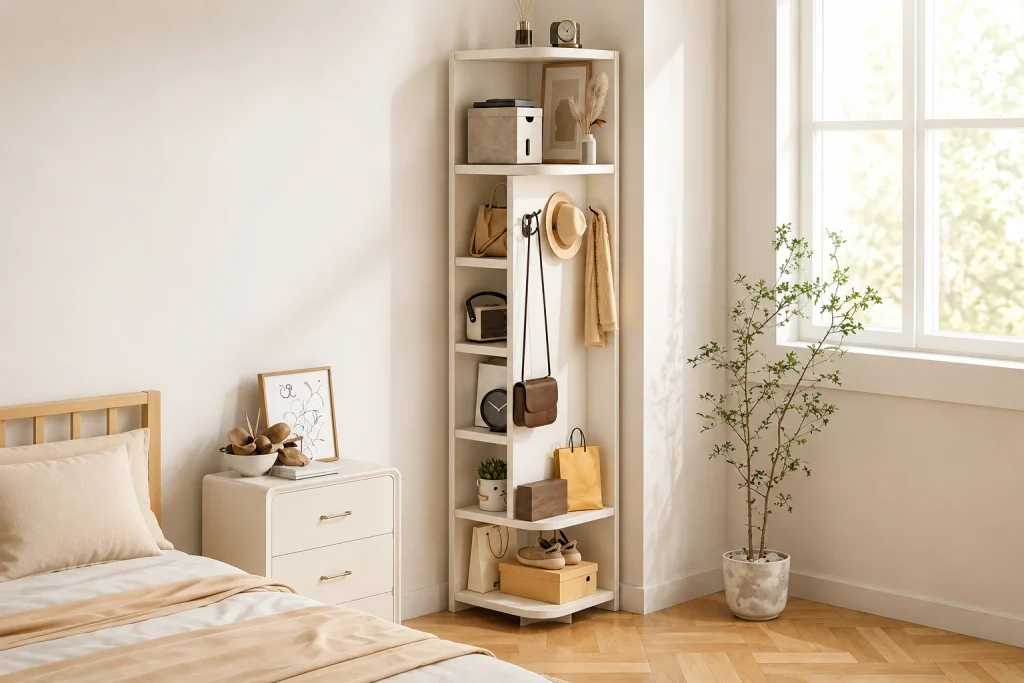
When floor space runs out, the walls become your next best resource. Vertical storage works because most bedroom walls sit mostly empty above waist height, even in small rooms. Add tall shelving units, hooks, or a wardrobe that reaches close to the ceiling instead of a short, wide dresser. A narrow bookshelf that runs floor to ceiling, for example, can store far more than a low, wide one in the same footprint. Tip: keep frequently used items on lower shelves and reserve the top shelves for things you access less often.
7. Add Floating Shelves
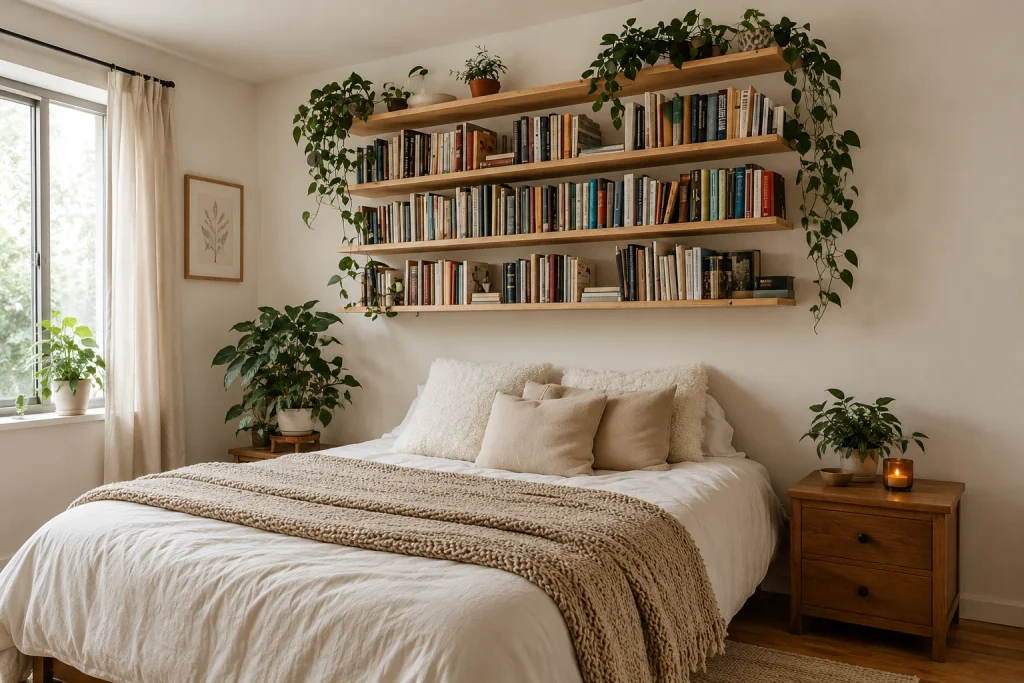
Floating shelves give you extra surface area for books, decor, or everyday items without requiring a table or cabinet underneath. They work because they use wall space that would otherwise stay bare. Install a set of two or three shelves above a desk, dresser, or bed to create display and storage space at once. For example, a row of three shallow shelves above a headboard can hold books and a small plant. Tip: avoid overcrowding each shelf; leave a little visual breathing room so the display doesn’t read as clutter.
8. Use Wall-Mounted Lighting
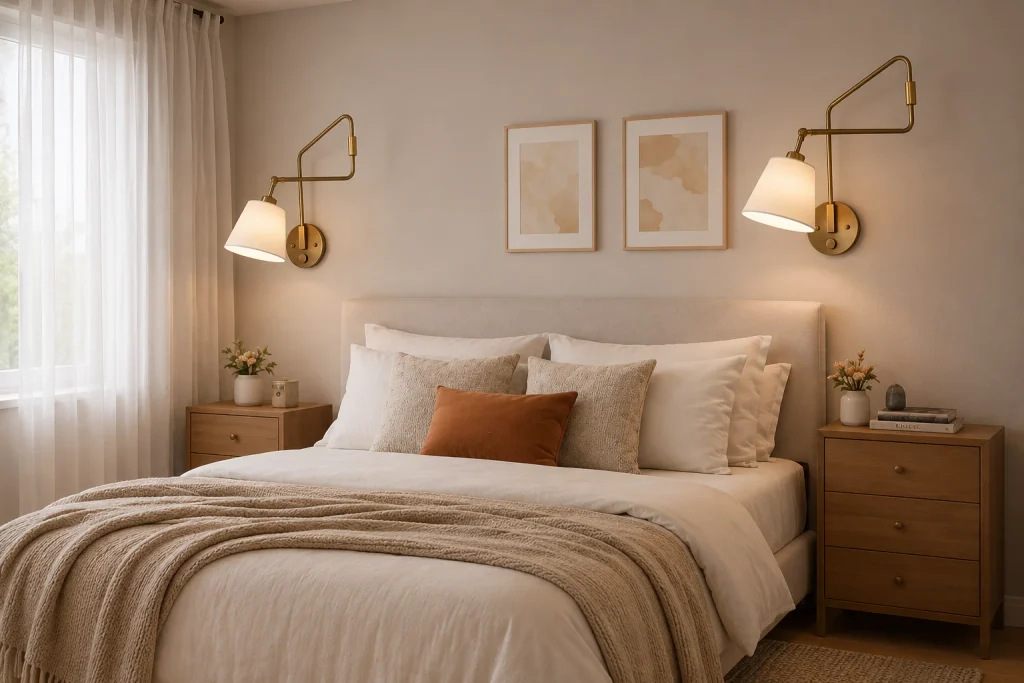
Wall-mounted sconces or swing-arm lamps free up nightstand and floor space that a traditional lamp would otherwise take up. This works especially well next to a bed where every inch of surface counts. Install a sconce on each side of the bed at shoulder height when seated, with a switch or pull cord within easy reach. A plug-in sconce, for example, can be installed without any wiring work, which makes it rental-friendly too. Tip: choose a swing-arm style so you can adjust the direction of the light for reading without moving anything else.
9. Choose a Tall Dresser Instead of a Wide Dresser
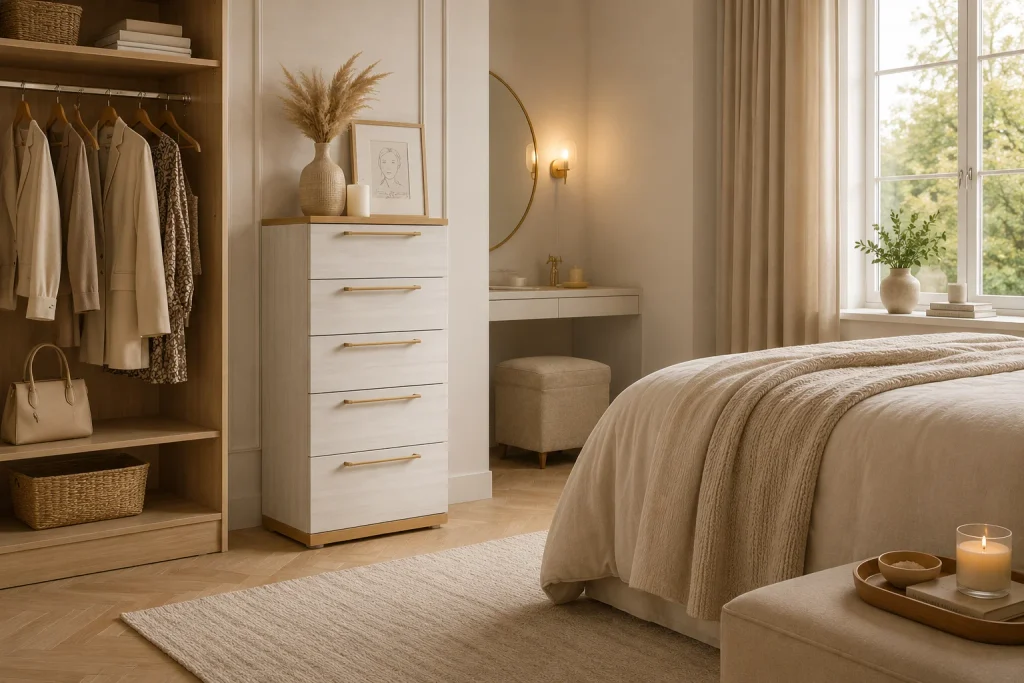
A tall, narrow dresser holds just as much clothing as a wide one but uses a fraction of the floor space. This works because it stacks storage vertically instead of spreading it horizontally across a wall. Look for a five- or six-drawer chest that’s narrower than it is tall, and place it in a corner or along the shortest wall. For example, swapping a six-foot-wide dresser for a two-foot-wide tall chest can free up several feet of usable floor. Tip: put heavier, less-used items in the bottom drawers and everyday items within easy reach in the middle.
10. Use the Back of the Bedroom Door
The back of your door is essentially free real estate that most people never use. This spot works well because it adds storage without touching the floor or walls at all. Hang hooks, a mirror, or a fabric organizer with pockets to hold shoes, accessories, or bags. For example, an over-the-door hook rack can hold robes, bags, and scarves that would otherwise pile up on a chair. Tip: keep items on the door lightweight so the hardware doesn’t strain the door hinges over time.
11. Add an Over-the-Door Organizer
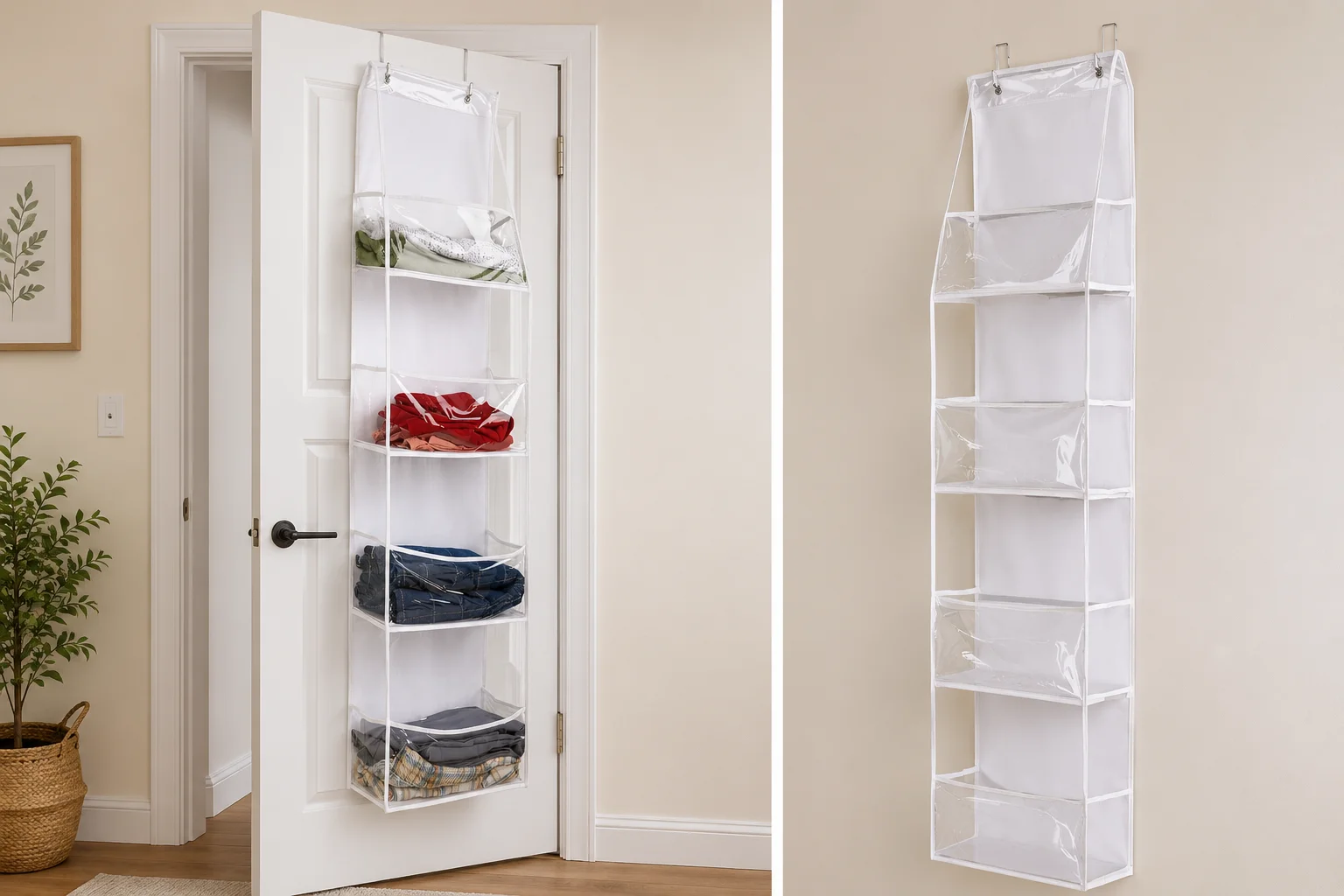
An over-the-door organizer with clear pockets or bins is one of the most practical small bedroom storage ideas for closets or entry doors. It works because it turns unused vertical door space into visible, sorted storage. Hang one inside your closet door to hold shoes, folded clothes, or accessories that don’t fit neatly on a shelf. For example, a 12-pocket organizer can replace a shoe rack entirely in a tight closet. Tip: use clear pockets so you can see contents at a glance instead of unhooking the whole organizer to search.
12. Make Use of Awkward Corners
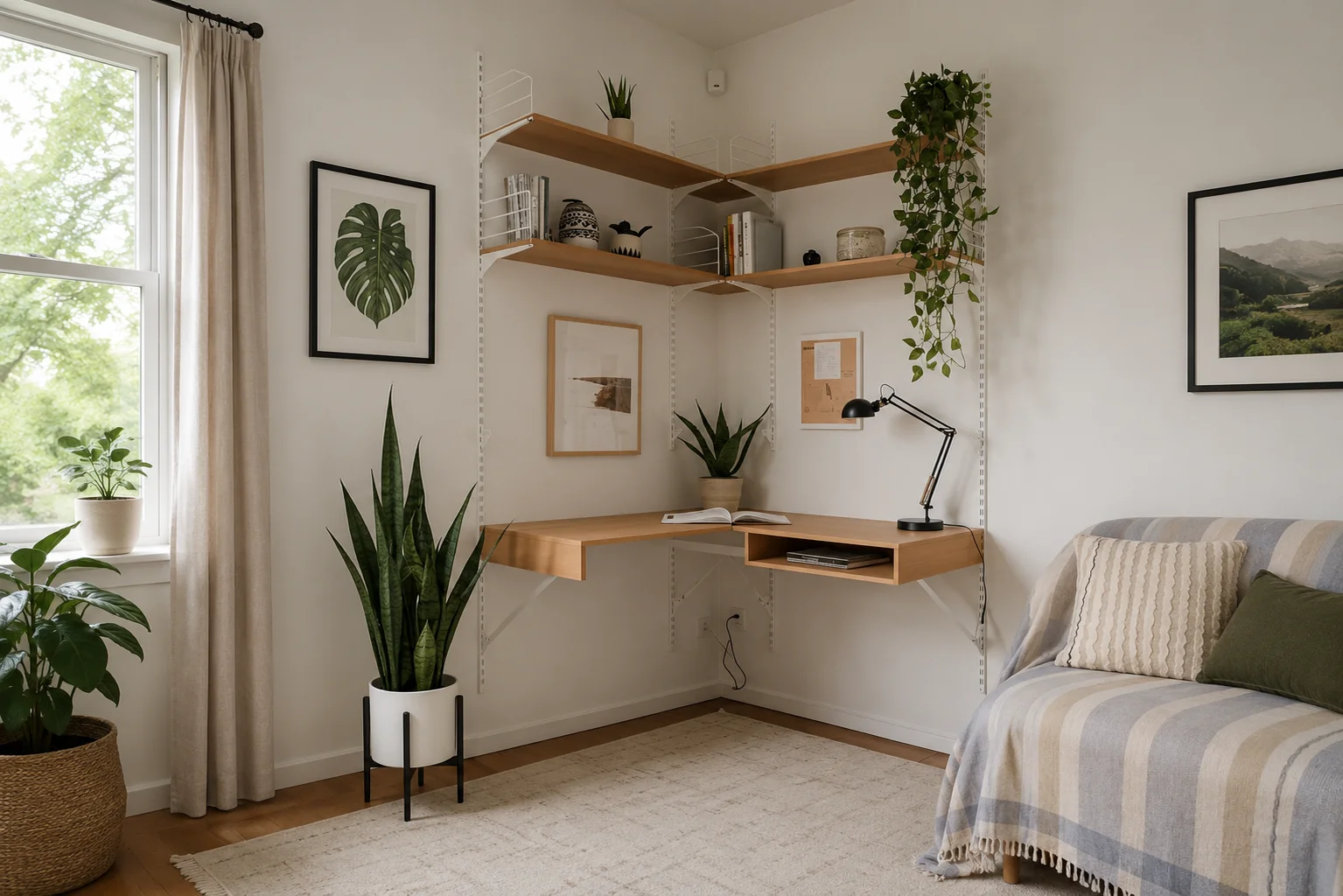
Corners are often left empty because standard furniture doesn’t fit them well, but they’re some of the most useful spots in a small bedroom once you plan around them. This works because corner-specific furniture is designed to use angled space that square furniture wastes. Add a corner shelf unit, a corner desk, or a slim corner wardrobe. For example, a triangular corner shelf can hold books or a small plant without blocking any walking path. Tip: measure the corner carefully, since even a few inches of miscalculation can make corner furniture stick out awkwardly.
13. Add a Multifunctional Desk
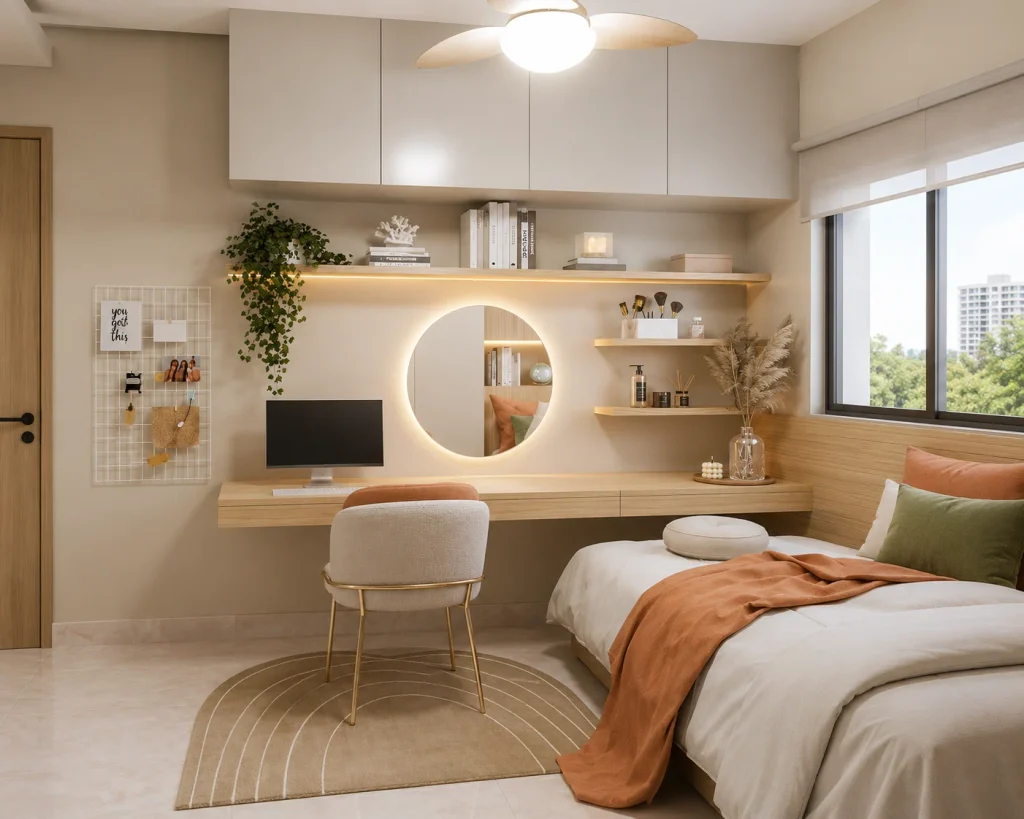
A desk that also works as a vanity, nightstand, or extra surface space saves you from needing two separate pieces of furniture. This works because one piece handles multiple daily tasks instead of taking up space for a single purpose. Choose a slim desk with a drawer for makeup or office supplies, and pull up a stool that tucks fully underneath when not in use. For example, a 24-inch-wide desk can double as a spot for morning routines and evening laptop work. Tip: keep the desktop as clear as possible so it can quickly switch between uses.
14. Use a Fold-Down or Wall-Mounted Desk
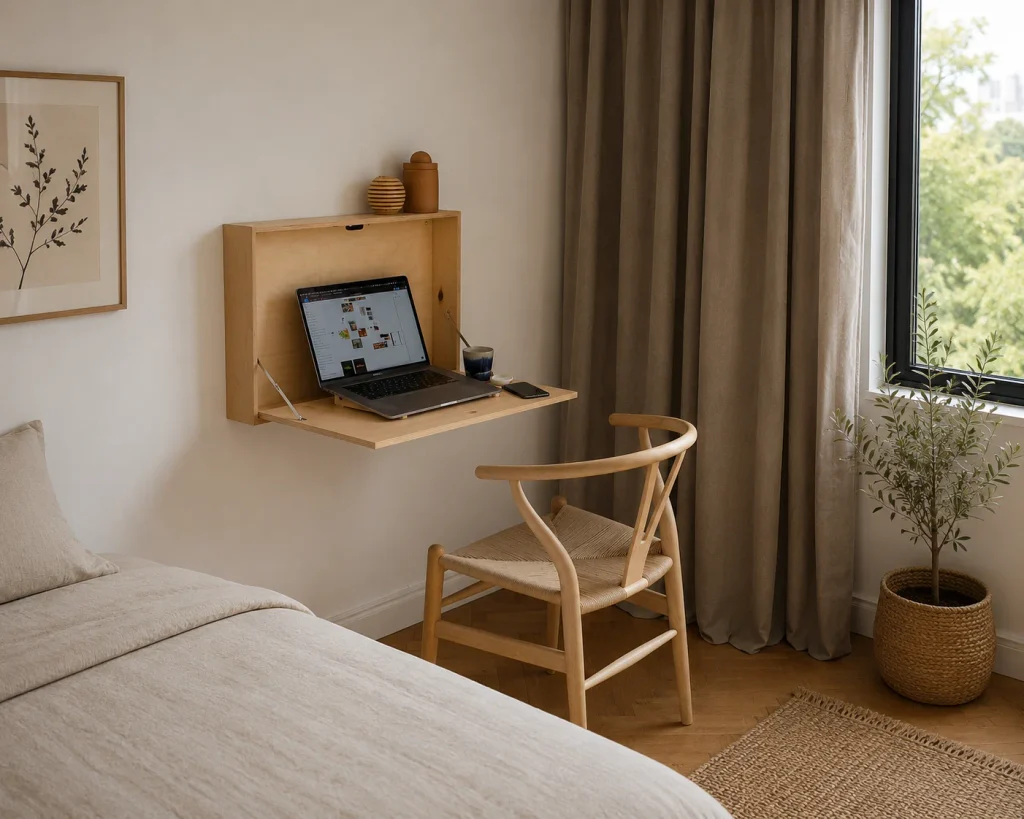
A fold-down desk attaches to the wall and folds flat when you’re not using it, which makes it one of the most space-efficient small bedroom furniture ideas available. It works because it eliminates the need for a dedicated desk footprint entirely. Mount it at standard desk height, around 28 to 30 inches, and pair it with a folding or stackable chair. For example, a wall-mounted drop-leaf desk can hold a laptop during the day and fold away by evening. Tip: install a small shelf above it to hold supplies so the desk itself stays clear when folded down.
15. Add a Strategically Placed Mirror
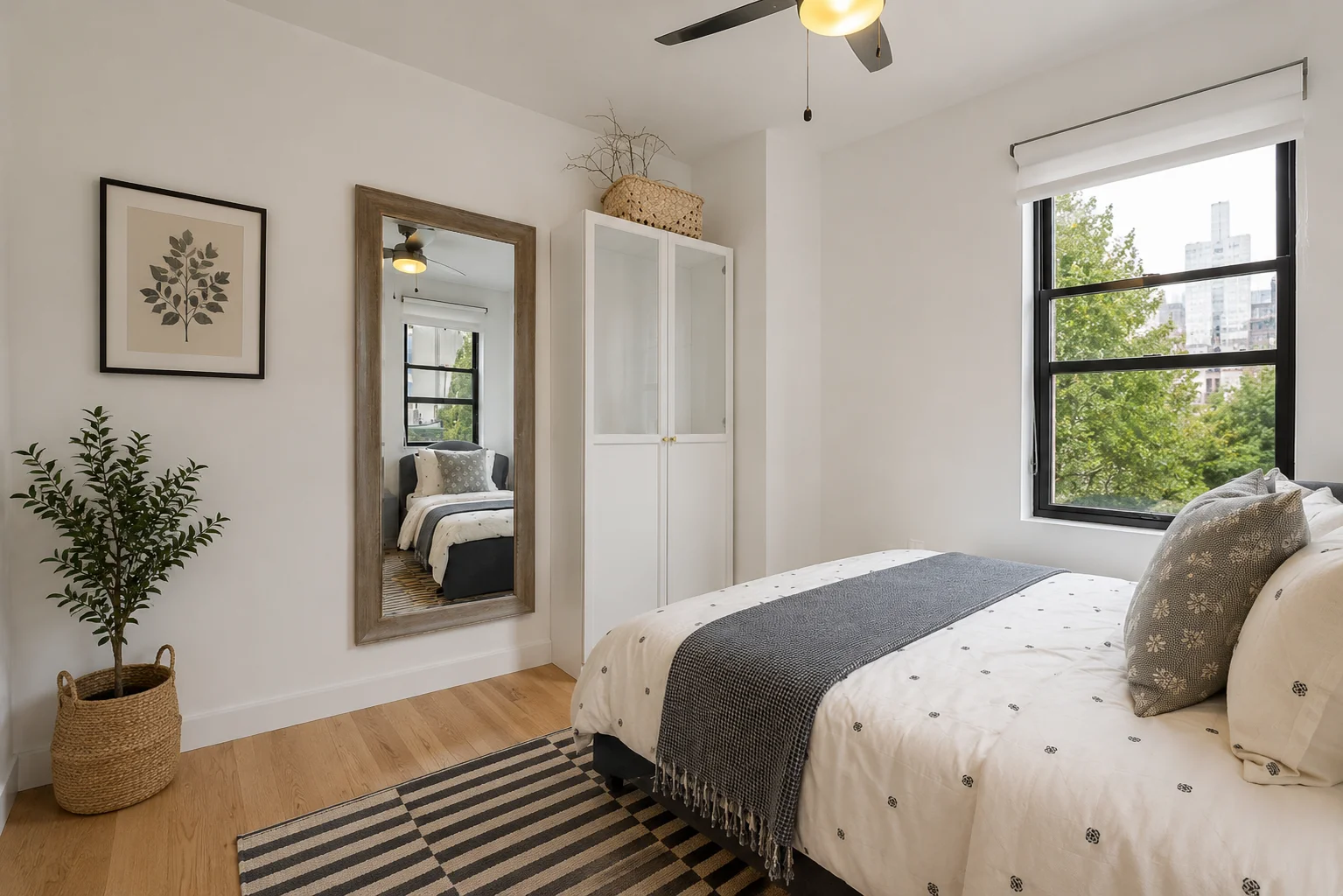
A well-placed mirror reflects light around the room and gives the eye a sense of depth, which makes a small bedroom feel more open. This works best when the mirror faces a window or a light source rather than a blank wall. Hang a full-length or medium mirror on the wall opposite your window, or lean one against a wall near the closet. For example, a leaning floor mirror in an empty corner adds function without requiring any mounting. Tip: avoid placing a mirror directly across from the bed if it feels distracting when you’re trying to relax.
16. Keep the Floor Visually Open
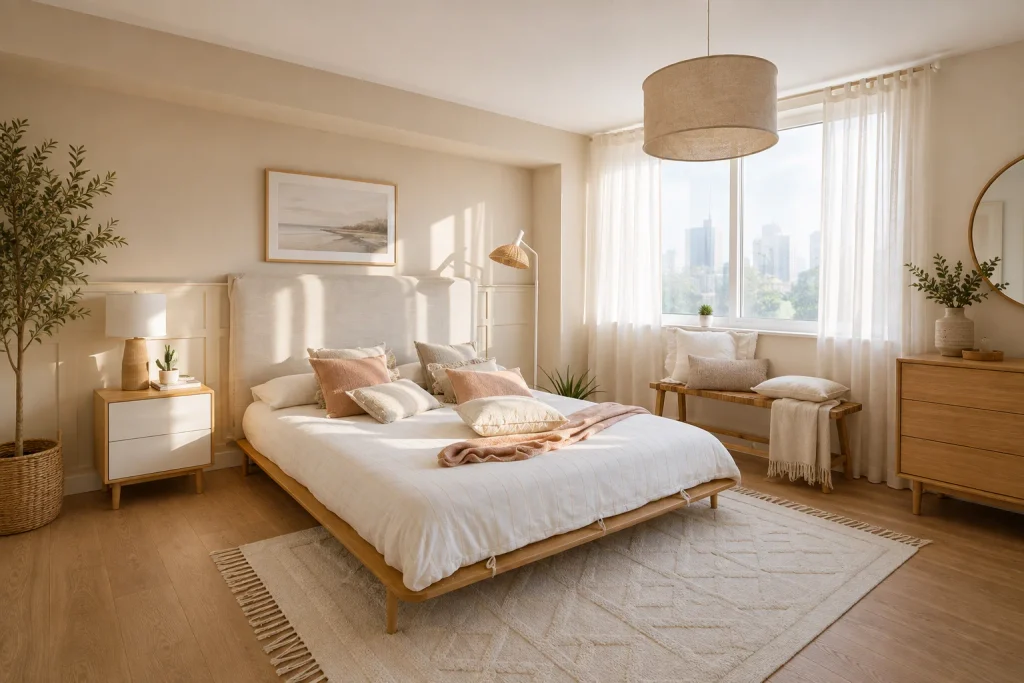
An open floor plan, even in a small room, makes the space feel bigger simply because your eye has a clear path to follow. This works because visual clutter on the floor makes a room feel smaller than it actually is. Choose furniture with visible legs instead of solid bases, and keep the area under the bed and around furniture free of piles. For example, swapping a solid-base storage ottoman for one with slim wooden legs can make a noticeable difference. Tip: do a quick nightly floor check, since even a few stray items can undo the open feeling you’ve worked to create.
17. Use a Light and Cohesive Color Palette
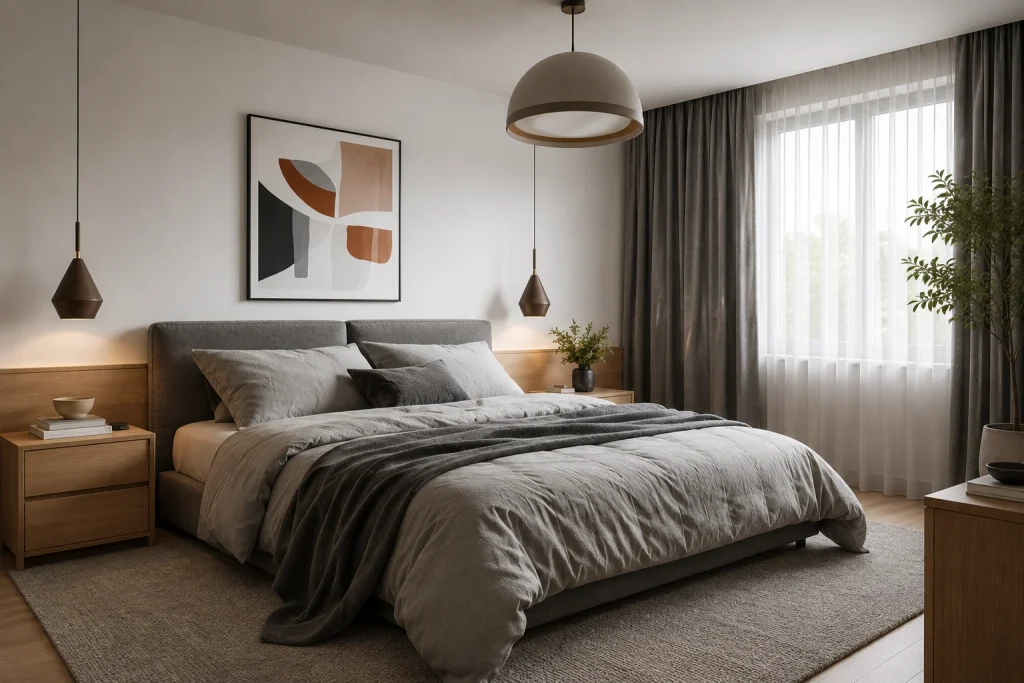
A consistent, lighter color palette helps a small bedroom feel calm and unified rather than visually busy. This works because too many contrasting colors and patterns can make a room feel chaotic, which reads as smaller. Stick to two or three main colors across your walls, bedding, and furniture, using warm white, soft gray, or greige as a base. For example, painting walls a soft neutral and choosing bedding in a similar tone keeps the whole room feeling connected. Tip: introduce personality through one or two accent colors in pillows or artwork instead of changing the whole palette.
18. Use Curtains to Emphasize Ceiling Height
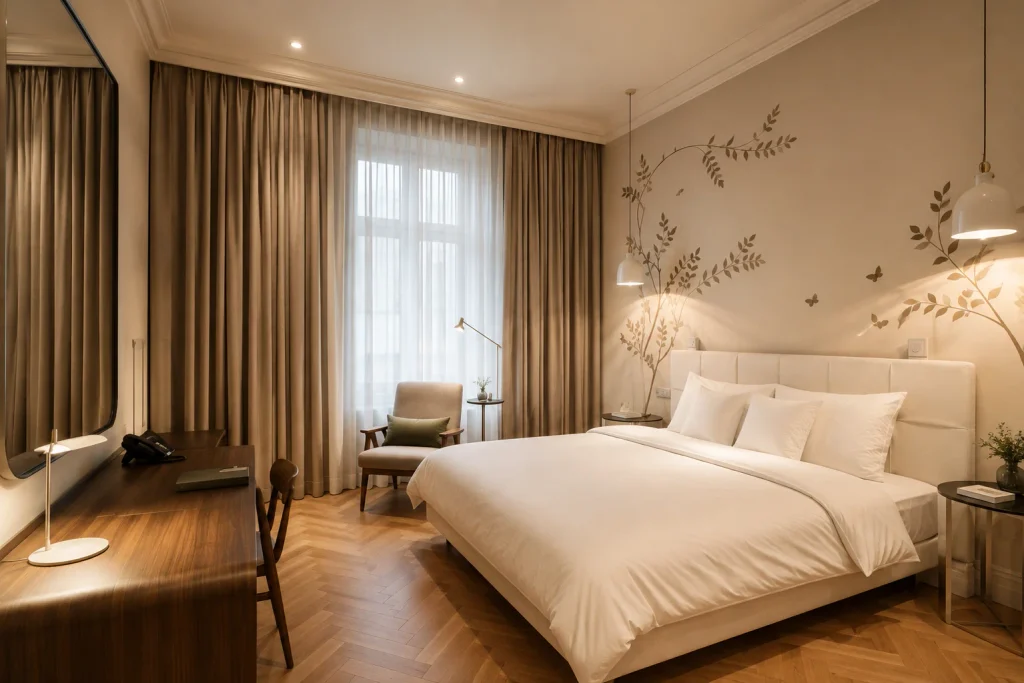
Hanging curtains close to the ceiling, rather than directly above the window frame, draws the eye upward and makes the room feel taller. This works because the extra vertical fabric creates the illusion of a taller window and higher ceiling. Mount curtain rods a few inches below the ceiling line and let the curtains fall to the floor. For example, floor-length curtains hung just under crown molding can make an 8-foot ceiling feel noticeably taller. Tip: choose curtains in a color close to your wall color so the effect feels seamless rather than boxed in.
19. Maximize Closet Storage
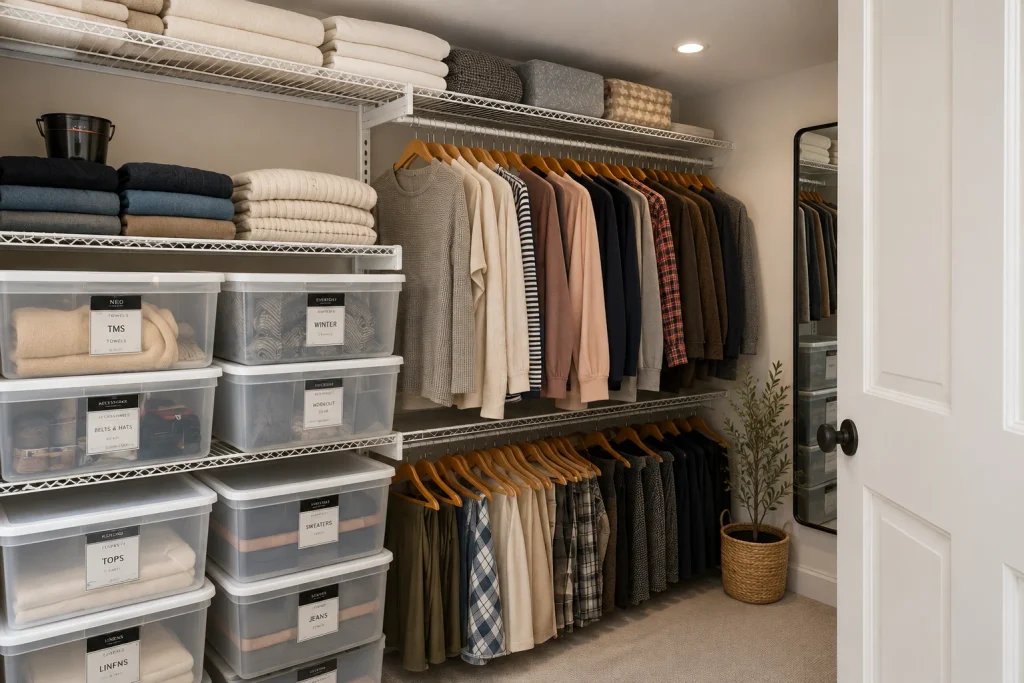
Most closets waste a huge amount of vertical space by relying on a single hanging rod and one shelf. This works because adding levels and dividers lets you store far more in the same square footage. Install a double hanging rod, add stackable bins on the floor, and use drawer dividers inside any built-in dressers. For example, a closet with a second, lower rod can double your hanging space for shorter items like shirts and folded pants. Tip: group items by category, such as all workwear together, so you can find what you need without disturbing the rest.
20. Create Hidden Storage for Seasonal Items
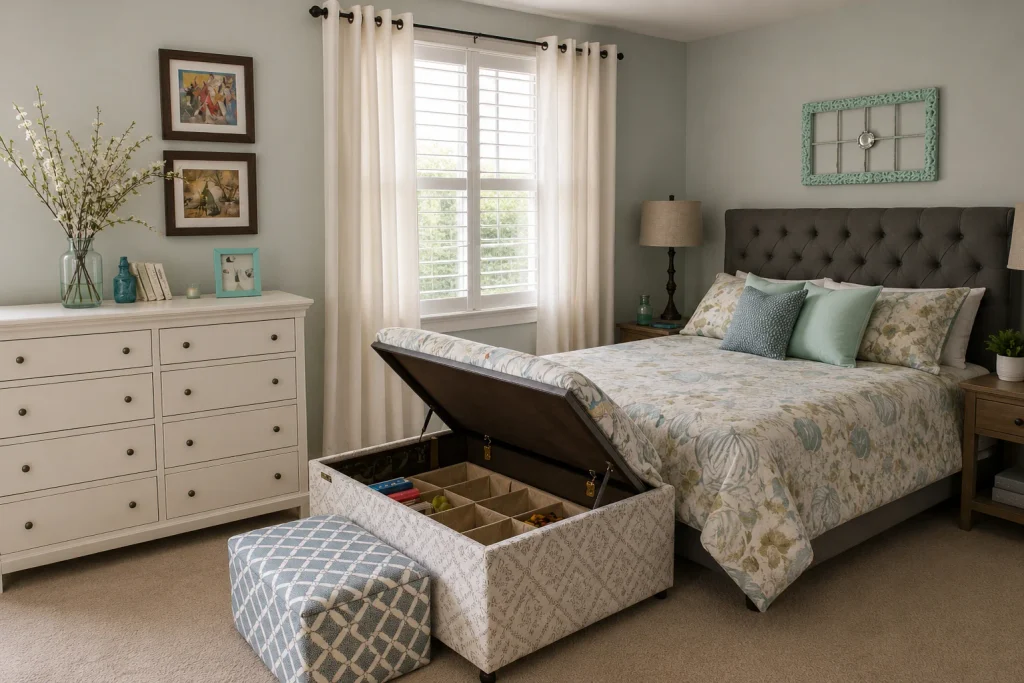
Seasonal items like holiday decorations, winter coats, or extra bedding don’t need to be visible or easily accessible year-round, which makes them perfect for hidden storage. This works because it clears daily-use space for things you actually reach for often. Use under-bed bins, the top shelf of a closet, or storage ottomans for these items. For example, a labeled bin under the bed can hold winter blankets that only come out for a few months a year. Tip: do a seasonal swap twice a year so out-of-season items don’t quietly take over prime storage spots.
21. Keep Decor Minimal but Cozy
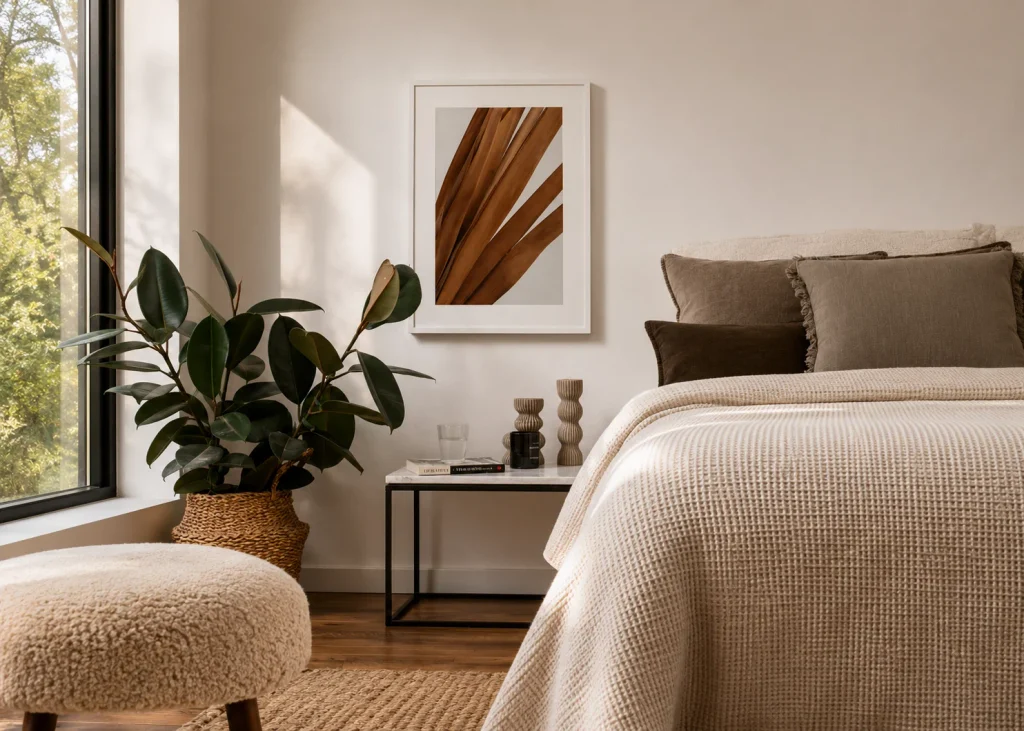
A small bedroom can still feel warm and personal without being packed with decor, and knowing where to stop is just as important as knowing what to add. This works because a few intentional pieces read as curated, while too many small items read as clutter. Choose a handful of meaningful pieces, like one piece of art, a small plant, and soft bedding, rather than filling every surface. For example, one framed print above the bed often has more visual impact than five smaller pieces scattered around the room. Tip: before adding a new decor item, consider removing one you already have to keep the balance.
How to Arrange Furniture in a Small Bedroom
Start by positioning the bed first, since it’s the largest piece and sets the layout for everything else. In most small bedrooms, placing the bed against the longest wall, away from the door swing, keeps a clear walking path. Leave at least a narrow but consistent gap around the bed so you’re not squeezing past furniture every time you get up. Use corners for dressers, desks, or reading chairs rather than placing them along open wall space you might need later. Avoid blocking windows with tall furniture, since natural light does more for the room’s feel than an extra shelf would. Keep closet doors, whether sliding or hinged, fully accessible so you’re not rearranging furniture just to get dressed. In narrow bedrooms, a bed pushed lengthwise against one wall usually works better than centering it. Square bedrooms have more flexibility, but still benefit from one clear focal point, usually the bed or a window. If you need a desk, tuck it into an underused corner rather than the center of the room, and in bedrooms with limited closet space, plan for a freestanding wardrobe before you arrange anything else.
Best Storage Ideas for a Small Bedroom
The most effective small bedroom storage ideas combine several small solutions rather than relying on one big piece of furniture. Under-bed storage handles bulky or seasonal items without taking up any additional floor space. Tall dressers and floating shelves add vertical storage that a wide dresser simply can’t match in the same footprint. Storage benches at the foot of the bed give you a place to sit while doubling as a hidden compartment for extra linens. Baskets and bins keep loose items corralled on shelves or closet floors instead of scattered around the room. Closet organizers, including double rods and stackable drawers, make far better use of existing closet space than a single rod ever could. Drawer dividers keep smaller items like socks and accessories from turning into a jumbled mess. Door organizers add storage without using any wall or floor space at all. To keep the room visually calm, choose storage containers in matching colors or materials, and resist the urge to display every organizational tool. Hidden storage, tucked into benches, ottomans, or under the bed, is often more effective than open storage for keeping a small room looking uncluttered.
How to Choose Furniture for a Small Bedroom
Furniture scale matters more than furniture quantity in a small bedroom. A few well-sized pieces will always work better than several pieces that are slightly too big. Storage beds are worth prioritizing since they combine two functions in the space of one. Slim nightstands and narrow dressers reduce visual bulk while still giving you the storage and surface space you need. Tall furniture, like a six-drawer chest or a floor-to-ceiling bookshelf, uses vertical space that a low, wide equivalent would waste. Multifunctional furniture, such as a desk that doubles as a vanity or a bench that opens for storage, reduces how many separate pieces you need to fit into the room. Folding furniture, like a drop-leaf desk or a folding chair, works well for rooms where floor space needs to change throughout the day. Wall-mounted furniture, including shelves and fold-down desks, skips the floor footprint entirely. Furniture with visible legs, rather than a solid base, keeps the room feeling more open. Oversized furniture can overwhelm a small room by blocking walking paths and making the ceiling feel lower than it is, so always measure your available space and compare it against a piece’s actual dimensions before buying anything.
Best Colors for a Small Bedroom
Warm white, cream, and beige are reliable choices for a small bedroom because they create a soft, cohesive backdrop that doesn’t compete with furniture or decor. Soft gray and greige offer a slightly cooler alternative while still keeping the room feeling calm and unified. Pale blue and soft sage bring in a bit of color without overwhelming a small space, especially when used on walls with lighter bedding. Light taupe works well as a warm neutral that pairs easily with both wood tones and metal accents. A cohesive, lighter palette can make a room feel brighter and more visually open, since fewer competing colors give the eye less to sort through. That doesn’t mean you have to avoid darker colors altogether. You can bring in deeper tones through bedding, artwork, curtains, pillows, or a single accent piece of furniture, which adds depth and personality without darkening the whole room. It’s worth noting that lighter colors don’t physically make a room bigger, but they do reduce visual clutter and reflect available light more effectively, which contributes to an overall airier feel.
How to Use Mirrors in a Small Bedroom
Mirrors are one of the simplest tools for making a small bedroom feel more open, mainly because they reflect both light and depth. A full-length mirror leaned against a wall or mounted near the closet gives you a functional dressing spot while also expanding the sense of space. Wardrobe doors with built-in mirrors are especially useful since they add function without requiring any extra wall space. Wall-mounted mirrors work well when placed across from a window, where they bounce natural light further into the room. Leaning mirrors are a flexible, rental-friendly option since they don’t require any hardware or wall damage. When choosing mirror size, match it to the wall or furniture piece it’s paired with rather than going as large as possible. It’s easy to overdo mirrors in a small space, so stick to one or two well-placed pieces rather than covering multiple walls, which can start to feel disorienting instead of open.
Small Bedroom Lighting Ideas
Layered lighting makes the biggest difference in how a small bedroom feels, since relying on a single overhead fixture tends to flatten the whole room. Wall sconces provide reading light without taking up nightstand or floor space, which matters when every surface counts. Pendant lights work well in place of table lamps, especially when hung just above nightstand height on either side of the bed. Ceiling fixtures still play a role for general lighting, but they shouldn’t be the only light source in the room. Bedside lamps remain useful if you have the surface space, though a plug-in sconce is a good swap when space is tight. Under-shelf lighting adds a soft glow to floating shelves or a desk area without needing an extra lamp. Closet lighting, even a simple battery-powered puck light, makes it easier to find items in a closet that doesn’t get much natural light. Natural light should be prioritized above all else, so avoid blocking windows with furniture or heavy curtains during the day. Combining a few of these layers, rather than relying on one bright overhead light, gives the room a warmer, more functional feel overall.
Make Every Inch of Wall Space Useful
Once floor space is spoken for, walls become the next place to look for storage and function. Tall shelves and floating shelves add display and storage without touching the floor at all. Pegboards offer flexible, movable storage for anything from jewelry to small tools, and they can be rearranged as your needs change. Wall hooks are useful near the door or closet for bags, robes, or hats that would otherwise end up on a chair. Vertical artwork, hung in a tall, narrow arrangement, draws the eye upward and makes the ceiling feel higher. Tall wardrobes make better use of a room’s height than short, wide ones. Above-bed storage, like a slim shelf or cabinet, can work well in rooms with enough clearance, though it should be installed securely. Wall-mounted desks skip the floor footprint entirely, which matters most in rooms where every square foot of floor space is already accounted for. Vertical storage matters in small rooms because most of the usable space above waist height goes completely unused otherwise.
How to Make a Small Bedroom Cozy Without Making It Feel Crowded
Coziness comes from texture and comfort, not from quantity. Soft bedding, a couple of layered blankets, and a few cushions add warmth without taking up any real space. Curtains soften hard window lines and make the room feel more finished, especially in a warm, neutral tone. A small rug, even a runner along one side of the bed, adds texture underfoot without visually shrinking the floor. Warm lighting, rather than a single bright overhead bulb, makes a big difference in how relaxed the room feels in the evening. A plant or two brings life into the space without requiring much room. One or two pieces of artwork and a handful of personal accessories, like framed photos or a favorite object, make the room feel like yours. The difference between cozy and cluttered usually comes down to intention: cozy items are chosen and placed, while cluttered items accumulate without a plan. A simple styling formula to follow is one textile layer, one light source upgrade, and one to two personal touches, which keeps the room warm without tipping into visual overload.
Small Bedroom Ideas on a Budget
You don’t need a big budget to make a small bedroom function better. Start by rearranging the furniture you already have, since a better layout costs nothing and can immediately improve how the room feels. Decluttering is the next free step, and it often does more for a small room than any purchase would. DIY shelves, built from basic brackets and boards, are an affordable way to add wall storage without buying a finished unit. Secondhand furniture, found through local listings or thrift stores, can give you a properly scaled dresser or nightstand for a fraction of retail cost. Affordable baskets and storage boxes help corral loose items on shelves or closet floors. Simply changing your bedding can shift the whole feel of the room without any structural changes. Wall hooks are inexpensive and immediately useful near the closet or door. Repurposing furniture you already own, like turning a side table into a nightstand, avoids new purchases altogether. Reorganizing the closet with dividers or bins is a low-cost project with a high payoff, and improving lighting with a simple lamp swap can change the mood of the room without a big investment.
Rental-Friendly Small Bedroom Ideas
Renters need small bedroom solutions that don’t involve drilling holes or making permanent changes. Removable hooks, the kind rated for wall-safe use, hold bags, robes, and accessories without any damage. Over-the-door storage, whether for the closet or bedroom door, adds space without touching a single wall. Freestanding shelves and wardrobes offer real storage without requiring installation of any kind. Tension rods can create extra hanging space inside a closet or even divide an oddly shaped room, and they remove easily when you move out. Leaning mirrors and freestanding wardrobes skip wall mounting altogether while still adding function. Portable lighting, like plug-in sconces or battery-operated fixtures, gives you layered light without any wiring changes. Removable wallpaper is worth considering if you want a color or pattern update, since it comes off cleanly when your lease ends. Storage boxes and bins round out the list as a flexible, no-commitment way to organize a rental bedroom. As a general rule, avoid permanent alterations unless your landlord has clearly approved them as optional upgrades.
Small Bedroom Decorating Mistakes to Avoid
Oversized furniture is the most common mistake, and the fix is simple: measure the room and compare it against a piece’s actual dimensions before buying. Blocking windows with tall furniture cuts off natural light, so keep window areas clear whenever possible. Blocking closet doors with a bed or dresser makes daily routines harder than they need to be, so map out door swing before placing furniture. Too many storage pieces can crowd a room just as much as too little storage, so aim for a few multifunctional pieces instead of many small ones. Ignoring vertical space wastes one of the most useful areas in a small room, so add shelving before assuming you’ve run out of storage options. Poor lighting, especially relying on a single overhead bulb, makes a room feel flat and uninviting, so add at least one additional light source. Too much decor overwhelms a small space quickly, so edit down to a few meaningful pieces. Buying storage bins or organizers before decluttering often leads to storing things you don’t actually need, so declutter first. Too many colors or patterns can make a small room feel chaotic, so stick to a cohesive palette. Poor furniture layout blocks walking paths, so always leave a clear route through the room. Finally, choosing style over function, like a beautiful chair that never gets used, wastes valuable square footage that could serve a real purpose.
Small Bedroom Space-Maximizing Checklist
- [ ] Measure the room
- [ ] Check furniture scale
- [ ] Clear walking paths
- [ ] Use under-bed storage
- [ ] Maximize closet space
- [ ] Use vertical walls
- [ ] Add multifunctional furniture
- [ ] Improve lighting
- [ ] Reduce clutter
- [ ] Add only useful decor
Frequently Asked Questions
1. How can I maximize space in a small bedroom?
Focus on furniture that fits your room’s actual scale, use vertical storage like tall shelves and dressers, and take advantage of under-bed space. Keep the floor as clear as possible and reduce clutter, since visual clutter shrinks a room just as much as physical clutter does. Small, consistent changes usually add up to more usable space than one big renovation.
2. What furniture is best for a small bedroom?
Storage beds, slim nightstands, tall narrow dressers, and multifunctional pieces like fold-down desks work best. These pieces either combine two functions in one item or use vertical space instead of spreading out across the floor. Always measure your room before buying, since even a few extra inches can throw off the whole layout.
3. How can I make a small bedroom look bigger?
Use a light, cohesive color palette, add a well-placed mirror to reflect light, and keep the floor visually open with furniture that has visible legs. Hanging curtains close to the ceiling also draws the eye upward, which makes the ceiling feel higher and the room feel more spacious overall.
4. Where should I put storage in a small bedroom?
Prioritize under-bed storage, tall dressers, floating shelves, and closet organizers with double rods or dividers. The back of the bedroom door and the inside of the closet door are also useful spots for hooks or over-the-door organizers, since they don’t take up any additional floor space.
5. What colors are best for a small bedroom?
Warm white, cream, beige, soft gray, greige, pale blue, soft sage, and light taupe all work well as a cohesive base palette. These tones keep the room feeling calm and unified, while darker colors can still be introduced through bedding, artwork, or a single accent piece.
6. How can I make a small bedroom cozy without clutter?
Focus on a few intentional layers, like soft bedding, one or two cushions, warm lighting, and a small rug, rather than filling every surface with decor. The key is choosing items with purpose instead of letting things accumulate, which keeps the room feeling warm rather than crowded.
Make Every Inch of Your Small Bedroom Work
Making a small bedroom feel functional and comfortable comes down to a handful of consistent strategies: choosing furniture that fits the room’s actual scale, using vertical space instead of relying only on the floor, and keeping storage organized rather than just hidden away. Smart small bedroom ideas don’t require a full renovation or a big budget. They just require a bit of planning and a willingness to rethink how each piece of furniture earns its place. If the whole list feels like a lot, start small. Pick two or three changes, like adding a floating shelf, swapping a wide dresser for a tall one, or hanging a mirror across from your window, and build from there. A small bedroom can still be stylish, calm, and genuinely comfortable once every inch of it is working for you.
SEO Title
Small Bedroom Ideas: 21 Ways to Maximize Every Inch
Meta Description
Discover 21 practical small bedroom ideas for smarter storage, better layout, and a cozy feel. Budget-friendly and rental-friendly tips that actually work.
URL Slug
/small-bedroom-ideas/
Primary Keyword
small bedroom ideas
Secondary Keywords
small bedroom decorating ideas, small bedroom storage ideas, small bedroom organization ideas, small bedroom design, small bedroom decor, small bedroom layout ideas, small bedroom furniture ideas, small bedroom makeover, small space bedroom ideas, tiny bedroom ideas, small apartment bedroom ideas, cozy small bedroom, minimalist small bedroom, space saving bedroom ideas, small bedroom ideas on a budget
Search Intent
Readers are looking for practical, inspiring guidance on how to organize, furnish, and decorate a small bedroom to make it feel more spacious and functional.
Pinterest Pin Titles
- Small Bedroom Storage Ideas That Actually Work
- Small Bedroom Makeover Ideas Anyone Can Try
- Small Bedroom Organization Tips for Every Closet
- How to Layout a Small Bedroom the Smart Way
- Small Apartment Bedroom Ideas for Renters
Pinterest Pin Descriptions
- Struggling with a tiny bedroom that never feels organized? These small bedroom storage ideas show you how to use under-bed space, floating shelves, and closet organizers to fit more without adding clutter. Simple changes that make a real difference, even in the smallest rooms.
- A small bedroom makeover doesn’t have to mean a full renovation. This guide walks through furniture swaps, lighting upgrades, and layout changes that make a tiny room feel bigger and more put-together, all without a major budget or a big project.
- From double closet rods to over-the-door organizers, these small bedroom organization ideas help you make sense of a limited closet and cramped storage. Practical tips for keeping clothes, shoes, and accessories sorted without running out of room.
- Not sure where to put the bed or how to fit a desk in a small bedroom? This layout guide covers furniture placement, walking paths, and corner solutions for narrow, square, and awkwardly shaped small bedrooms of every kind.
- Renting a small apartment bedroom and can’t drill into the walls? These rental-friendly ideas cover removable hooks, freestanding shelves, and portable lighting so you can maximize storage and style without losing your deposit.
Pinterest Keywords
small bedroom ideas, small bedroom storage, small bedroom organization, small bedroom decor, tiny bedroom ideas, small apartment bedroom, cozy small bedroom, small bedroom makeover, small bedroom layout, space saving furniture, under bed storage ideas, small bedroom on a budget, minimalist small bedroom, small bedroom closet organization, rental bedroom ideas
Image / Visual Content Plan
- Image Concept: A neatly made storage bed with drawers pulled open showing folded linens Recommended Section: Idea 1 – Choose a Bed With Built-In Storage Suggested Alt Text: Small bedroom storage bed with open drawers holding folded linens
- Image Concept: Under-bed storage bins lined up and visible beside a low bed frame Recommended Section: Idea 2 – Use the Space Underneath the Bed Suggested Alt Text: Under-bed storage bins used in a small bedroom setup
- Image Concept: A pair of floating nightstands mounted on either side of a neatly styled bed Recommended Section: Idea 5 – Install Floating Nightstands Suggested Alt Text: Floating nightstands in a small bedroom with wall-mounted lighting
- Image Concept: A tall, narrow shelving unit filled with books and folded storage baskets Recommended Section: Idea 6 – Make Use of Vertical Wall Space Suggested Alt Text: Tall vertical shelving unit in a small bedroom for extra storage
- Image Concept: A wall sconce mounted above a bed with warm, soft lighting Recommended Section: Small Bedroom Lighting Ideas Suggested Alt Text: Wall-mounted sconce lighting in a small bedroom
- Image Concept: A full-length mirror leaning in the corner of a small, bright bedroom Recommended Section: How to Use Mirrors in a Small Bedroom Suggested Alt Text: Full-length leaning mirror in a small bedroom corner
- Image Concept: A cozy, minimalist bedroom with layered bedding, a small rug, and soft lighting Recommended Section: How to Make a Small Bedroom Cozy Without Making It Feel Crowded Suggested Alt Text: Cozy minimalist small bedroom with layered bedding and soft lighting
- Image Concept: A studio apartment corner set up as a compact bedroom nook Recommended Section: How to Arrange Furniture in a Small Bedroom Suggested Alt Text: Small apartment bedroom nook with space-saving furniture layout
- Image Concept: An organized closet with double hanging rods, bins, and an over-the-door organizer Recommended Section: Best Storage Ideas for a Small Bedroom Suggested Alt Text: Organized small bedroom closet with double rods and storage bins
- Image Concept: A wide shot of a small bedroom showing the full furniture layout and clear walking path Recommended Section: Small Bedroom Ideas on a Budget Suggested Alt Text: Small bedroom makeover with budget-friendly furniture layout
Featured Image Concept
Featured Image Concept: A bright, airy small bedroom shown from a slightly elevated angle, featuring a storage bed with neutral bedding, a tall narrow dresser, floating shelves above a slim desk, a wall-mounted sconce, and a leaning mirror in the corner. The floor is visibly clear and the color palette is soft and cohesive throughout.
Pinterest Text Overlay: 21 Small Bedroom Ideas That Maximize Every Inch
Alt Text: Bright small bedroom with storage bed, tall dresser, and floating shelves showing smart use of every inch
Internal Linking Strategy
- Suggested Anchor Text: cozy bedroom styling tips Suggested Future Article: Cozy Bedroom Ideas Best Placement: Within the “How to Make a Small Bedroom Cozy Without Making It Feel Crowded” section
- Suggested Anchor Text: more bedroom storage solutions Suggested Future Article: Bedroom Storage Ideas Best Placement: Within the “Best Storage Ideas for a Small Bedroom” section
- Suggested Anchor Text: closet organization ideas Suggested Future Article: Bedroom Organization Ideas Best Placement: Within Idea 19 – Maximize Closet Storage
- Suggested Anchor Text: minimalist bedroom inspiration Suggested Future Article: Minimalist Bedroom Ideas Best Placement: Within Idea 21 – Keep Decor Minimal but Cozy
- Suggested Anchor Text: neutral color palette guide Suggested Future Article: Neutral Bedroom Ideas Best Placement: Within the “Best Colors for a Small Bedroom” section
- Suggested Anchor Text: more small apartment decorating ideas Suggested Future Article: Small Apartment Decor Best Placement: Within the “Rental-Friendly Small Bedroom Ideas” section
- Suggested Anchor Text: cozy living room styling Suggested Future Article: Cozy Living Room Ideas Best Placement: Within the introduction or conclusion, as a related-room suggestion
- Suggested Anchor Text: more budget decorating tips Suggested Future Article: Budget Home Decor Ideas Best Placement: Within the “Small Bedroom Ideas on a Budget” section