
Walk into a truly restful bedroom and you can feel the difference before you even notice why. The bed is inviting instead of buried under decorative pillows. The surfaces are clear. The light is soft. Nothing is shouting for your attention. This is the heart of good minimalist bedroom ideas — not an empty, sterile room, but one where every object earns its place.
A lot of people assume minimalism means bare walls and a mattress on the floor. In reality, it’s about intentional choices: calm colors, smart storage, natural textures, and lighting that makes a small or simple room feel warm rather than cold. In this guide, you’ll find 17 practical ways to bring that feeling into your own bedroom, whether you’re working with a spacious primary suite or a rented studio apartment.
What Makes a Bedroom Feel Minimalist?
A minimalist bedroom isn’t defined by how little furniture it has — it’s defined by how intentional every choice feels. That means less visual clutter, furniture that actually serves a purpose, and a simple color palette that doesn’t compete for attention. Clean lines matter more than empty space.
The details that make a room feel calm are often the small ones: storage that’s hidden instead of piled in a corner, natural textures like wood and linen, and lighting that’s layered rather than a single harsh overhead bulb. Comfortable bedding and a few personal touches keep it from feeling like a hotel room. The goal isn’t owning fewer things for its own sake — it’s making sure everything you keep is something you actually use or love.
1. Choose a Simple Platform or Low-Profile Bed
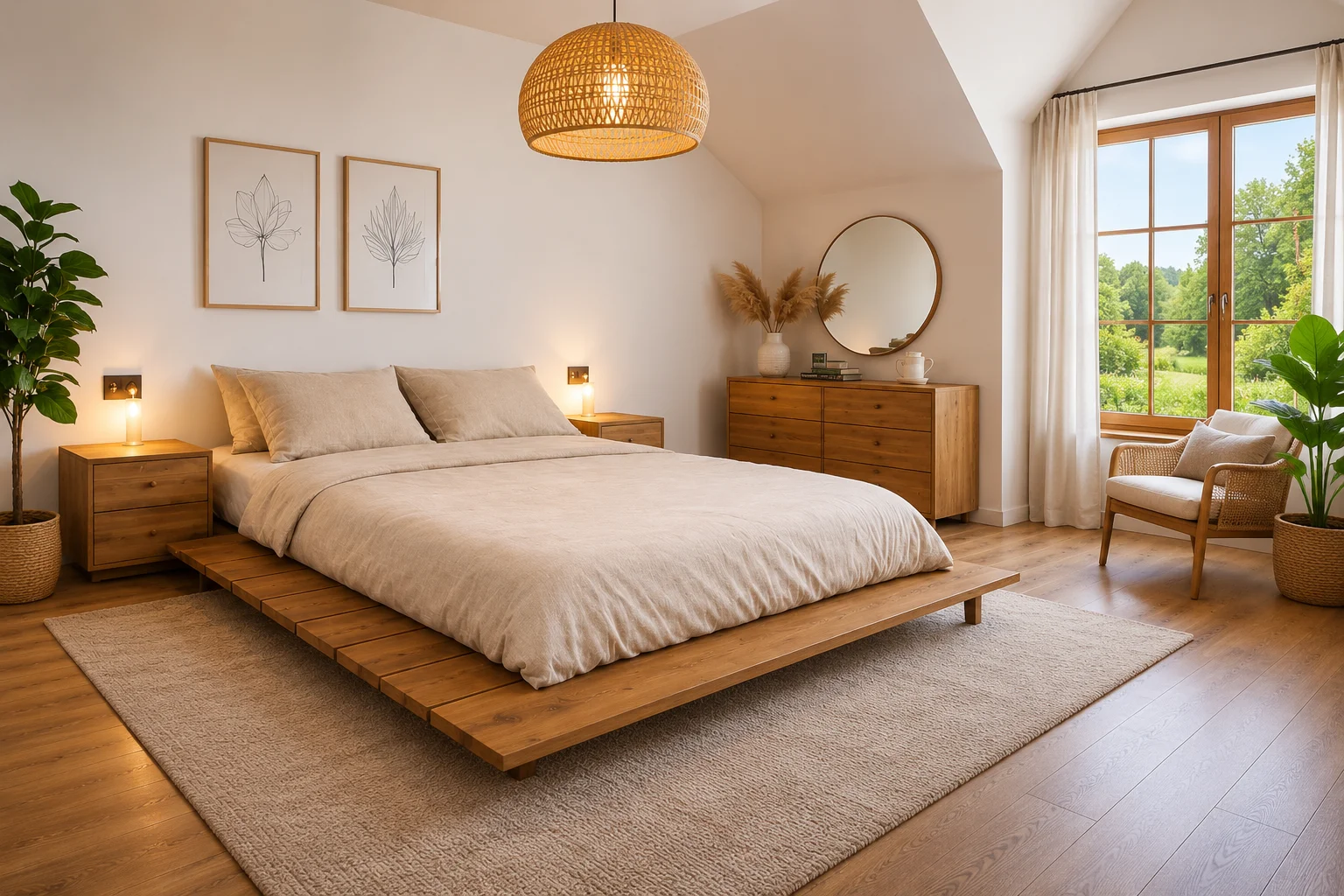
A low-profile platform bed is one of the fastest ways to set a minimalist tone. Its clean silhouette skips the bulky headboards, carved frames, and skirting that tend to visually crowd a room. Because it sits closer to the floor, it also makes ceilings feel taller and rooms feel more open, which is especially useful in smaller bedrooms.
Look for a frame with simple, straight lines in a natural wood tone or a matte finish. Avoid anything with excessive trim or a busy pattern. If you already own a taller bed, you can still get a similar effect by choosing simpler bedding and removing an ornate headboard.
Styling tip: keep the frame visible on at least two sides rather than tucking it behind furniture, so its clean lines can actually be seen.
2. Use a Calm Neutral Color Palette
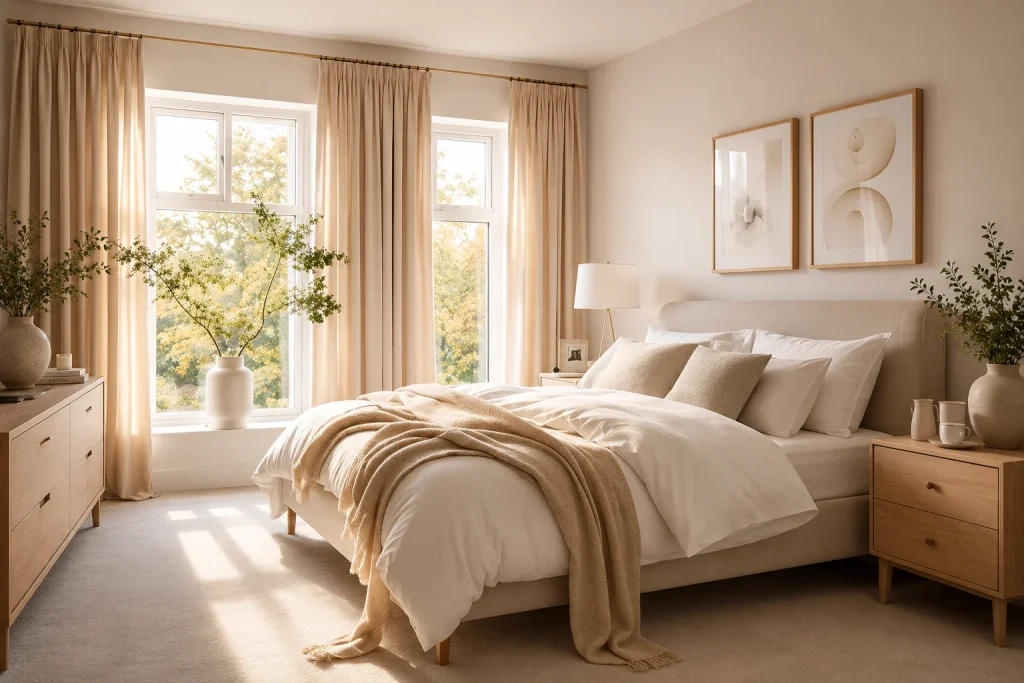
Color sets the emotional tone of a bedroom before anything else does. Warm neutrals — think warm white, cream, sand, or soft taupe — create a sense of quiet without feeling flat or cold. Unlike stark white, these tones have enough depth to feel lived-in and comfortable.
Start with your walls and largest surfaces in one neutral base, then bring in one or two supporting shades through bedding, rugs, or curtains. This keeps the room cohesive instead of visually busy. Avoid pairing more than three main colors, since too many competing tones can undo the calm effect you’re going for.
Styling tip: test paint swatches at different times of day, since natural light changes how warm or cool a neutral color reads.
3. Keep Bedside Tables Visually Clean
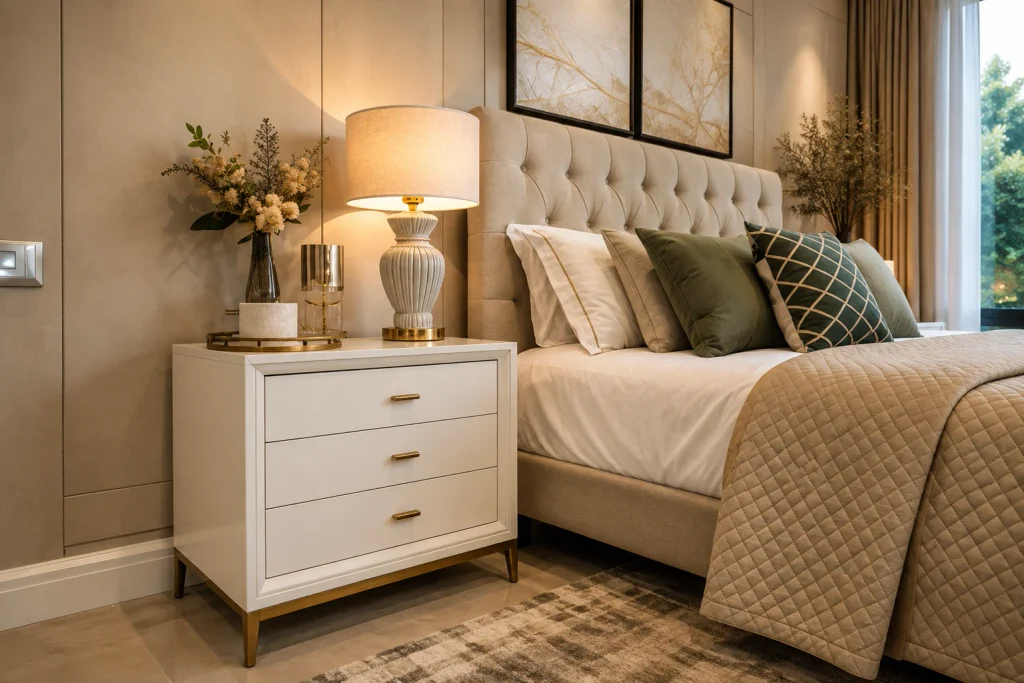
Nightstands are often the first place clutter builds up — chargers, books, tissues, and half-used candles pile up fast. Keeping this surface clear makes the whole room feel calmer, since it’s usually the area closest to eye level when you’re lying in bed.
Choose a nightstand with at least one drawer so daily essentials have a home out of sight. Limit what stays on top to two or three items: a lamp, a small tray, and maybe one book. Everything else — remotes, lotion, jewelry — belongs inside the drawer or in a small organizer.
Styling tip: use a shallow drawer tray to keep small items from sliding around and turning into visual noise every time you open it.
4. Choose Multifunctional Bedroom Furniture
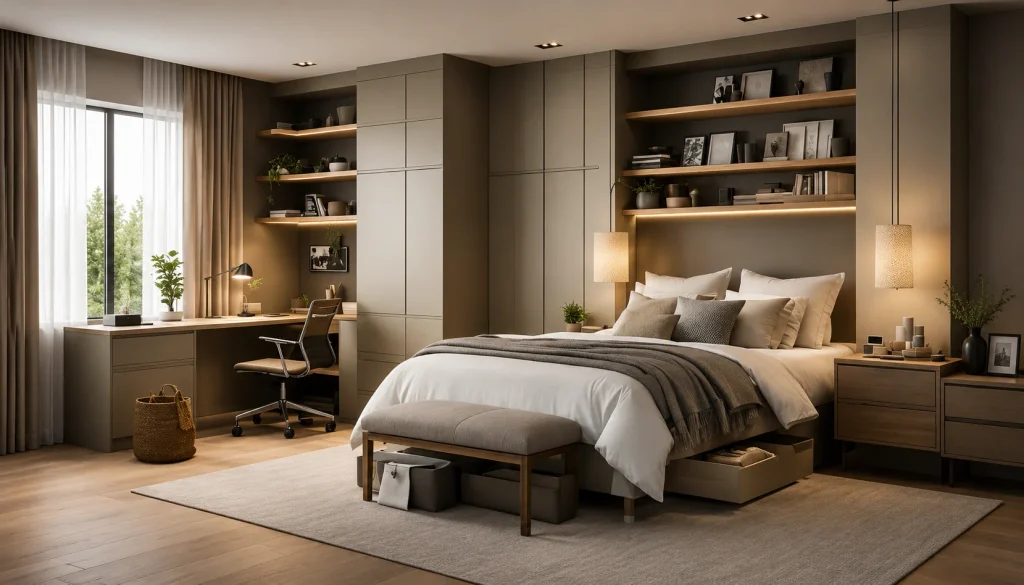
Every piece of furniture in a minimalist bedroom should be doing real work. A bench with hidden storage at the foot of the bed, an ottoman that opens up, or a desk that also serves as a vanity all reduce the total number of items in the room without sacrificing function.
This matters most in smaller bedrooms or apartments, where floor space is limited and every extra piece competes for room to move. Before buying anything new, ask whether it can serve two purposes instead of one.
Styling tip: choose multifunctional pieces in the same tone as your other furniture so they blend in rather than standing out as an obvious storage solution.
5. Use Hidden Storage
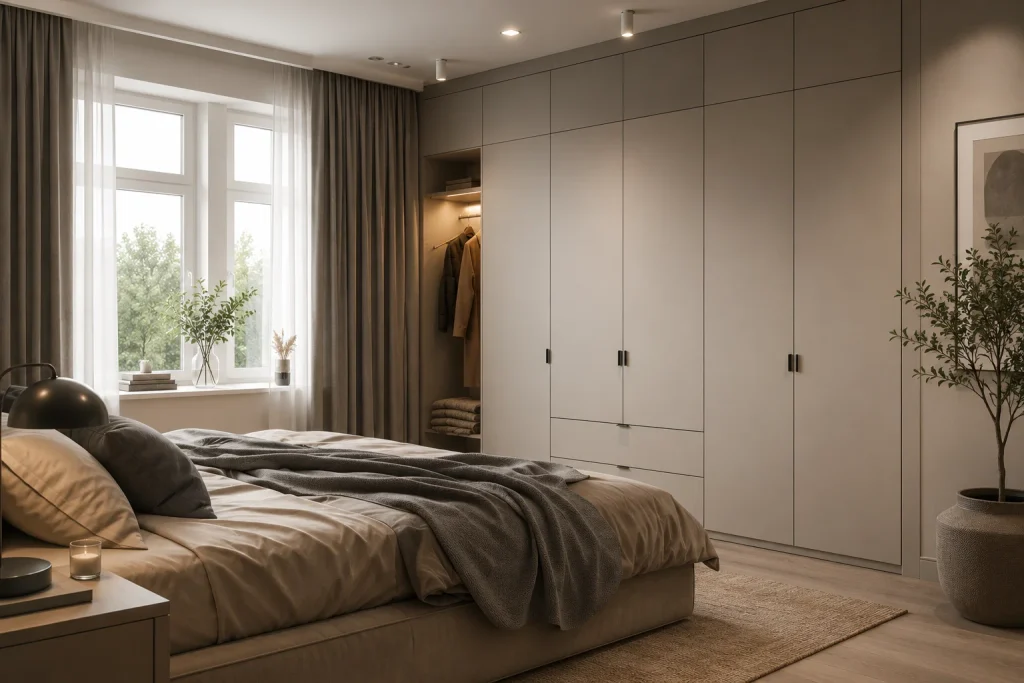
Open shelving looks great in photos, but in daily life it usually collects clutter fast. Closed storage — cabinets, drawers, and boxes with lids — keeps everyday items accessible while keeping the room visually calm. You get the same organization without the visual noise.
Under-bed storage bins, a closed wardrobe, or a dresser with deep drawers can absorb items that would otherwise sit out on surfaces. This is especially useful for things you use often but don’t want on display, like extra linens or off-season clothing.
Styling tip: label bins or drawers on the inside, not the outside, so the storage itself stays visually seamless.
6. Declutter Surfaces Before You Decorate
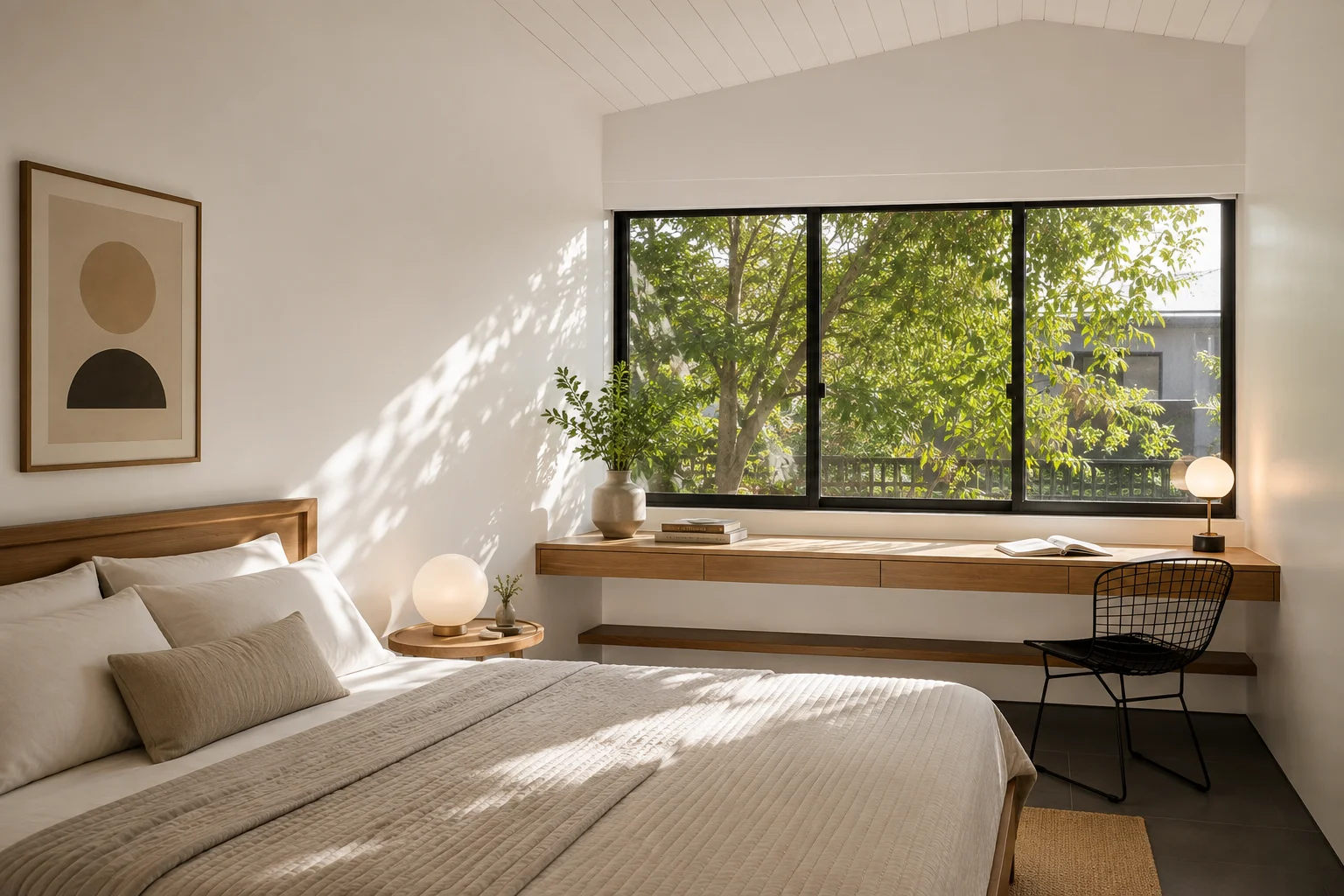
Before adding anything new to a bedroom, clear every surface completely and only add back what you actually use or love. This single step does more for a minimalist look than any purchase. Dressers, windowsills, and desks accumulate small items that quietly add visual weight to a room over time.
Sort what’s left into three categories: keep, store elsewhere, or donate. Be honest about items you haven’t touched in the past few months. A bedroom with three intentional objects on a dresser feels calmer than one with fifteen scattered items, even if the room is otherwise identical.
Styling tip: set a simple rule, like one tray per surface, so clutter has less room to creep back in over time.
7. Add Soft Layered Bedding
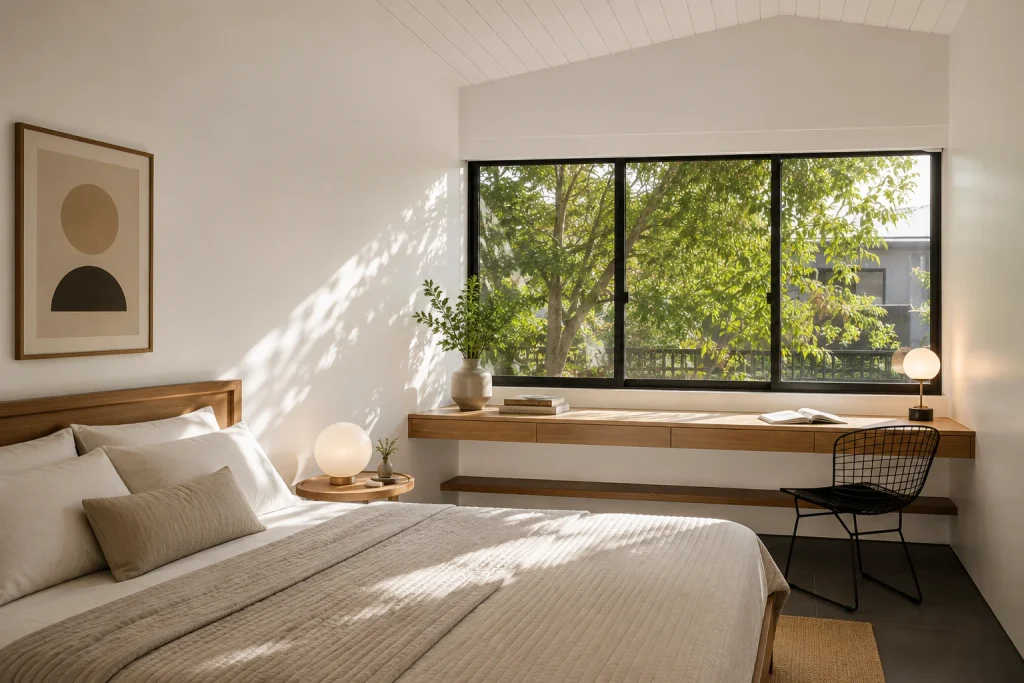
Minimalist doesn’t mean minimal comfort. Layering two or three textures — a linen duvet, a knit throw, and one or two pillows — creates depth and warmth without adding visual clutter. The key is sticking to a tight, coordinated color palette so the layers read as one calm look rather than a mismatched pile.
Natural fabrics like linen and cotton also tend to look better rumpled, which means the bed still looks intentional even when it’s not perfectly made. This makes the room easier to maintain day to day.
Styling tip: fold the throw blanket in thirds at the foot of the bed instead of draping it loosely, for a more polished, considered look.
8. Introduce Natural Wood
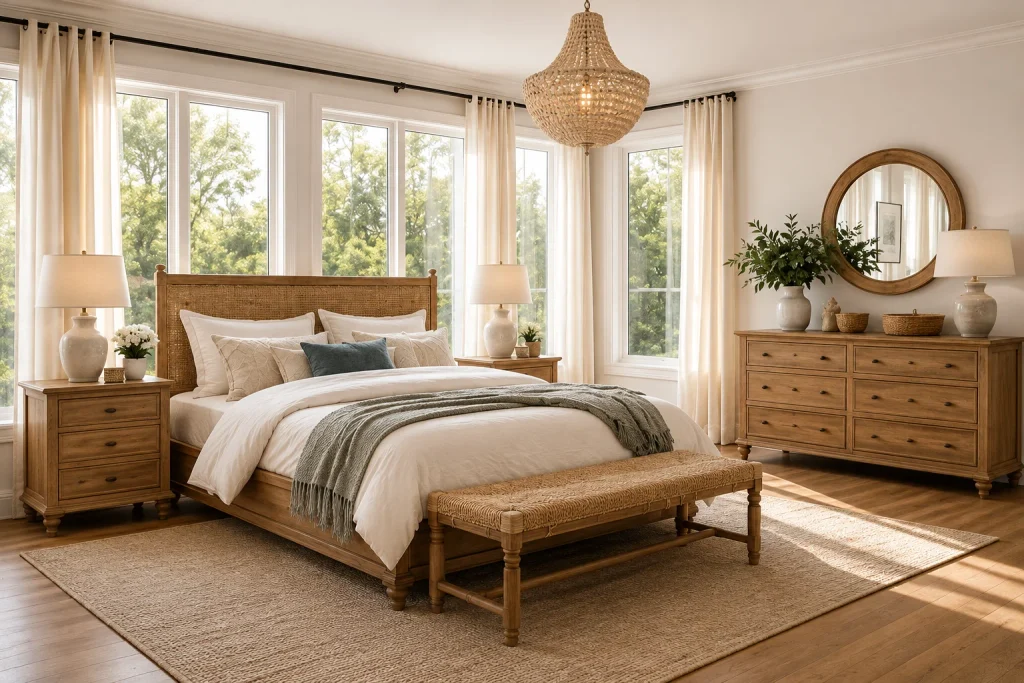
Wood tones are one of the easiest ways to keep a neutral bedroom from feeling flat or cold. A wood bed frame, nightstand, or dresser adds warmth and organic texture that paint and fabric alone can’t provide. Even one or two wood pieces can shift the whole feel of a room.
Mixing wood tones is fine as long as they share similar undertones — pairing a warm oak frame with a cool gray-toned nightstand can feel disjointed. Stick to two wood tones at most in the same room.
Styling tip: bring in a small wood tray or bowl on a dresser if your furniture is mostly painted or upholstered, so the room still gets a touch of natural material.
9. Use Subtle Textures to Add Warmth
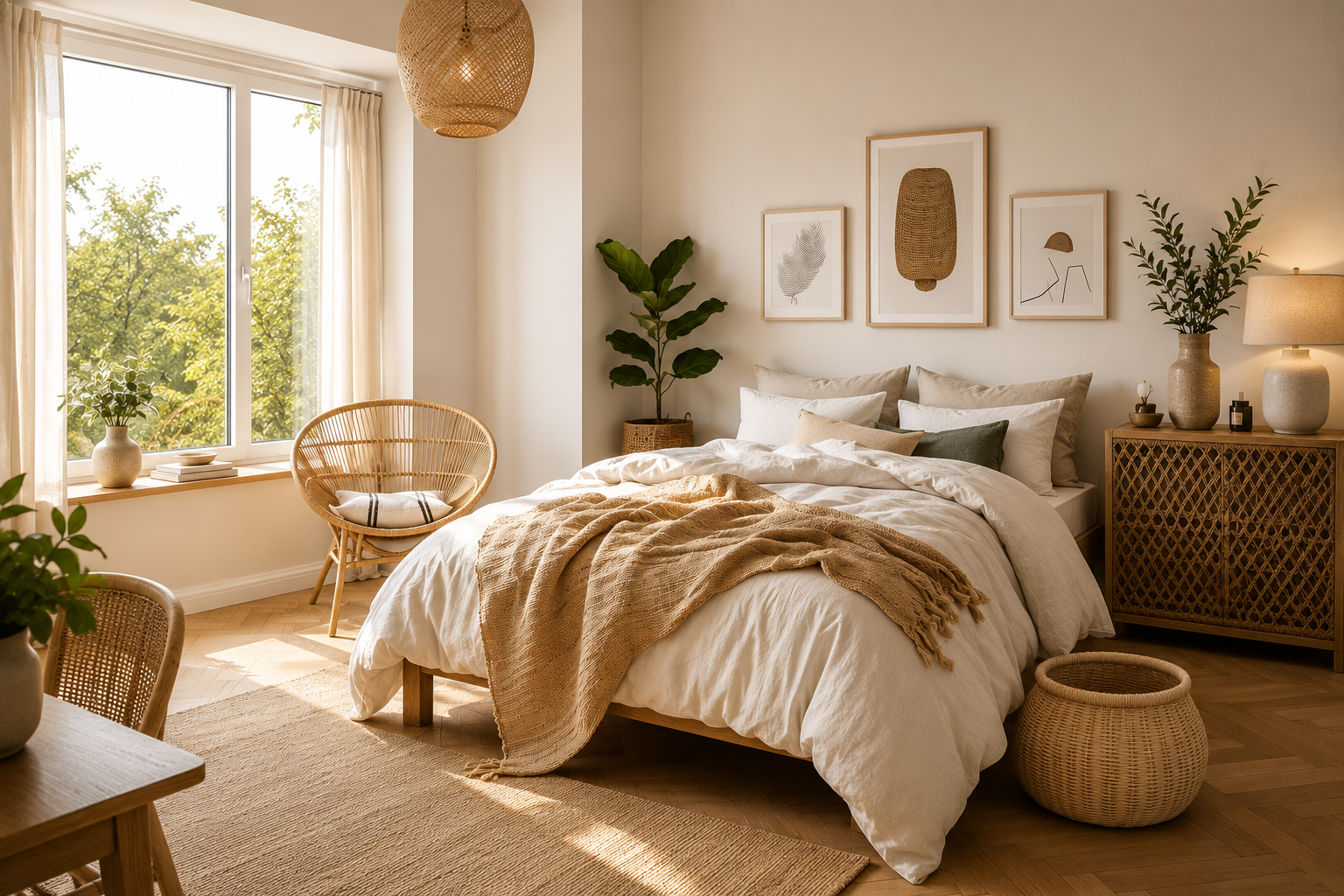
A room built entirely from smooth, flat surfaces can start to feel sterile no matter how nice the color palette is. Subtle texture — a bouclé chair, a woven basket, a slightly nubby throw pillow — gives the eye something interesting to rest on without adding visual clutter or extra color.
The trick is variety without chaos. Combine two or three different textures, like smooth linen sheets, a chunky knit blanket, and a woven jute rug, so the room feels tactile and layered rather than flat.
Styling tip: touch fabric samples in person before buying, since texture often reads differently in photos than it feels in real life.
10. Keep Wall Decor Intentional
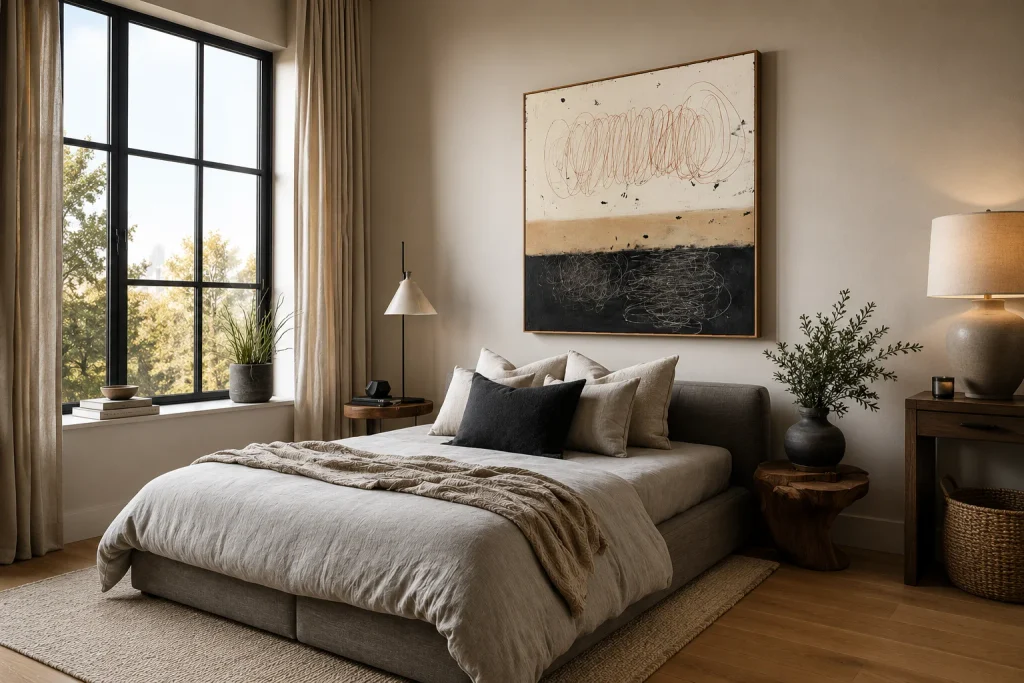
Empty walls can feel unfinished, but overly busy gallery walls work against a minimalist look. The middle ground is choosing a small number of pieces that actually mean something to you — one large piece of art, a mirror, or a simple set of two or three framed prints in matching frames.
Give each piece breathing room. Crowding several small items close together creates visual noise even if each individual piece is simple. Leave generous space around whatever you hang.
Styling tip: hang art at eye level when standing, roughly 57 to 60 inches to the center of the piece, for a more grounded, gallery-like feel.
11. Use Warm Layered Lighting
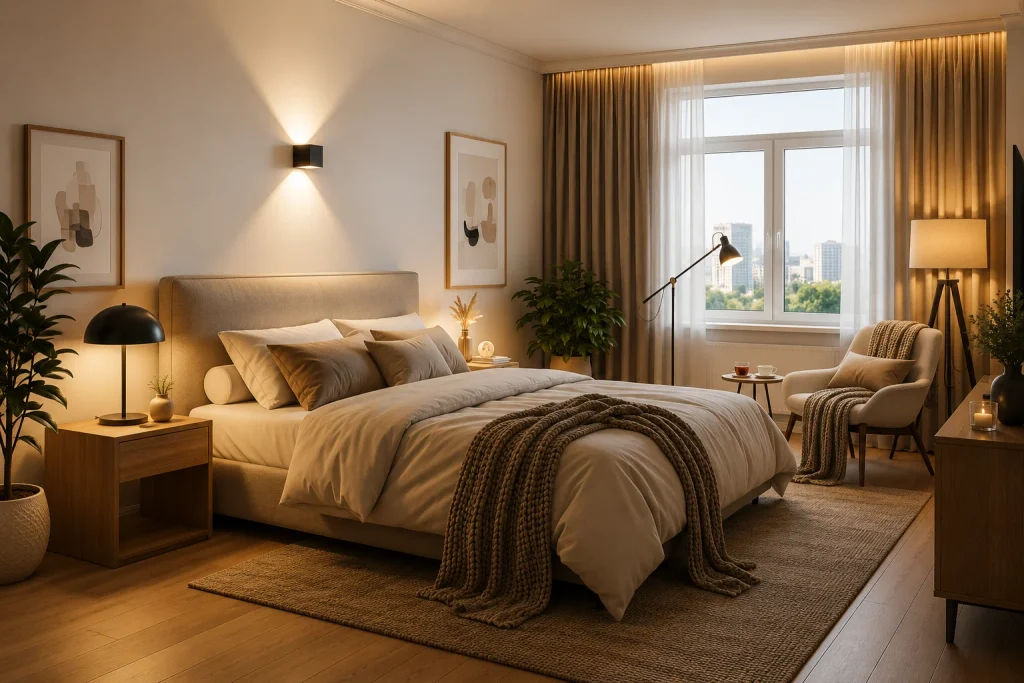
A single overhead light forces a room into one flat mood, which is part of why so many minimalist bedrooms accidentally feel cold. Layering light sources — a bedside lamp, a floor lamp, and maybe a wall sconce — lets you shift the room’s atmosphere depending on the time of day.
Choose warm-toned bulbs, generally in the 2700K to 3000K range, rather than cool white ones, since warmer light reads as cozier and more residential. Dimmable options give you even more control for winding down at night.
Styling tip: turn off the overhead light entirely in the evening and rely only on lamps for a noticeably calmer feel.
12. Maximize Natural Light
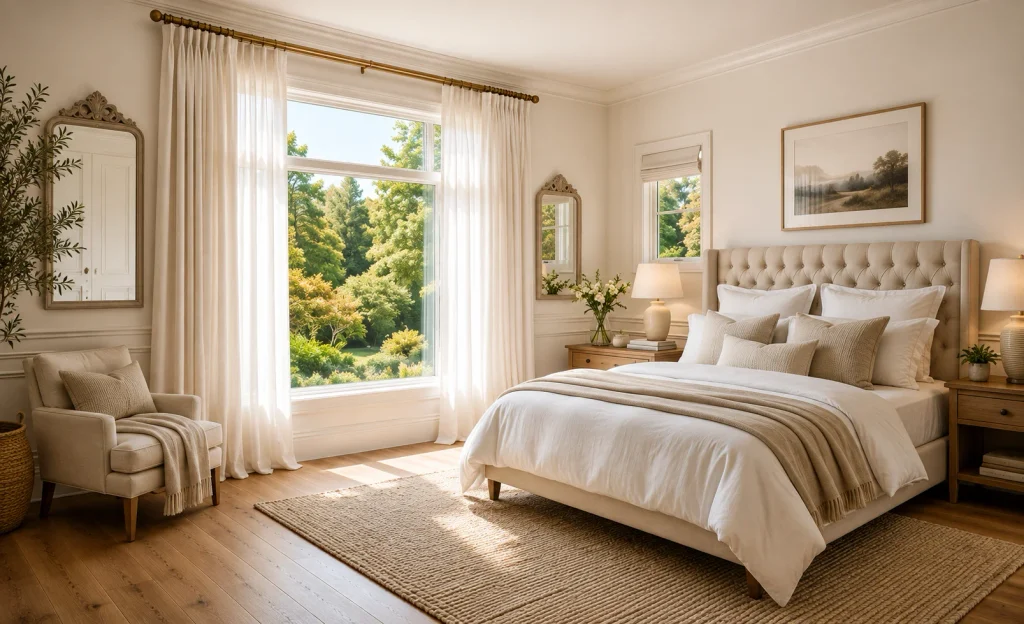
Daylight does more to make a room feel open and calm than almost any decorating choice. Keep windows as unobstructed as possible with sheer or lightweight curtains that let light filter through during the day, and avoid heavy furniture placed directly in front of windows.
If privacy is a concern, layer sheers with a heavier curtain you can draw at night rather than blocking the window permanently. Mirrors placed to reflect window light can also help brighten a room that doesn’t get much direct sun.
Styling tip: keep curtain rods mounted close to the ceiling rather than just above the window frame, which makes the window — and the light it lets in — feel larger.
13. Add One or Two Carefully Chosen Plants
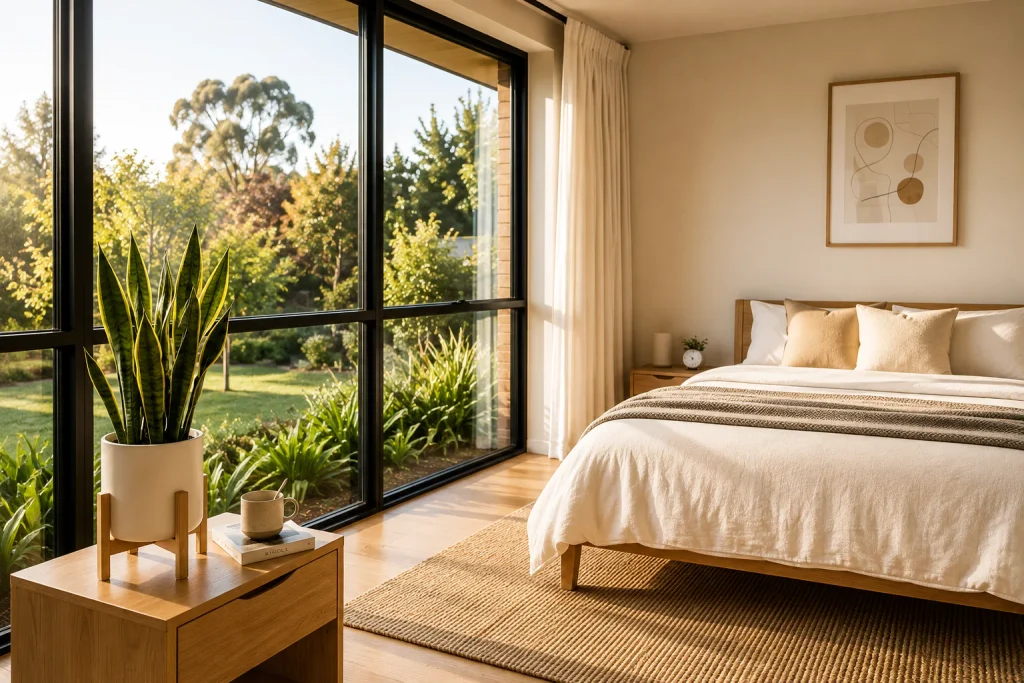
A single well-placed plant brings life and softness into a room that might otherwise feel too rigid. Because minimalist rooms rely on fewer objects overall, each one carries more visual weight, so a plant with simple, structural leaves — like a snake plant or a fiddle leaf fig — tends to work better than something busy or trailing.
One or two plants are usually enough. More than that can start to compete with the calm feeling you’re trying to create, especially in a smaller room.
Styling tip: choose a simple ceramic or woven planter in a neutral tone so the pot doesn’t distract from the plant itself.
14. Create a Simple and Functional Reading Corner
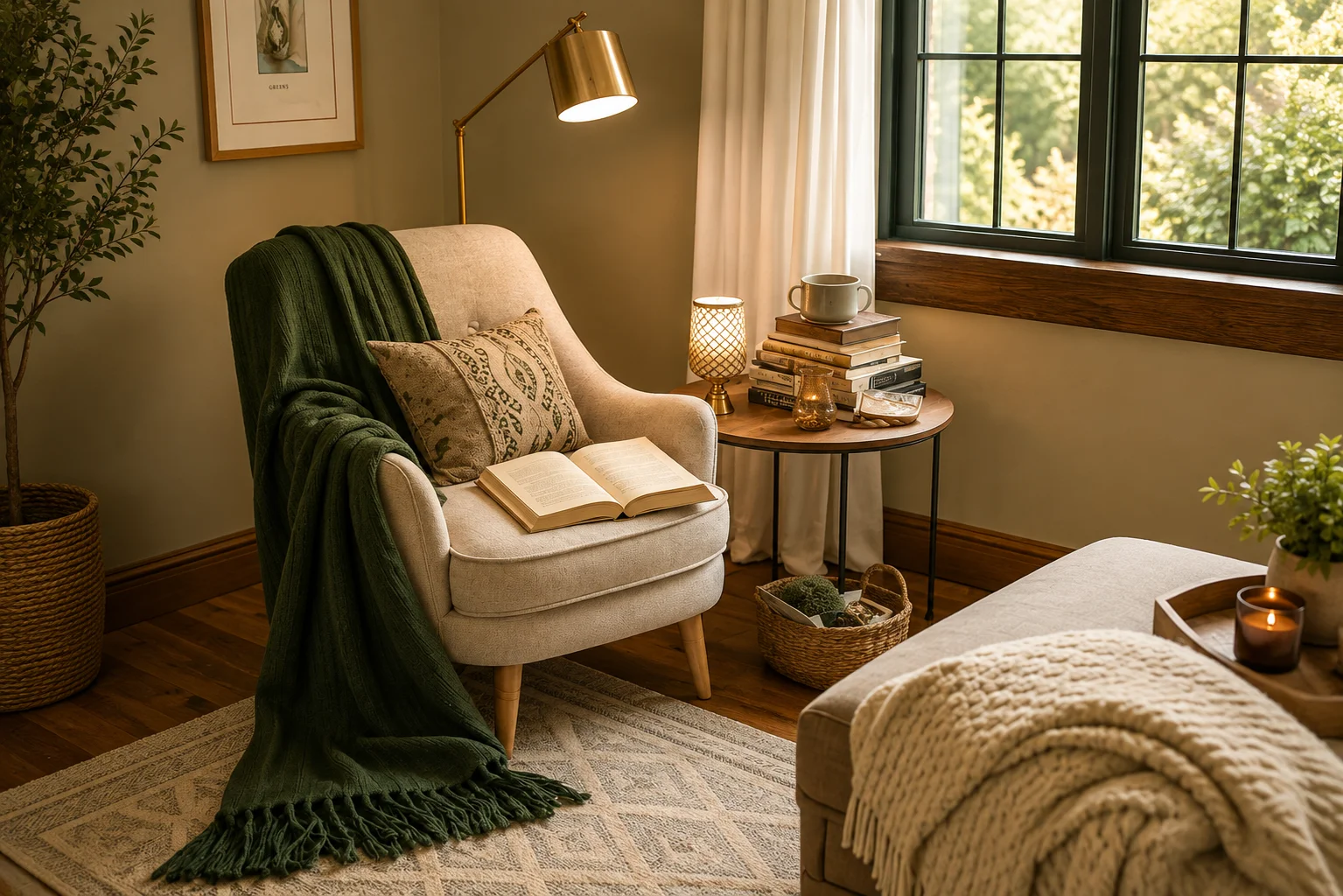
If you have even a small amount of extra floor space, a reading corner adds comfort and personality without cluttering the main room. One comfortable chair, a small side table, and a floor lamp is usually all it takes. Skip anything with a busy pattern or bulky frame.
This kind of corner also gives you a second use for the room beyond sleeping, which can make a small bedroom feel more functional overall. It doesn’t need much space — even a chair tucked near a window works.
Styling tip: add one folded throw blanket over the arm of the chair so the space feels used and inviting rather than staged.
15. Use a Full-Length Mirror Strategically
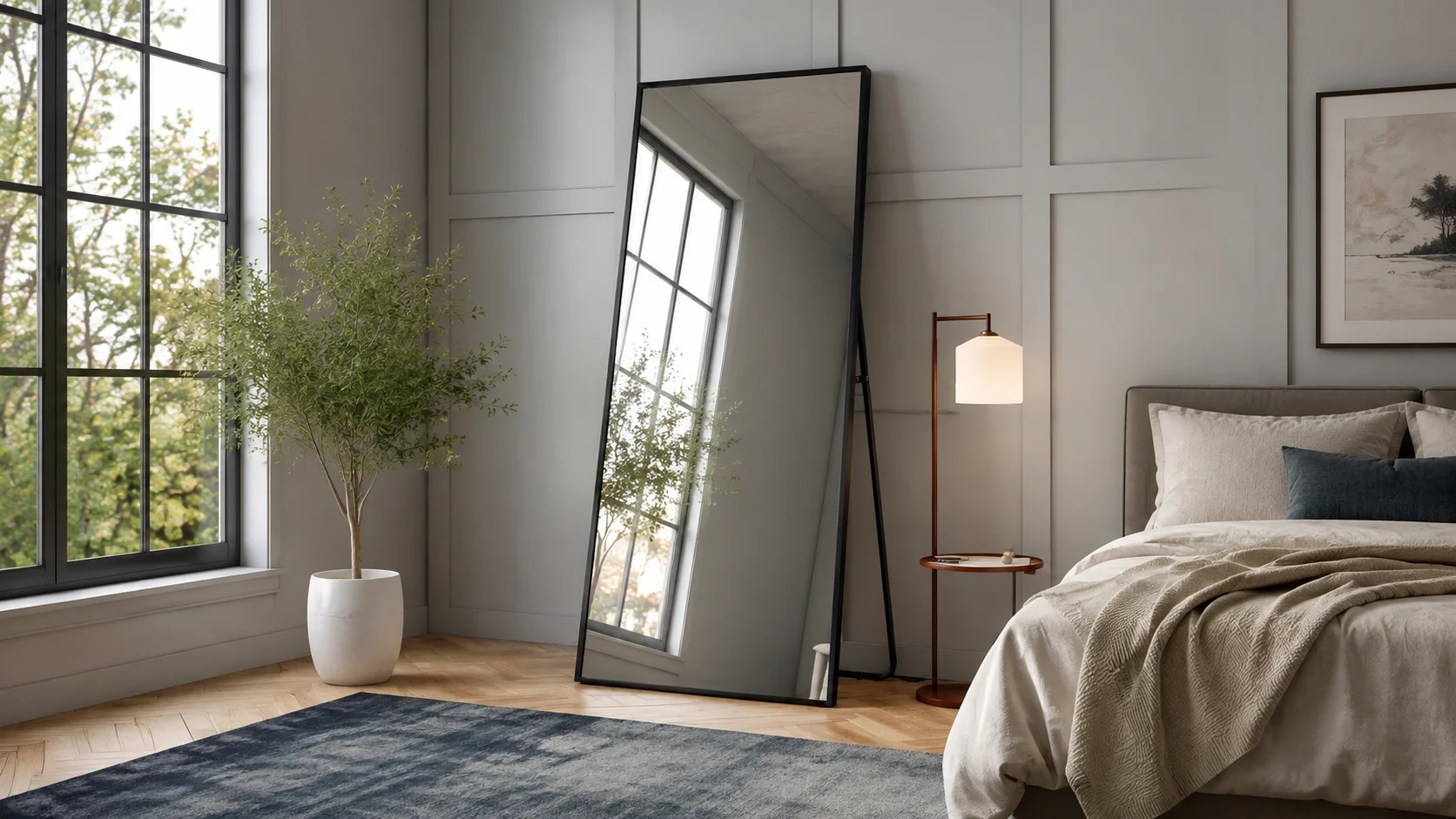
A mirror serves a practical purpose and a design one at the same time. Beyond helping you get dressed, a well-placed mirror reflects light around the room and can make a small or dim bedroom feel noticeably larger and brighter.
Lean a full-length mirror against a wall rather than mounting it, for a more relaxed, less formal look that’s also easy to move if you rearrange furniture later. Position it to reflect a window or a light source for the biggest visual impact.
Styling tip: angle the mirror slightly rather than placing it flush against the wall, which softens its presence and avoids a stark, showroom feel.
16. Choose Cohesive Curtains and Window Treatments
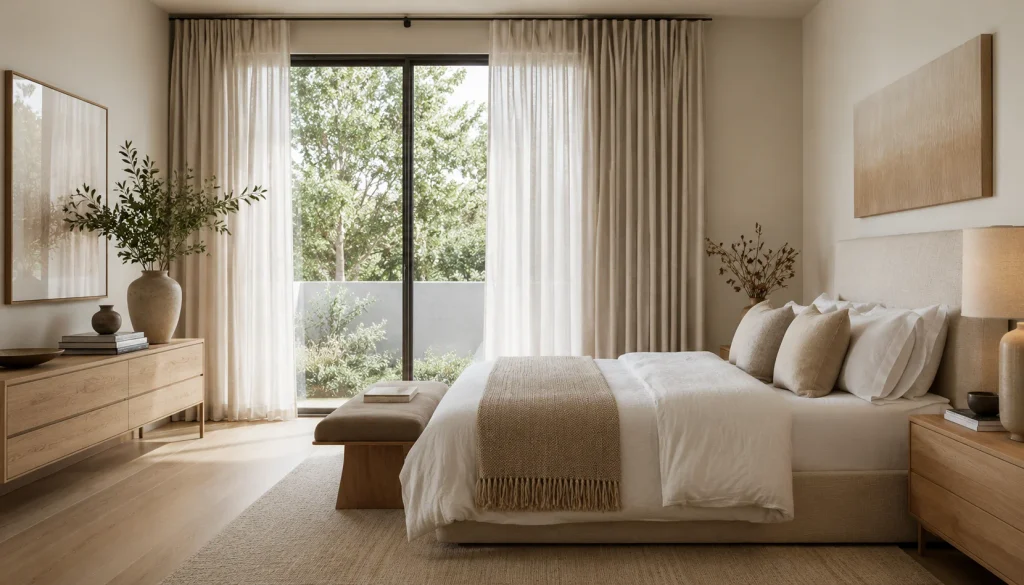
Mismatched or overly patterned curtains can undercut an otherwise calm room fast. Stick to simple, solid-colored curtains in a fabric that complements your bedding and wall color, such as linen or a soft cotton blend. Avoid heavy prints or busy trims.
Full-length curtains that reach the floor generally look more intentional than shorter ones that stop at the windowsill. If your budget is tight, even one well-chosen curtain panel in a neutral tone can visually anchor a window better than mismatched blinds alone.
Styling tip: hang curtains slightly wider than the window frame so they don’t block natural light when open.
17. Add Personal Details Without Creating Clutter
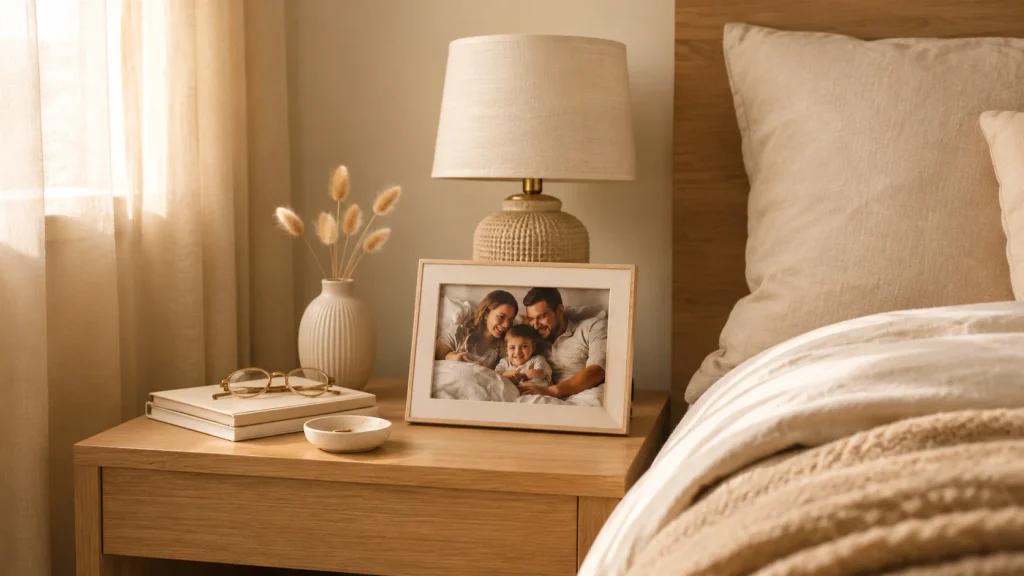
Minimalism doesn’t mean erasing your personality — it means being selective about what you display. A few meaningful objects, like a framed photo, a favorite ceramic piece, or a small stack of books you actually reread, keep the room from feeling generic or impersonal.
The key is restraint rather than elimination. Choose three to five items that genuinely matter to you and give each one enough space to be noticed, rather than scattering a dozen smaller items across every surface.
Styling tip: rotate personal items seasonally so the room feels fresh without requiring you to add more permanent decor.
Best Colors for a Minimalist Bedroom
Warm white, cream, beige, taupe, and greige form the backbone of most minimalist color palettes because they create a soft, calm backdrop without feeling flat. Soft gray, pale sage, and muted blue work well as slightly cooler alternatives if you want a more restful, spa-like feel. Warm brown and soft charcoal can add depth when used thoughtfully.
A simple, reliable formula is a base color, a secondary neutral, a natural wood tone, and one subtle accent. For example: cream walls, a taupe rug, a light oak bed frame, and sage green throw pillows. This keeps the room cohesive while still having enough contrast to feel intentional rather than flat.
Darker colors don’t need to be avoided — they just work better in smaller doses. A charcoal throw blanket, a piece of dark-framed artwork, or deep green curtains can add richness without overwhelming a light, airy room. No single color is universally “the” minimalist choice; what matters is how the palette works together.
How to Add Warmth and Texture to a Minimalist Bedroom
When a color palette is simple, texture becomes the main way a room communicates warmth and comfort. Without it, even a beautifully painted neutral room can start to feel flat or clinical. Texture gives the eye something to notice without adding visual clutter or extra color.
Linen, cotton, wool, and bouclé bring softness through bedding and upholstery, while knitted blankets add a cozy, tactile layer that’s easy to swap seasonally. Natural wood, woven baskets, jute rugs, and rattan accents introduce organic texture that pairs naturally with neutral colors. Ceramic and stone details, like a simple vase or a stone tray, add a grounding, tactile contrast.
A practical way to layer texture: start with linen sheets, add a chunky knit throw at the foot of the bed, place a jute rug underfoot, and finish with one ceramic object on the dresser. Each material is different, but because the color palette stays consistent, the overall look still feels calm and cohesive rather than busy.
Minimalist Bedroom Storage Ideas
Good storage is what makes minimalism livable rather than aspirational. Under-bed storage bins make use of otherwise wasted space, especially for out-of-season items. Built-in wardrobes and closed cabinets keep clothing and daily items out of sight, which does more for a calm-looking room than almost any other single change.
Floating shelves can work well for a small number of curated items, but they require more discipline than closed storage since everything on them stays visible. Storage baskets are useful for soft, less structured items like blankets or workout clothes, while drawer organizers and closet organizers keep smaller items from becoming a jumbled mess every time a drawer opens. A small bedside storage box can hold daily essentials like glasses or lip balm without cluttering the nightstand surface.
Before adding more storage, declutter first. Buying additional bins and baskets for items you don’t actually need just relocates the clutter instead of solving it.
How to Choose Furniture for a Minimalist Bedroom
Every major piece of furniture in a minimalist bedroom should have a clear, specific purpose. Before buying anything, ask what job it’s actually doing — a nightstand should hold what you need within reach at night, a dresser should hold clothing you regularly wear, and so on. If a piece doesn’t have an obvious function, it’s likely to become another surface for clutter.
Look for simple silhouettes with clean lines rather than ornate carving or bulky proportions. Furniture should also be scaled appropriately to the room — an oversized dresser in a small bedroom will make the whole space feel cramped no matter how organized it is. Low-profile beds, slim nightstands, and simple dressers tend to work well across most room sizes.
This doesn’t mean replacing everything you own. Many existing pieces can work in a minimalist bedroom once they’re decluttered and styled more simply — sometimes the furniture was never the problem, just what was piled on top of it.
Minimalist Bedroom Lighting Ideas
Lighting has a bigger impact on how “minimalist” a room feels than most people expect. Natural light should always come first — keep windows as unobstructed as reasonably possible during the day. From there, layered lighting is what keeps the room from feeling flat once the sun goes down.
Wall sconces and pendant lights are useful in smaller rooms where surface space for lamps is limited. Simple bedside lamps with fabric shades soften the light and are easy to dim for nighttime reading. Floor lamps work well in reading corners or larger rooms with extra floor space, and accent lighting, like a small plug-in lamp on a dresser, can highlight a favorite object without needing an overhead fixture.
Warm-toned lighting throughout the room keeps things feeling cozy rather than clinical. The right combination ultimately depends on your room’s layout and existing electrical setup — a room with limited outlets may lean more on ceiling fixtures, while a room with several outlets can use more flexible lamp placement.
How to Style a Minimalist Bed
The bed is the visual anchor of a minimalist bedroom, so it deserves the most thought. Start with simple, neutral sheets in a natural fabric like cotton or linen. Add one or two blankets in complementary tones, such as a lightweight quilt topped with a knitted throw, rather than piling on multiple patterns.
Limit decorative pillows to two or three at most — enough to add texture without turning the bed into a chore to make and unmake every day. Layered textures matter more than a high pillow count for creating a comfortable, inviting look.
A simple bedding formula that works in most rooms: fitted sheet and flat sheet, one duvet or quilt, one folded throw blanket, and two to three pillows in coordinated but not matching tones. This keeps the bed feeling comfortable and finished without excess.
Minimalist Bedroom Wall Decor Ideas
Walls are one of the easiest places to accidentally over-decorate, even in a minimalist room. One oversized piece of artwork often has more visual impact than a cluster of small frames, since it reads as a single, intentional statement rather than a collection of separate objects.
If you prefer a gallery wall, keep it simple: three to five pieces in matching or complementary frames, spaced generously apart. Abstract art, botanical prints, and black-and-white photography all tend to work well in a neutral room because they don’t compete with the color palette. A well-placed mirror can double as wall decor while also reflecting light. Minimal floating shelves with just one or two objects can work too, as long as they’re not allowed to fill up over time.
Fewer, larger pieces almost always read as more considered than many small ones, especially in a room built around calm, uncluttered surfaces.
Minimalist Bedroom Ideas for Small Spaces
Small bedrooms benefit the most from minimalist principles, since every piece of furniture has a bigger impact on how the room feels. Choose appropriately scaled furniture rather than squeezing in full-sized pieces that crowd the walking path. A queen bed in a small room can still work if the rest of the furniture stays minimal and low-profile.
Vertical storage — tall, narrow shelving or a wardrobe that uses height rather than floor space — helps you store more without taking up additional square footage. Floating nightstands and wall-mounted lighting free up floor space entirely, which makes a small room feel more open. Under-bed storage is especially valuable here, since it uses space that would otherwise go to waste.
Mirrors and light colors both help a small room feel larger by bouncing light around. Keep walking paths clear of furniture, and lean on multifunctional pieces, like a bench that also stores linens, to avoid needing extra furniture altogether.
How to Make a Minimalist Bedroom Feel Cozy
The most common mistake in minimalist design is confusing “simple” with “sparse.” A cozy minimalist bedroom still uses soft bedding, layered blankets, and a rug underfoot to soften hard floors and add warmth. Curtains, even simple ones, soften a room’s hard edges in a way that blinds alone usually can’t.
Warm lighting does a lot of heavy lifting here — swapping cool white bulbs for warm-toned ones can change a room’s entire mood without spending much money. Natural materials, a plant or two, and a small number of personal objects round out the feeling of a lived-in, comfortable space rather than a showroom.
Minimalist does not mean cold, and cozy does not mean cluttered. A simple formula to hold onto: soft textures, warm light, one or two personal touches, and nothing left out that you don’t actually use.
Minimalist Bedroom Ideas on a Budget
You don’t need a big budget to create a calm, minimalist bedroom — in most cases, editing what you already own matters more than buying anything new. Start by decluttering completely; this costs nothing and usually has the biggest visual impact of any single step. Rearranging existing furniture can also make a room feel fresh without spending a dollar.
Reusing furniture you already own, rather than replacing it, keeps costs down while still letting you shift the overall look through styling. Secondhand pieces, found through local listings or thrift stores, often have the simple, sturdy lines that suit a minimalist room. DIY artwork, simple bedding swaps, and affordable woven baskets from a home goods store can update a room’s texture and storage without a big investment.
Changing a single light bulb to a warmer tone or removing decor you don’t love both count as real, effective changes. The goal is thoughtful editing, not a shopping list — some of the calmest bedrooms are simply the ones with the least left out.
Minimalist Bedroom Decorating Mistakes to Avoid
A few common mistakes can undercut an otherwise good minimalist bedroom. Making the room too empty leaves it feeling unfinished — add texture and a few personal objects to fix this. Using too many matching items, like an entire bedding-and-curtain set from one collection, can look flat; mix in one or two pieces that don’t perfectly match instead.
Removing all personality makes a room feel impersonal — keep a few meaningful objects on display. Relying on only one texture throughout the room reads as cold; layer in wood, linen, and wool to add depth. Poor lighting, especially a single overhead fixture, makes any room feel harsh; add a lamp or two.
Buying expensive furniture just because it looks minimalist isn’t necessary — simple, well-made pieces at any price point work fine. Ignoring storage leads to clutter creeping back; build in closed storage from the start. Leaving visible clutter, choosing furniture that looks good but isn’t comfortable, using too many small decorative objects, and painting everything stark white are all common missteps — the fix in each case is the same: choose fewer, more intentional pieces, and prioritize comfort alongside simplicity.
A Simple Minimalist Bedroom Styling Formula
If you need a starting point, try this: Functional Furniture + Calm Colors + Layered Textures + Smart Storage + Warm Lighting + Personal Details. Each part plays a different role — furniture handles function, color sets the tone, texture adds warmth, storage keeps things tidy, lighting shapes the mood, and personal details keep it from feeling generic.
This formula isn’t a strict rule, and you don’t need to check every box perfectly. Some rooms will lean more on texture, others more on lighting, depending on what you already have and what the space needs. Use it as a loose framework you can adjust to fit your own bedroom, your budget, and what actually makes you feel at ease when you walk in.
Frequently Asked Questions
1. What makes a bedroom minimalist?
A minimalist bedroom is defined by intentional choices rather than an empty look. That means functional furniture, a simple color palette, hidden or organized storage, and decor that’s chosen deliberately instead of accumulated over time. The goal is a calm, uncluttered space that still feels comfortable and personal.
2. How do I make my bedroom look more minimalist?
Start by decluttering surfaces completely, then only add back what you use or love. Simplify your color palette, add closed storage for everyday items, and limit decorative objects to a small, meaningful group. Small changes, like clearing your nightstand, often make a bigger visual difference than buying new furniture.
3. What colors are best for a minimalist bedroom?
Warm neutrals like cream, taupe, greige, and soft white work well as a base because they feel calm without being flat. Soft gray, pale sage, and muted blue are good alternatives for a cooler feel. Darker tones like charcoal or warm brown can be added through bedding or accents for depth.
4. How can I make a minimalist bedroom cozy?
Layer soft textures like linen, wool, and knit blankets, add a rug, and use warm-toned lighting instead of cool white bulbs. A few personal objects and one or two plants also help. Coziness comes from texture and warmth, not from adding more decorative items.
5. How do I organize a minimalist bedroom?
Declutter first, then group similar items together using closed storage like drawers, bins, and baskets. Under-bed storage and a well-organized closet handle items you don’t need daily. Keep visible surfaces limited to a few intentional objects so the room stays easy to maintain.
6. Can a minimalist bedroom still have personality?
Yes. Minimalism isn’t about removing everything personal — it’s about being selective. Choose three to five meaningful objects, like a favorite photo or a piece of art you love, and give them enough space to stand out instead of blending into clutter.
Create a Peaceful Bedroom With Less
A calm bedroom doesn’t come from owning as little as possible — it comes from being intentional about what stays. The ideas in this guide, from simple furniture and layered lighting to smart storage and soft textures, all point toward the same principle: every object in the room should be there on purpose.
If you’re not sure where to begin, start small. Clear one surface completely, swap in warmer lighting, or add a single layer of texture to your bed. These small, practical changes to your minimalist bedroom ideas add up faster than a full room overhaul, and they still leave plenty of room for comfort and personality. A peaceful bedroom isn’t an empty one — it’s one where everything left in it actually belongs.
SEO Title
17 Minimalist Bedroom Ideas for a Peaceful, Calm Space
Meta Description
Discover 17 practical minimalist bedroom ideas for a calm, cozy space — plus tips on colors, storage, lighting, and budget-friendly styling that still feels like home.
URL Slug
/minimalist-bedroom-ideas/
Primary Keyword
minimalist bedroom ideas
Secondary Keywords
minimalist bedroom decor, minimalist bedroom design, minimalist bedroom decorating ideas, minimalist bedroom inspiration, simple bedroom ideas, peaceful bedroom ideas, cozy minimalist bedroom, minimalist bedroom aesthetic, modern minimalist bedroom, minimalist bedroom furniture, minimalist bedroom colors, minimalist bedroom storage, minimalist bedroom organization, minimalist room ideas, calm bedroom ideas
Search Intent
Readers are searching for practical, inspiring guidance on how to create a calm, uncluttered bedroom, combining informational how-to advice with visual, Pinterest-style inspiration.
Pinterest Pin Titles
- 17 Minimalist Bedroom Ideas for a Truly Peaceful Space
- Cozy Minimalist Bedroom Ideas That Still Feel Warm
- Simple Minimalist Bedroom Makeover Ideas Anyone Can Try
- Calm Neutral Bedroom Ideas for a Restful Space
- Minimalist Bedroom Decor Ideas for Small and Simple Spaces
Pinterest Pin Descriptions
- Looking for minimalist bedroom ideas that still feel warm and comfortable? This guide walks through 17 practical ways to simplify your space with calm colors, natural textures, and smart storage, without making the room feel cold or empty. Perfect inspiration for a peaceful bedroom refresh.
- A cozy minimalist bedroom is all about layering texture and warm lighting, not adding more decor. Discover how to combine linen bedding, natural wood, and soft rugs for a restful space that feels intentional. Includes budget-friendly tips for small bedrooms and rentals alike.
- Ready for a minimalist bedroom makeover without a big budget? This article shares realistic, practical ideas for decluttering, styling your bed, and choosing simple furniture that actually works for your space. Great inspiration for renters, small bedrooms, and first-time minimalist decorators.
- Neutral minimalist bedroom ideas don’t have to feel flat. Learn how to combine warm whites, taupe, and soft wood tones with layered textures for a calm, cohesive look. This guide covers colors, lighting, and storage for a genuinely peaceful bedroom.
- Small bedroom? These minimalist bedroom ideas show how to maximize space with vertical storage, multifunctional furniture, and light colors, without making the room feel empty. Practical, realistic tips for apartments, rentals, and budget-conscious makeovers.
Pinterest Keywords
minimalist bedroom ideas, minimalist bedroom decor, cozy minimalist bedroom, neutral bedroom ideas, small bedroom ideas, peaceful bedroom ideas, minimalist bedroom on a budget, calm bedroom decor, modern minimalist bedroom, bedroom storage ideas, minimalist bedroom furniture, simple bedroom decor, minimalist bedroom makeover, apartment bedroom ideas, bedroom organization ideas
Image / Visual Content Plan
Image Concept: Wide shot of a neutral bedroom with a low platform bed and layered linen bedding Recommended Section: Introduction Suggested Alt Text: Calm minimalist bedroom with a low platform bed and layered neutral bedding
Image Concept: Close-up of a nightstand with a single lamp and one small tray Recommended Section: Idea 3 – Keep Bedside Tables Visually Clean Suggested Alt Text: Clean minimalist nightstand with a simple lamp and small tray
Image Concept: Bedroom with visible wood bed frame and matching wood dresser Recommended Section: Idea 8 – Introduce Natural Wood Suggested Alt Text: Minimalist bedroom with natural wood bed frame and dresser
Image Concept: Layered bedding close-up showing linen sheets, a knit throw, and two pillows Recommended Section: How to Style a Minimalist Bed Suggested Alt Text: Minimalist bedroom bed with layered linen bedding and knit throw
Image Concept: Open closet or wardrobe with folded clothing and labeled storage bins Recommended Section: Minimalist Bedroom Storage Ideas Suggested Alt Text: Organized minimalist bedroom closet with folded clothing and storage bins
Image Concept: Small bedroom with floating nightstands and wall-mounted sconces Recommended Section: Minimalist Bedroom Ideas for Small Spaces Suggested Alt Text: Small minimalist bedroom with floating nightstands and wall sconces
Image Concept: Single oversized abstract art piece above a bed with minimal styling Recommended Section: Minimalist Bedroom Wall Decor Ideas Suggested Alt Text: Minimalist bedroom wall decor with one large abstract art piece
Image Concept: Evening scene showing warm layered lighting from a lamp and floor lamp Recommended Section: Minimalist Bedroom Lighting Ideas Suggested Alt Text: Warm layered lighting in a minimalist bedroom at night
Image Concept: Cozy reading corner with a simple chair, side table, and folded throw Recommended Section: Idea 14 – Create a Simple and Functional Reading Corner Suggested Alt Text: Minimalist bedroom reading corner with a simple chair and throw blanket
Image Concept: Before-and-after style shot of a decluttered dresser surface Recommended Section: Minimalist Bedroom Ideas on a Budget Suggested Alt Text: Decluttered minimalist bedroom dresser with a few intentional objects
Featured Image Concept
Featured Image Concept: A softly lit bedroom with a low wood platform bed, neutral layered bedding, one woven basket, a small plant, and a single piece of wall art, photographed in natural daylight. Pinterest Text Overlay: 17 Minimalist Bedroom Ideas for a Peaceful Space Alt Text: Peaceful minimalist bedroom with neutral bedding, natural wood furniture, and soft lighting
Internal Linking Strategy
Suggested Anchor Text: cozy bedroom ideas Suggested Future Article: Cozy Bedroom Ideas Best Placement: Within the “How to Make a Minimalist Bedroom Feel Cozy” section
Suggested Anchor Text: small bedroom ideas Suggested Future Article: Small Bedroom Ideas Best Placement: Within the “Minimalist Bedroom Ideas for Small Spaces” section
Suggested Anchor Text: neutral bedroom color palettes Suggested Future Article: Neutral Bedroom Ideas Best Placement: Within the “Best Colors for a Minimalist Bedroom” section
Suggested Anchor Text: bedroom storage solutions Suggested Future Article: Bedroom Storage Ideas Best Placement: Within the “Minimalist Bedroom Storage Ideas” section
Suggested Anchor Text: bedroom organization tips Suggested Future Article: Bedroom Organization Ideas Best Placement: Within Idea 6 – Declutter Surfaces Before You Decorate
Suggested Anchor Text: modern bedroom design ideas Suggested Future Article: Modern Bedroom Ideas Best Placement: Within the “How to Choose Furniture for a Minimalist Bedroom” section
Suggested Anchor Text: decorating a small apartment Suggested Future Article: Small Apartment Decor Best Placement: Within the “Minimalist Bedroom Ideas for Small Spaces” section
Suggested Anchor Text: budget-friendly decorating tips Suggested Future Article: Budget Home Decor Ideas Best Placement: Within the “Minimalist Bedroom Ideas on a Budget” section