
21 Studio Apartment Decorating Ideas for Maximum Style
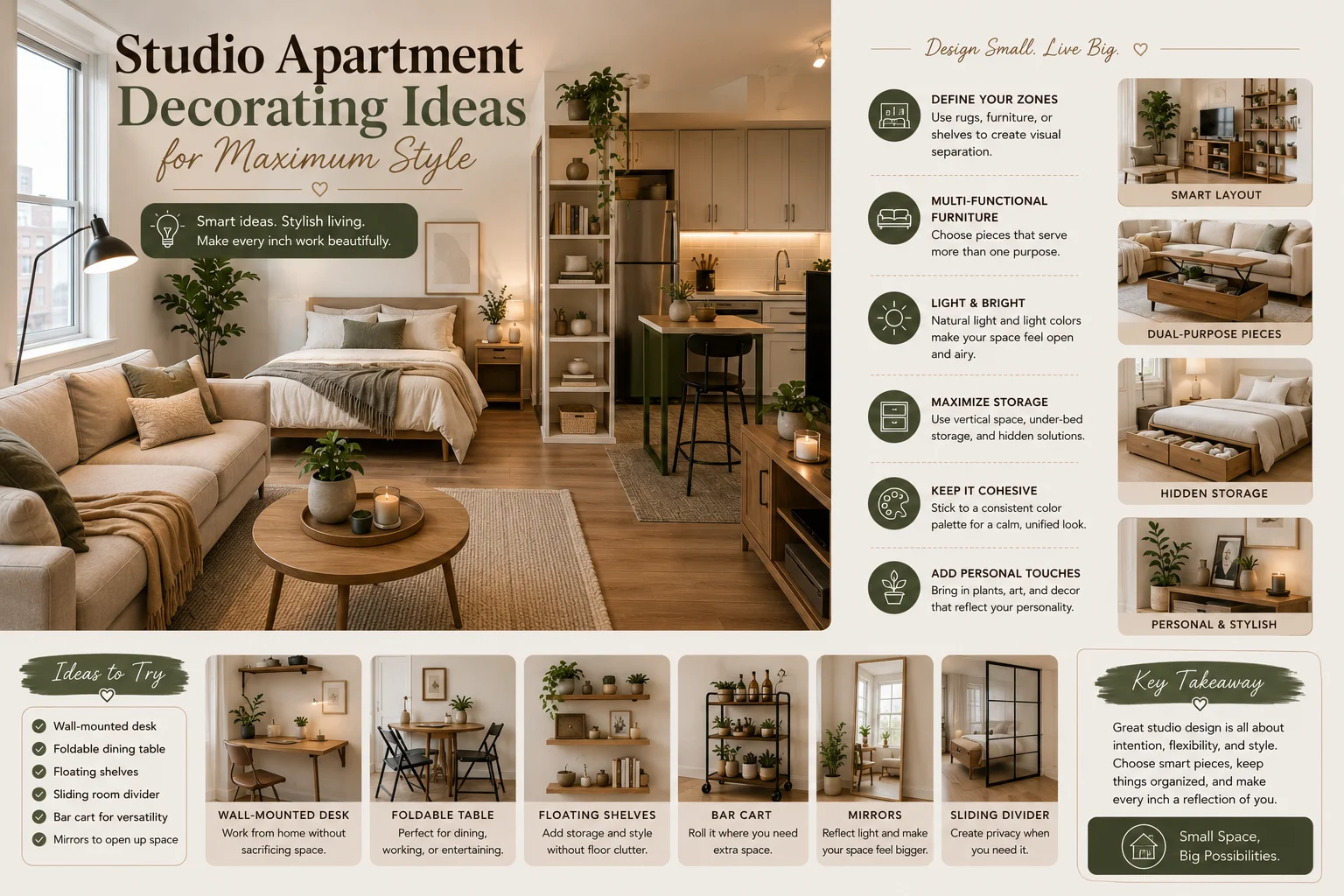
Decorating one open room to work as a bedroom, living room, dining room, and office at the same time is a real challenge. It’s easy to end up with a space that feels crowded, disorganized, or like nothing quite matches. The good news: limited square footage doesn’t mean limited style. With the right studio apartment decorating ideas, you can turn one open floor plan into a home that feels intentional, comfortable, and personal.
The key is layout, not luck. How you arrange furniture, where you place storage, how you use lighting, and how consistent your color choices are all matter more than the number of square feet you’re working with. In this guide, you’ll find 21 practical ideas for zoning your space, choosing furniture that pulls double duty, adding storage without clutter, and giving every corner of your studio a clear job to do.
How Do You Decorate a Studio Apartment?
Start by defining separate zones for sleeping, relaxing, working, and eating, even if there are no walls between them. Choose multifunctional furniture, like a storage ottoman or a sofa bed, so fewer pieces do more work. Use area rugs to visually mark where one zone ends and another begins. Take advantage of vertical space with shelving and wall storage instead of relying only on floor space. Stick to a cohesive color palette so the whole apartment feels connected rather than choppy. Add mirrors to bounce natural light around the room, and layer your lighting with floor lamps, table lamps, and overhead fixtures. The best studio apartment layouts balance personal style with everyday functionality, so plan around how you actually live, not just how a space looks in photos.
21 Studio Apartment Decorating Ideas for Maximum Style
1. Divide the Apartment Into Functional Zones
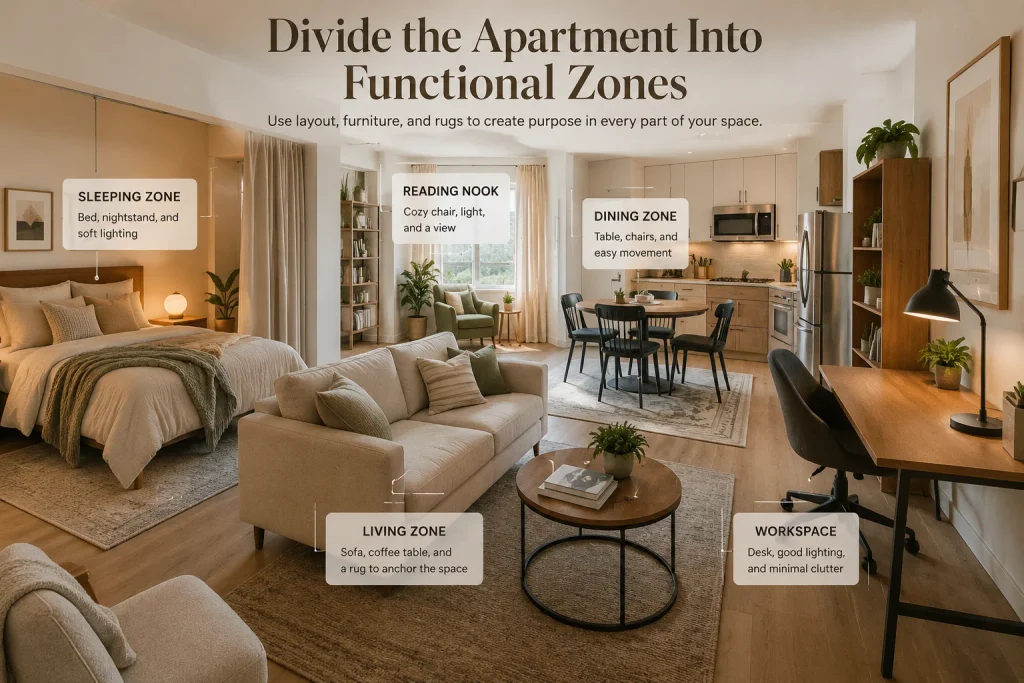
The single most useful studio apartment decorating idea is deciding what each part of the room is for before you decorate it. Without clear zones, furniture and decor tend to drift together into one undefined blob. Zoning works because your brain reads a space as organized when each area has an obvious purpose, even without walls. Start by sketching where you want your bed, seating, dining spot, and workspace, using the room’s natural shape, like an alcove or a long wall, as a guide. For example, a nook by the window can become a reading corner while the opposite wall holds a compact desk. Tip: walk through your daily routine mentally and place zones where they naturally fall in that path, so moving between them feels effortless instead of like you’re navigating an obstacle course.
2. Use Area Rugs to Define Different Spaces
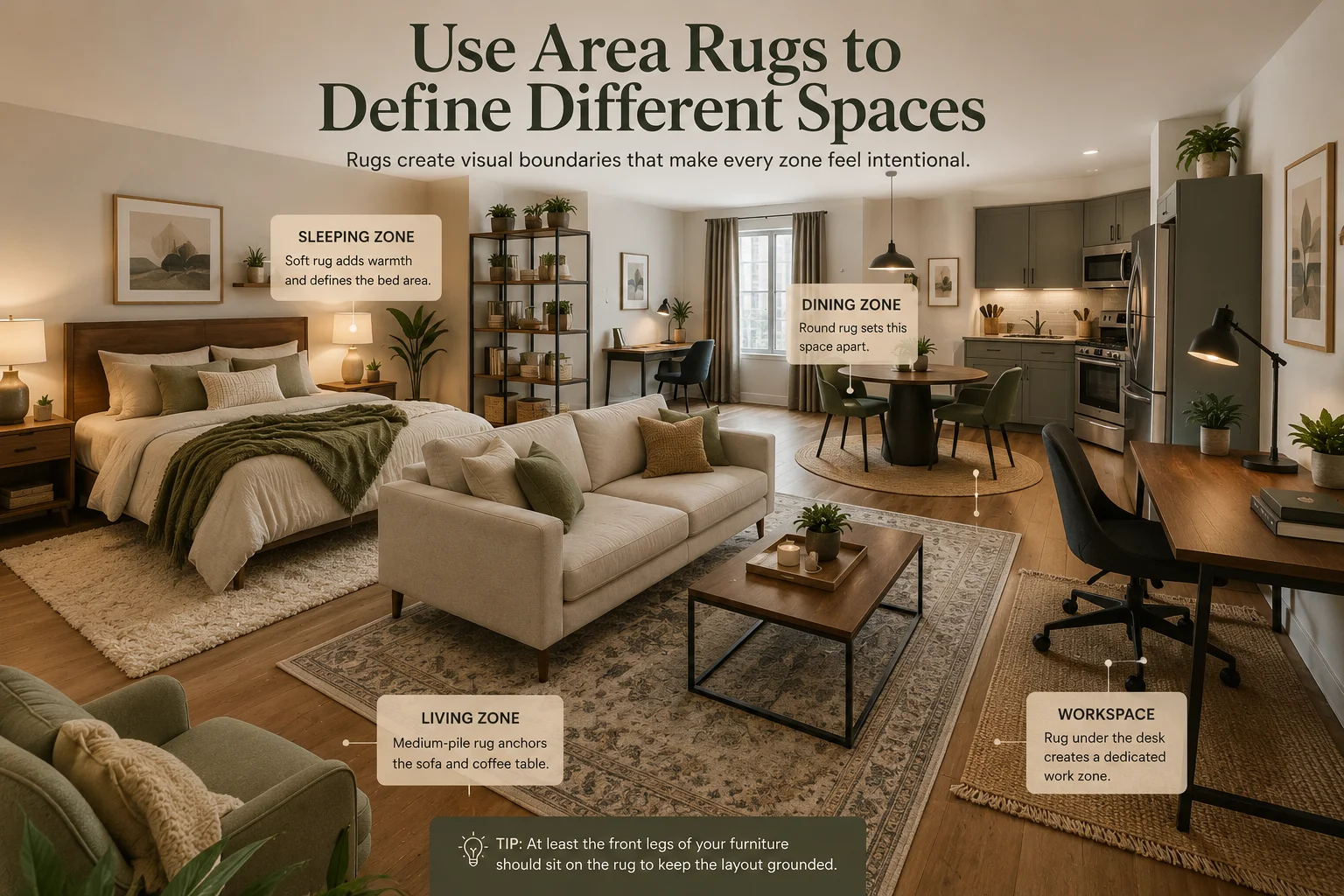
Rugs are one of the fastest ways to separate zones without adding a single piece of furniture. Flooring that runs continuously throughout a studio can make every activity blur into the next, so a rug under your bed or seating area gives that zone a visual boundary. This works because our eyes naturally read a rug’s edge as the start or end of a “room.” Try a medium-pile rug under your sofa and coffee table, and a different texture, like a soft shag, under your bed frame. In a 400-square-foot studio, even two rugs in complementary tones can make the space feel like it has three distinct rooms. Tip: size your rugs so at least the front legs of your furniture sit on them, which keeps the layout looking grounded instead of floating.
3. Choose Multifunctional Furniture
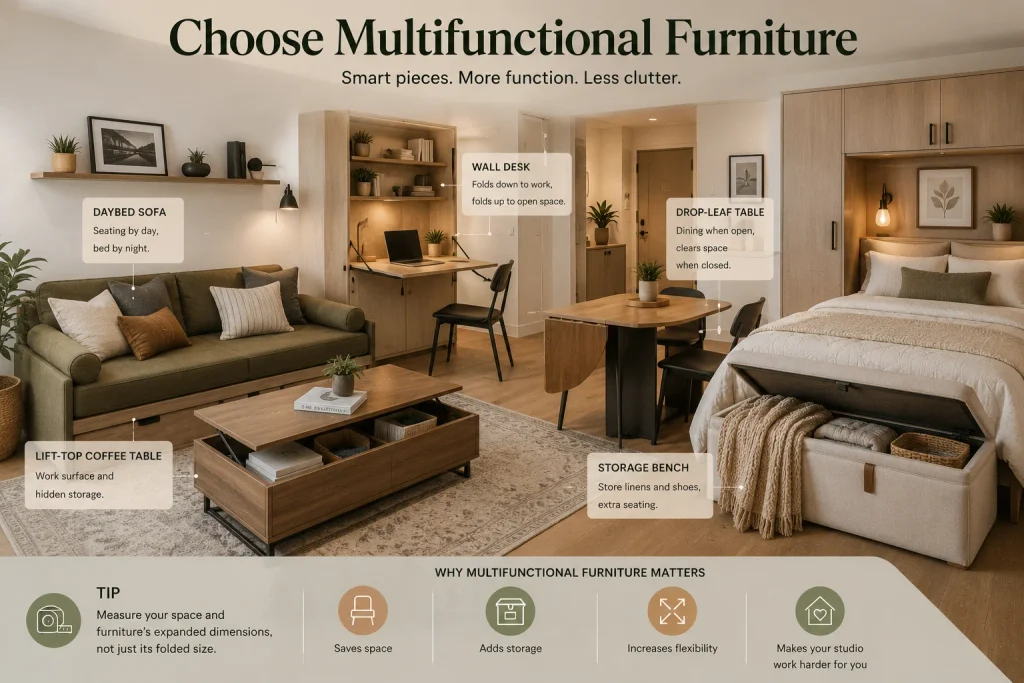
Furniture that serves more than one purpose is essential in a studio because every piece takes up precious floor space. A daybed that works as both seating and a bed, or a dining table that folds down when not in use, lets you fit more function into less area. This matters because a studio filled with single-purpose furniture runs out of room fast. A storage bench at the foot of the bed can hold extra linens while doubling as a spot to put on shoes. Before buying anything, list your actual daily needs, like a place to eat, work, and sleep, and look for pieces that solve two of those needs at once. Tip: measure your space and the furniture’s expanded dimensions, not just its folded size, before committing.
4. Use a Room Divider to Create Privacy
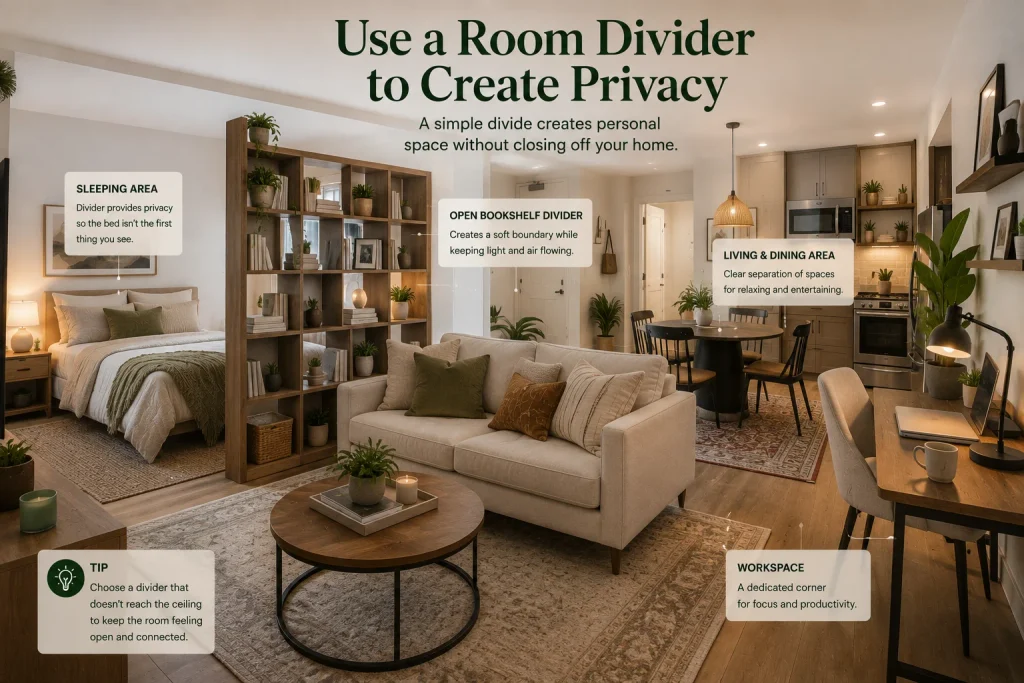
A room divider gives you a visual and sometimes physical break between zones without committing to a full wall. This is especially useful for separating a sleeping area from the main living space so the bed doesn’t dominate the room’s first impression. Freestanding screens, tall bookcases, or slatted wood panels all work well because they can be moved or removed entirely if your needs change. For example, placing an open bookshelf perpendicular to the wall behind your bed creates a soft boundary while still letting light and air pass through. Tip: choose a divider that doesn’t reach the ceiling, since leaving a gap at the top keeps the room feeling connected rather than chopped into two boxes.
5. Create a Dedicated Sleeping Area
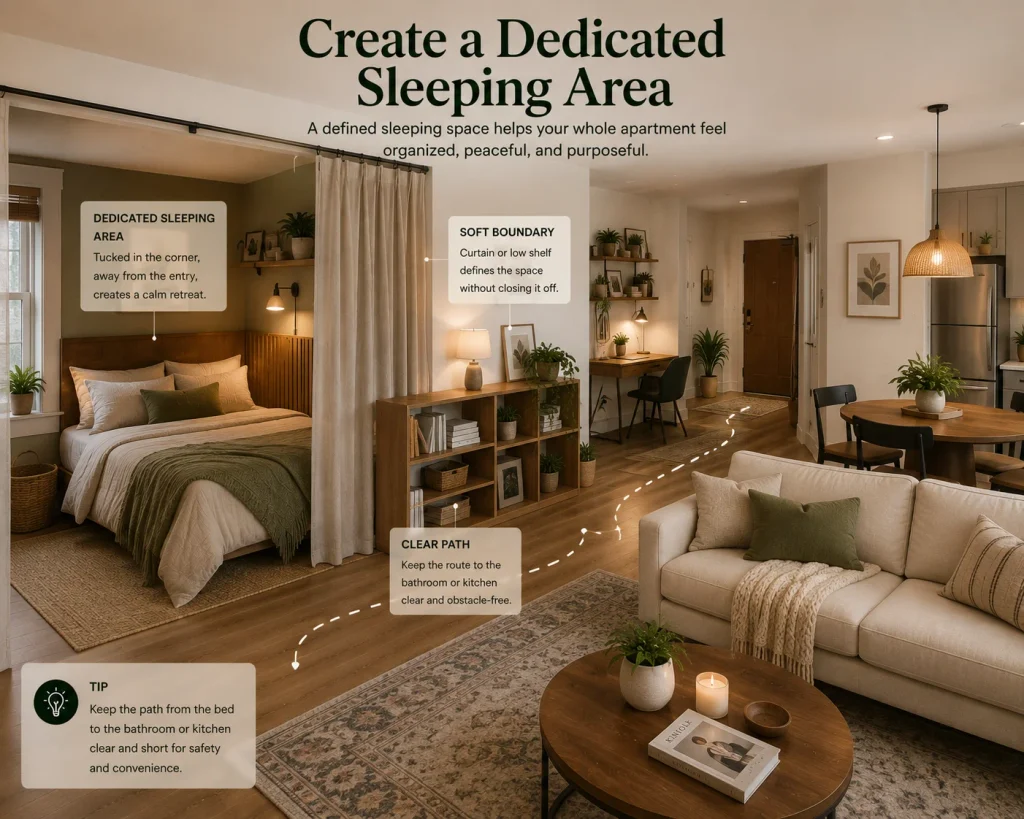
Giving your bed its own defined corner, rather than letting it sit in the middle of everything, makes the whole apartment feel more organized. A dedicated sleeping area works because it signals to your brain that this part of the room has a single, clear purpose: rest. Position the bed against the wall farthest from the entry if possible, and use a headboard, curtain, or low shelf to mark the boundary. For example, tucking a bed into an L-shaped nook next to a window instantly makes it feel like its own little room. Tip: keep the path from the bed to the bathroom or kitchen clear and short, since tripping over furniture at night is both annoying and avoidable with good planning.
6. Use Vertical Storage
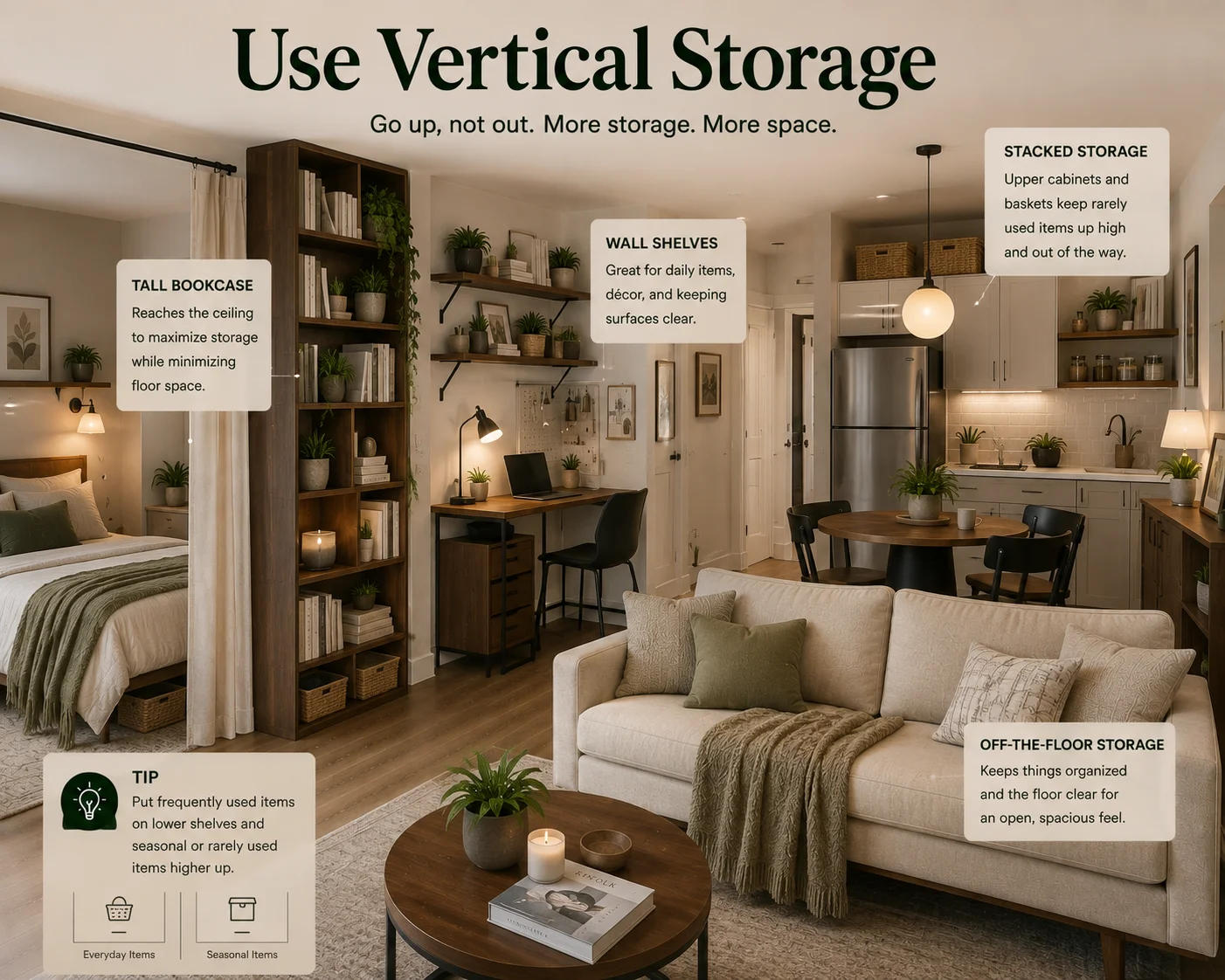
When floor space is limited, the walls become some of the most valuable real estate in a studio. Tall bookcases, wall-mounted cabinets, and stacked shelving let you store far more without shrinking your walking space. This works because it takes advantage of the vertical dimension most studios have plenty of, even when square footage is tight. A narrow bookcase that reaches close to the ceiling can hold books, baskets, and display items while taking up less than two feet of floor space. Tip: put frequently used items on lower shelves and seasonal or rarely used items higher up, so the storage stays practical, not just decorative.
7. Choose Furniture With Visible Legs
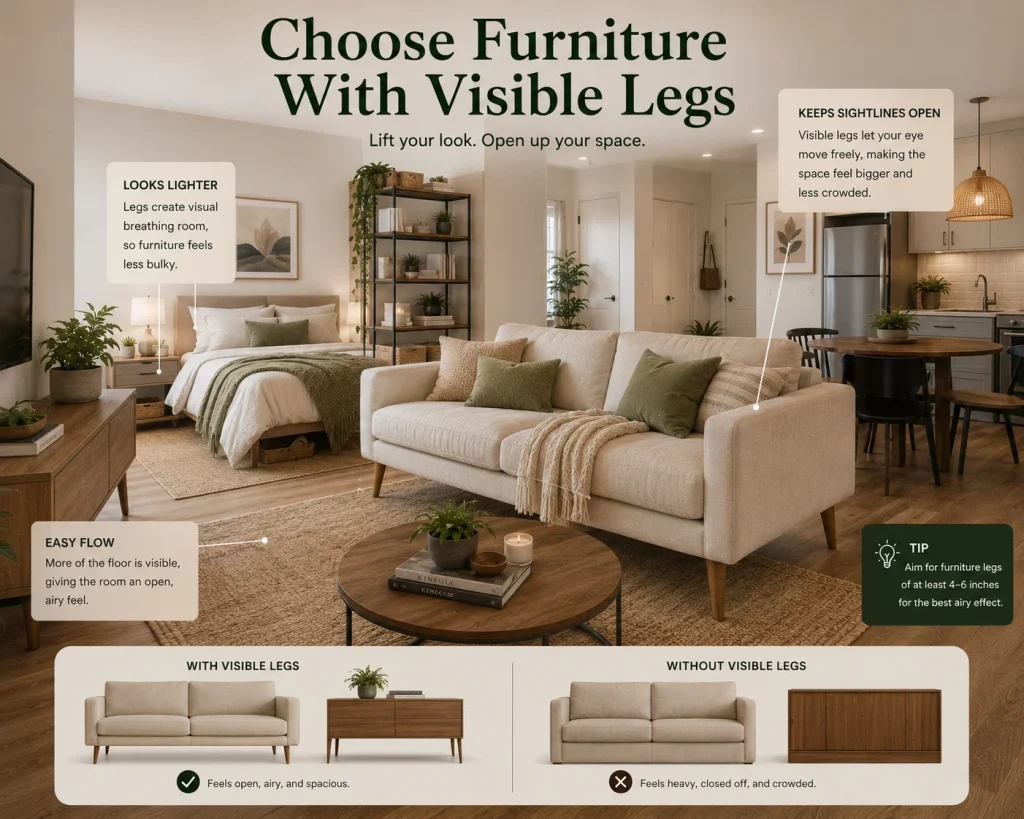
Furniture that sits flush to the floor, like a low platform sofa or a solid-base cabinet, can visually block sightlines and make a studio feel more packed than it is. Pieces with slim, visible legs let your eye travel underneath them, which keeps the floor feeling more open. This is a simple design trick used often in small-space styling. A sofa on tapered wood legs, for example, reads as lighter in a room than the same sofa with a skirted base. Tip: aim for furniture legs of at least four to six inches, since anything shorter starts to lose the airy effect you’re going for.
8. Add Mirrors to Reflect Light
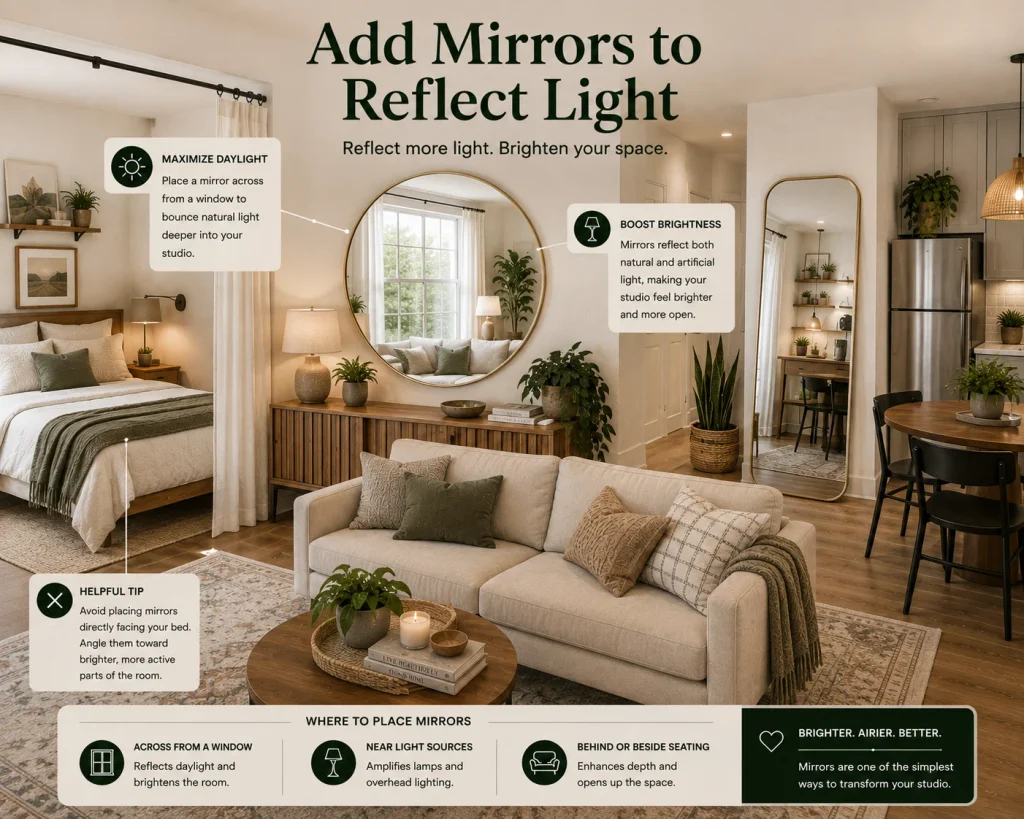
Mirrors don’t make a room bigger, but they do reflect both natural and artificial light around a space, which can make it feel brighter and more open. This is especially helpful in a studio where you may only have one or two windows serving the entire apartment. Hang a large mirror across from a window so it bounces daylight deeper into the room, or lean an oversized floor mirror against a wall near your seating area. Tip: avoid placing a mirror directly facing your bed if you find that visually distracting at night, and instead angle it toward a brighter, more active part of the room.
9. Keep the Color Palette Cohesive
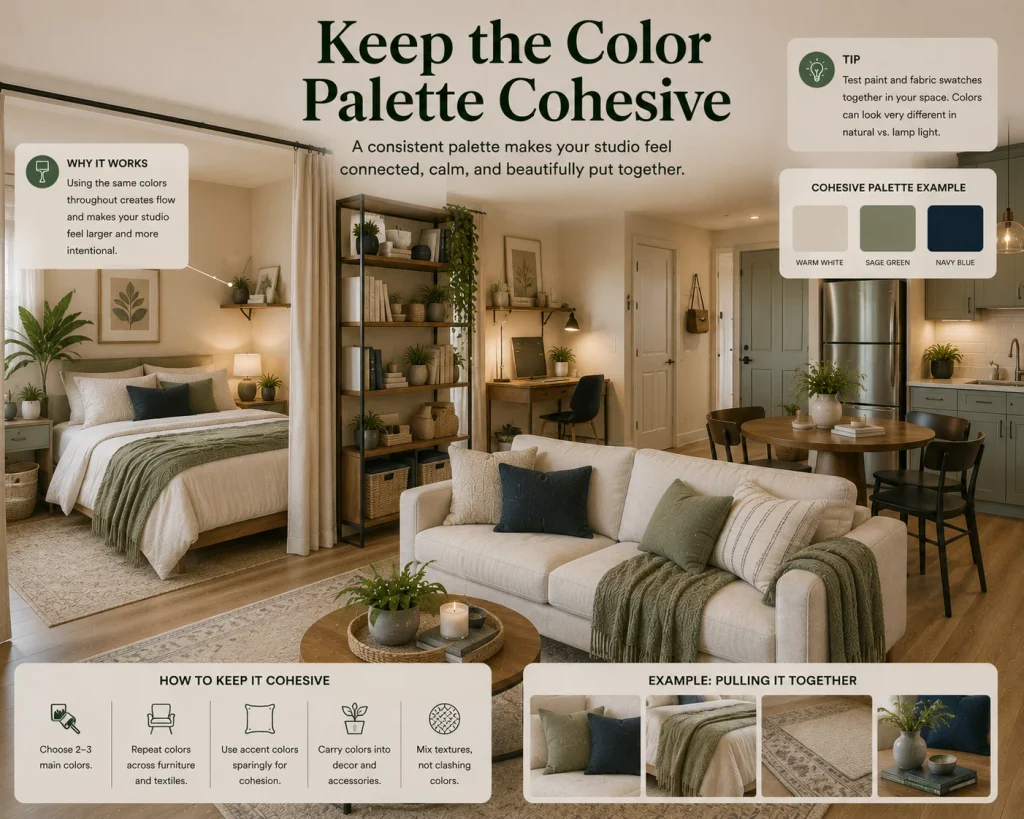
Sticking to a consistent color palette throughout your studio helps the whole space read as one connected room instead of several mismatched sections. This matters more in a studio than in a multi-room home because there are no doors to separate a bold choice in one room from a different one next door. Choose two or three main colors, like warm white, soft gray, and a muted sage, and repeat them across your bedding, rugs, and furniture. For example, a navy accent pillow on your sofa can echo a navy throw blanket on your bed, tying the zones together visually. Tip: test paint and fabric swatches together in the room’s actual lighting before committing, since colors shift depending on natural versus lamp light.
10. Use Curtains to Create Soft Separation
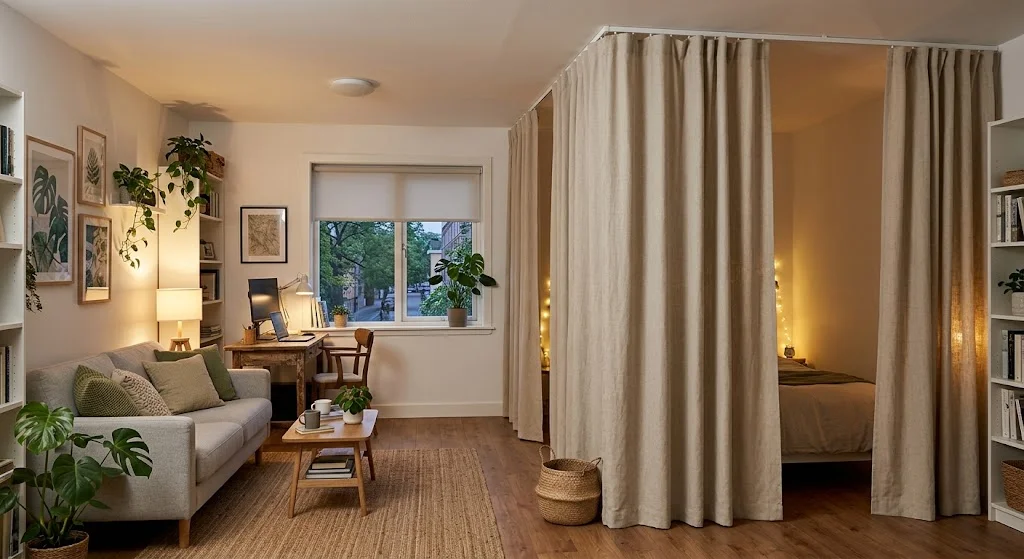
Curtains offer a flexible, rental-friendly way to separate a sleeping nook or closet area from the rest of the room. Unlike a solid divider, curtains can be pulled open during the day to keep the space feeling connected, then closed at night for privacy. This works well for renters since curtain rods can usually be mounted without major wall damage. A ceiling-mounted track curtain around a bed, for instance, creates an enclosed feel without any construction. Tip: choose a curtain fabric heavy enough to block some light and sound, since a sheer panel looks pretty but won’t do much for actual privacy.
11. Create a Compact Dining Area
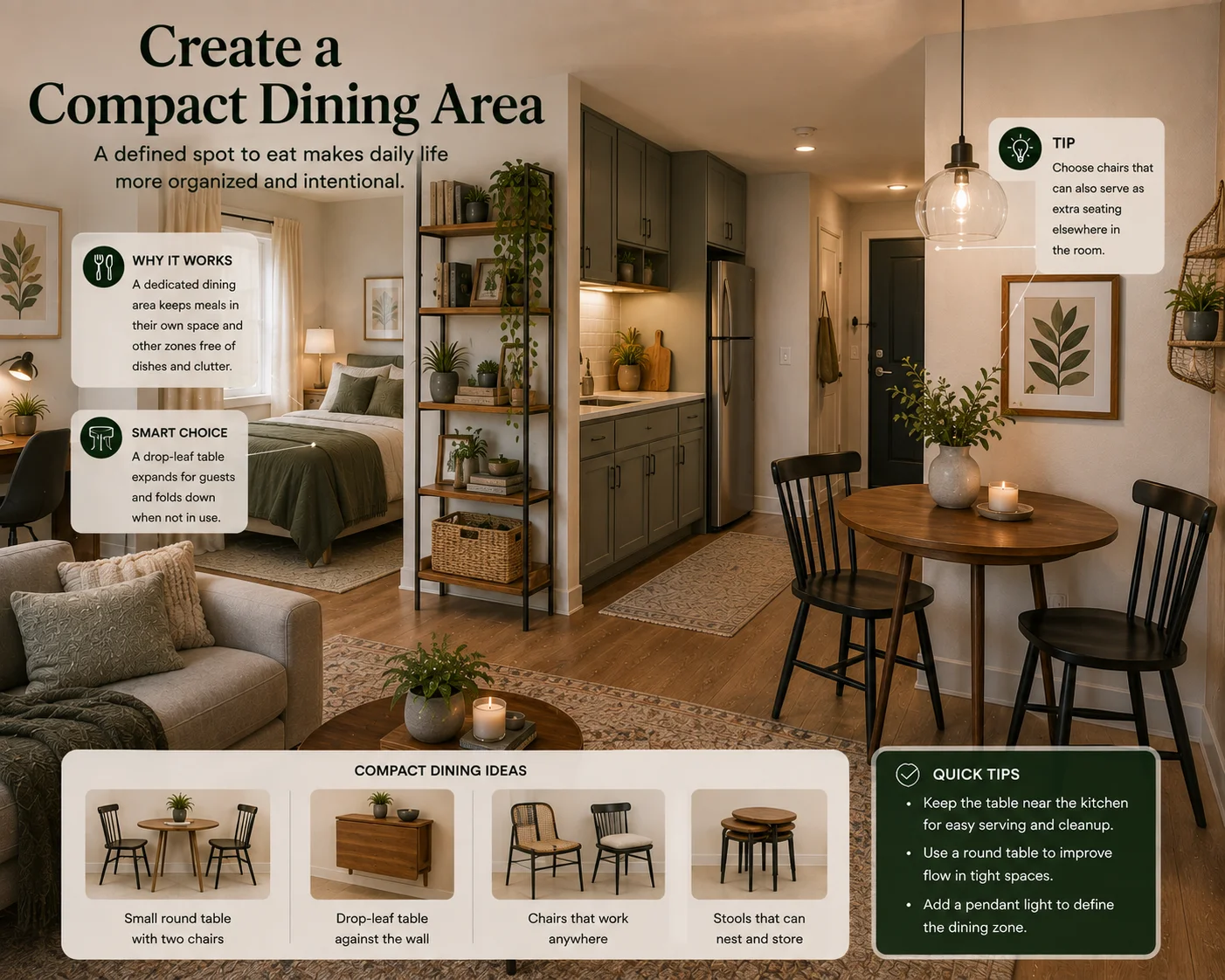
Even in a small studio, having a defined spot to eat makes daily life feel more organized than eating on the couch every night. A dining area doesn’t need to be large: a small round table with two chairs tucked near the kitchen can be enough. This works because it gives meals their own place, which helps keep other zones, like your bed or desk, free of dishes and clutter. A drop-leaf table against the wall is a smart choice since it can expand for guests and fold down the rest of the time. Tip: choose chairs that can also serve as extra seating elsewhere in the room, so the dining area doesn’t feel wasted when you’re not eating.
12. Design a Functional Work-From-Home Corner
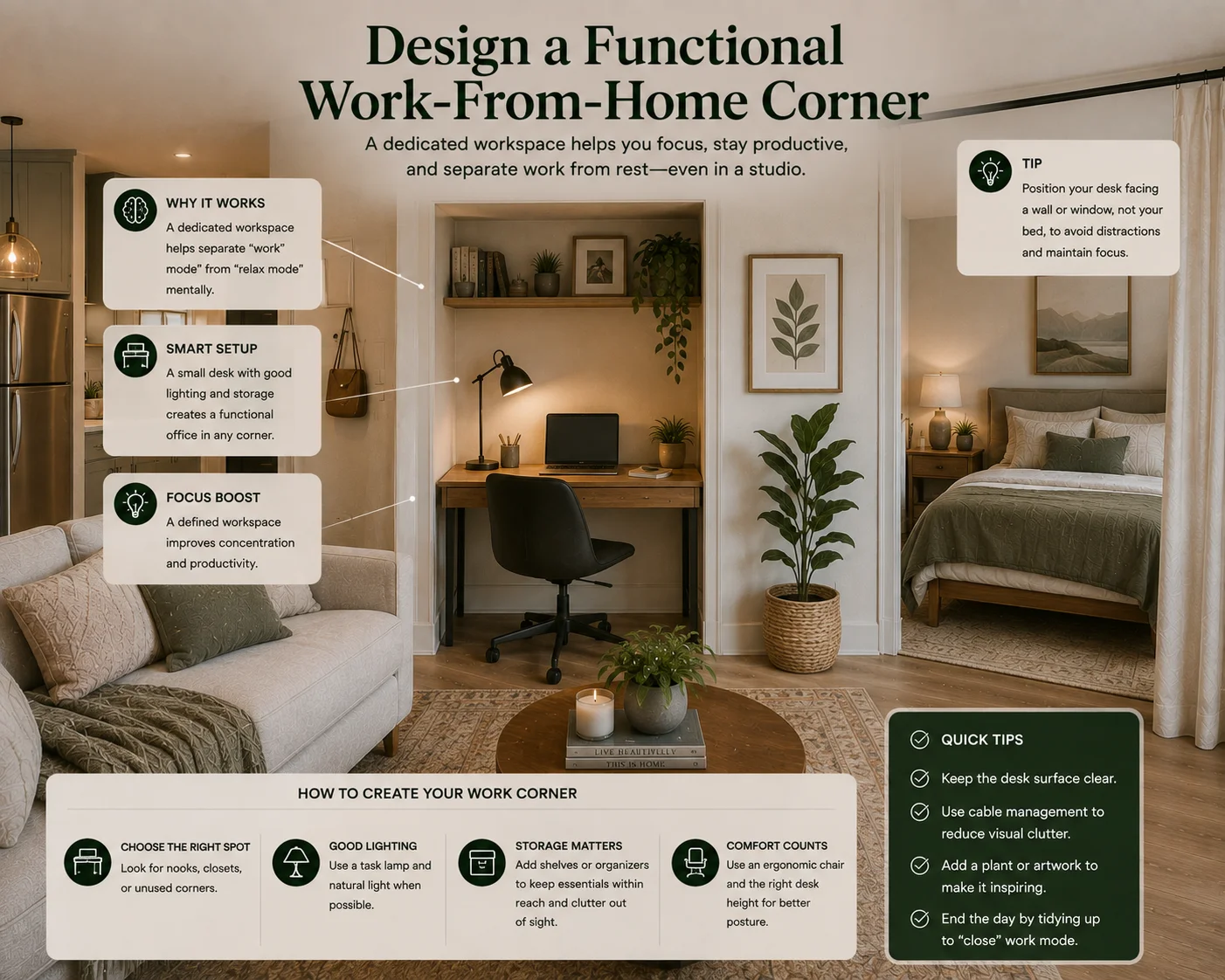
With remote work now common, many studio dwellers need a real workspace, not just a laptop balanced on a lap. A dedicated corner with a small desk and proper lighting helps separate “work mode” from “relax mode” mentally, even in one open room. This matters because working from your bed or couch can blur the line between rest and productivity. A narrow desk tucked into a closet or alcove, paired with a task lamp, can function as a legitimate office. Tip: position the desk facing a wall or window rather than your bed, so you’re not staring at your sleeping area during work hours.
13. Use Under-Bed Storage
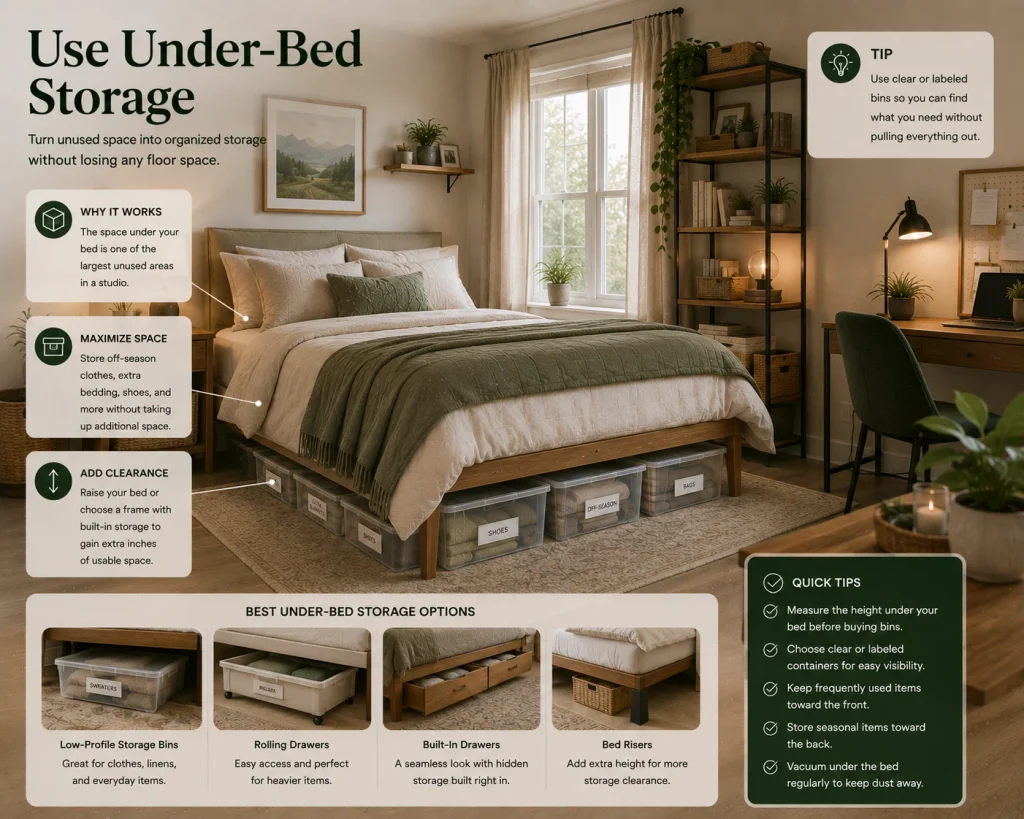
The space beneath your bed is often the single largest unused storage area in a studio apartment. Storage bins, rolling drawers, or a bed frame with built-in drawers can hold off-season clothing, extra bedding, or shoes without taking up any additional floor space. This works because it uses a dimension of the room, height under the bed, that would otherwise sit empty. A bed raised on risers, for example, can gain several extra inches of usable storage clearance. Tip: use clear or labeled bins so you can find what you need without pulling everything out from under the bed.
14. Add Floating Shelves
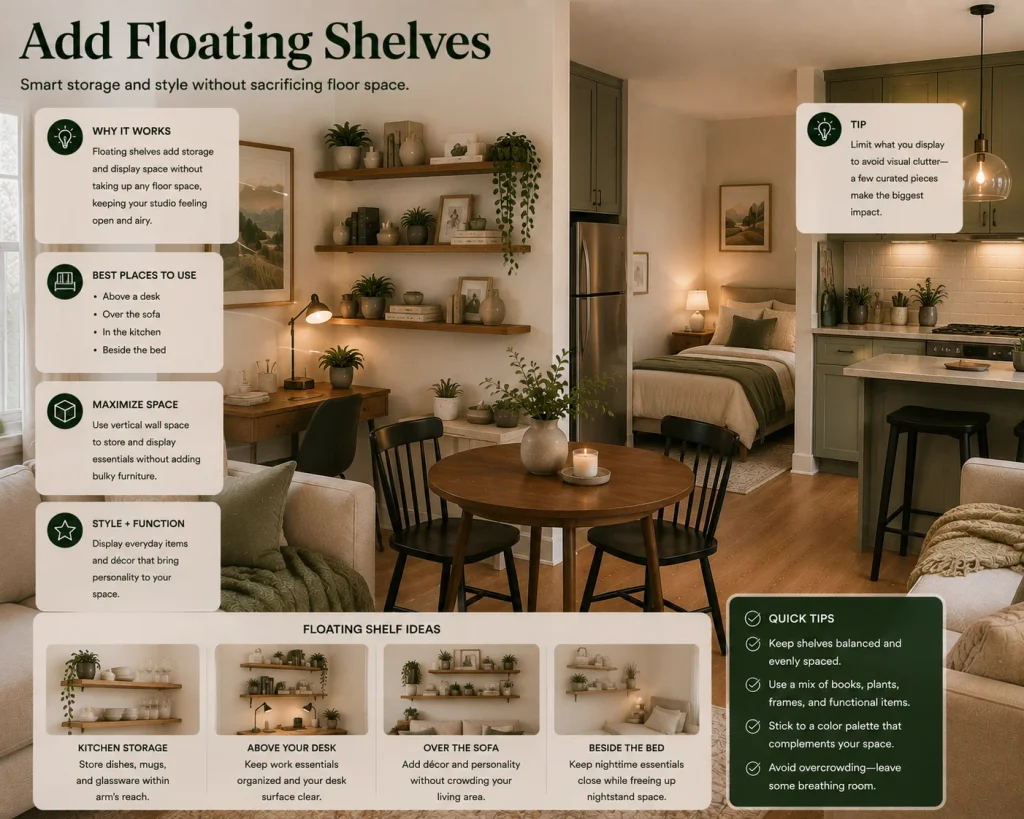
Floating shelves give you storage and display space without the visual weight of a full bookcase or cabinet. Because they mount directly to the wall, they keep the floor clear, which is especially helpful in tight walking areas like hallways or spots beside a bed. This works well above a desk, a sofa, or a kitchenette counter where extra storage is needed but floor space isn’t available. For example, three staggered shelves above a small dining table can hold dishes and glassware that would otherwise crowd a cabinet. Tip: limit what you display on open shelves to avoid visual clutter, since floating shelves can start to look busy fast if overloaded.
15. Choose a Storage-Friendly Coffee Table
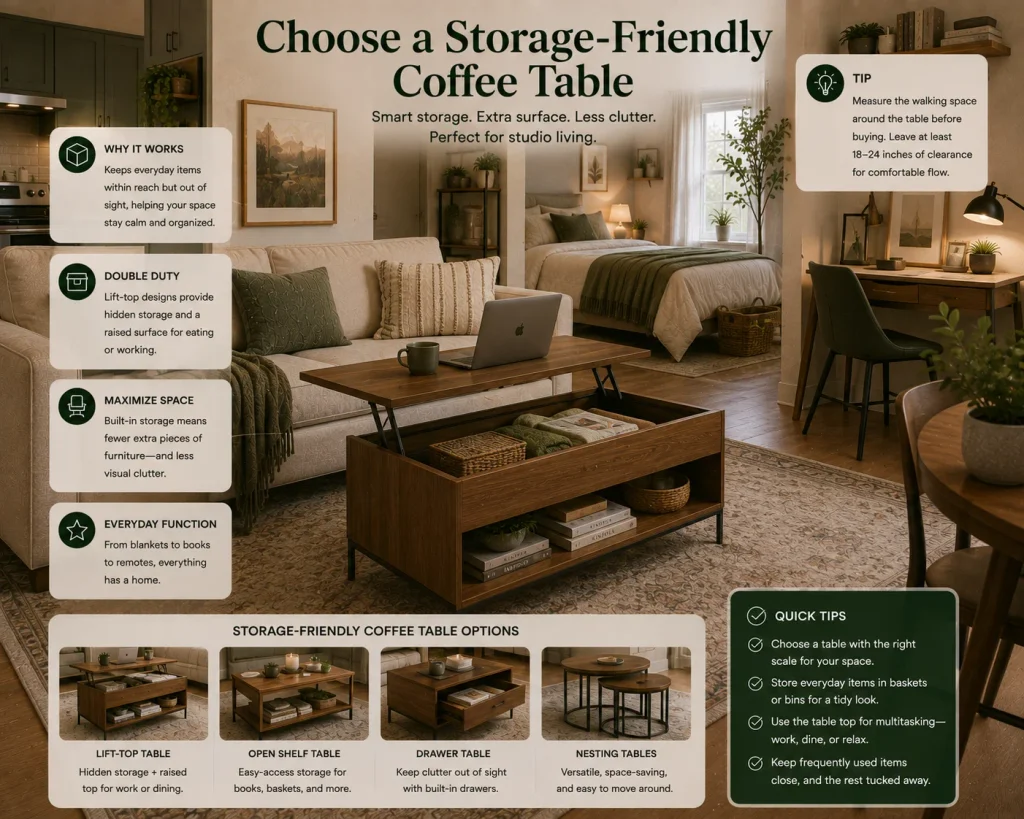
A coffee table with built-in storage, like a lift-top design or open shelving underneath, gives you a spot to stash remotes, magazines, or blankets that would otherwise pile up on the couch. This matters in a studio because there’s often no separate living room closet to hold everyday items. A lift-top coffee table can also double as a temporary desk or dining surface when you need extra workspace. Tip: measure the walking space around the table before buying, since a table that’s too large can make a small seating area feel tight even if the storage is useful.
16. Take Advantage of Awkward Corners
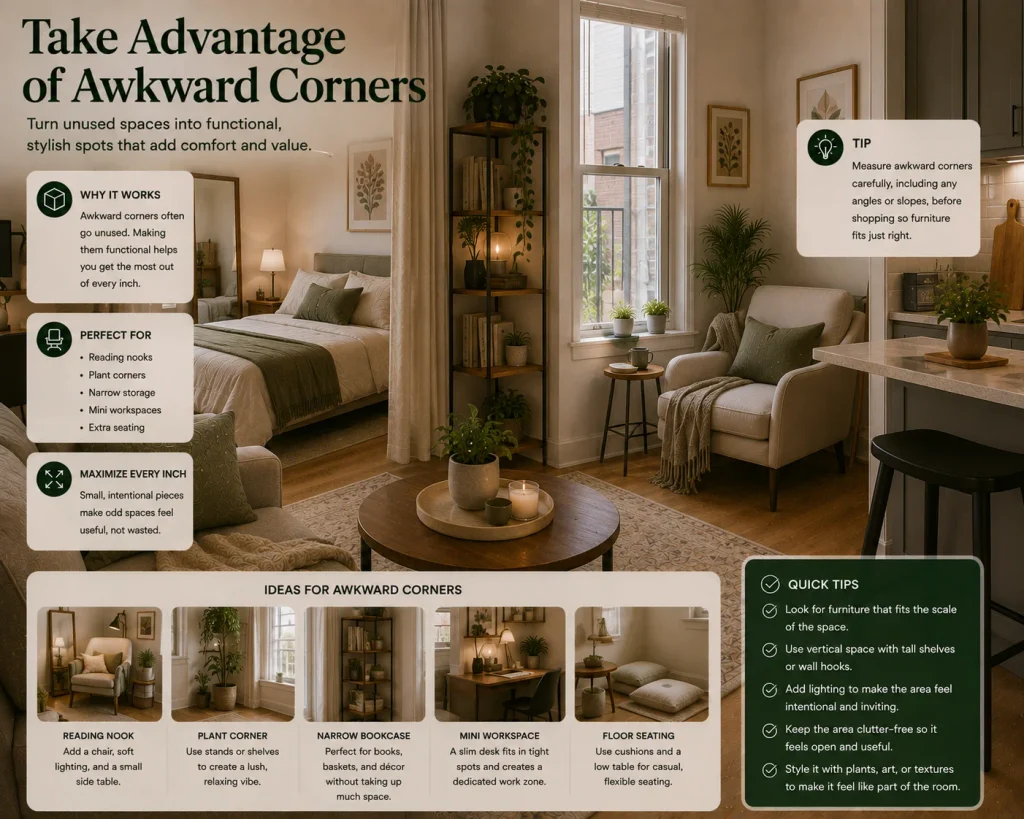
Every studio has at least one oddly shaped corner or dead space, often near a window, closet, or structural column. Rather than leaving these areas empty, use them for a reading chair, plant stand, or narrow bookcase. This works because it puts unused square footage to work instead of letting it sit as wasted space. A corner too small for a full chair might still fit a floor cushion and a small side table for casual seating. Tip: measure oddly shaped corners carefully, including any angles or slopes, before shopping, so you don’t end up with furniture that almost fits.
17. Use Layered Lighting
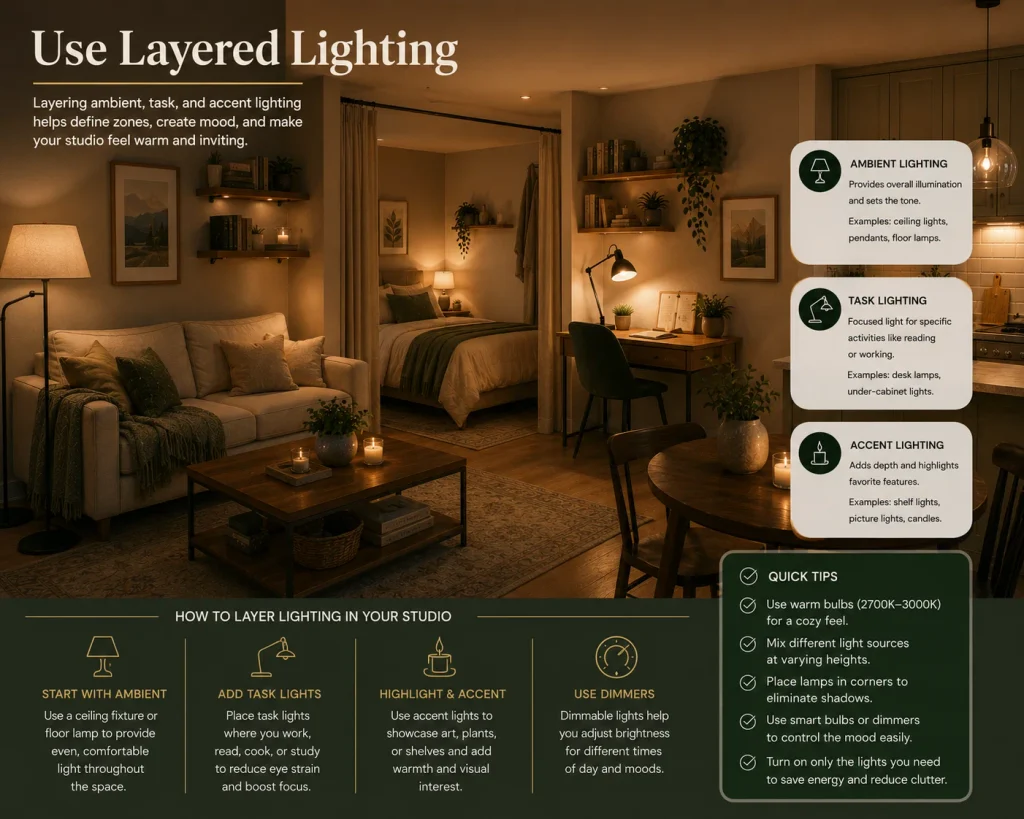
Relying on a single overhead light leaves a studio feeling flat and makes every zone look the same. Layering ambient, task, and accent lighting helps visually separate areas and adds warmth throughout the room. This works because different light sources draw attention to specific zones, like a floor lamp beside your reading chair or a task lamp on your desk. For example, a dimmable floor lamp near the bed can create a cozier mood at night than a bright ceiling fixture. Tip: use warm-toned bulbs, generally around 2700K to 3000K, for a cozier feel throughout the apartment.
18. Keep the Entryway Organized
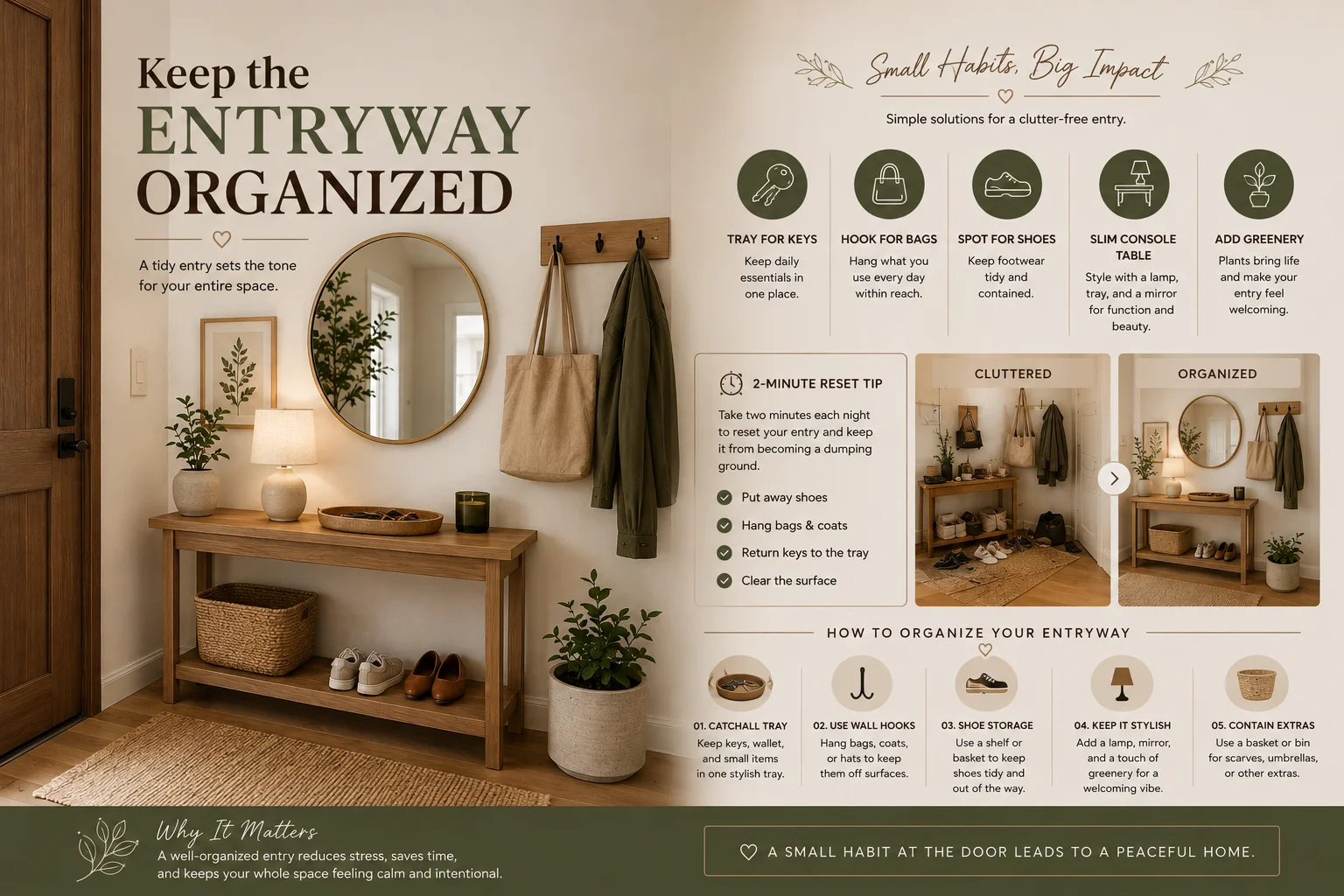
The first few feet inside your door set the tone for the rest of your studio, so a cluttered entry can make the whole apartment feel disorganized. A small tray for keys, a hook for bags, and a spot for shoes keeps daily items from spreading into your living or sleeping zones. This matters because in a studio, there’s no separate mudroom to catch the mess. A slim console table by the door can hold a lamp, a catchall tray, and a mirror for a quick last look before heading out. Tip: do a nightly two-minute reset of the entry area so it doesn’t slowly become a dumping ground.
19. Choose Decor With Intention
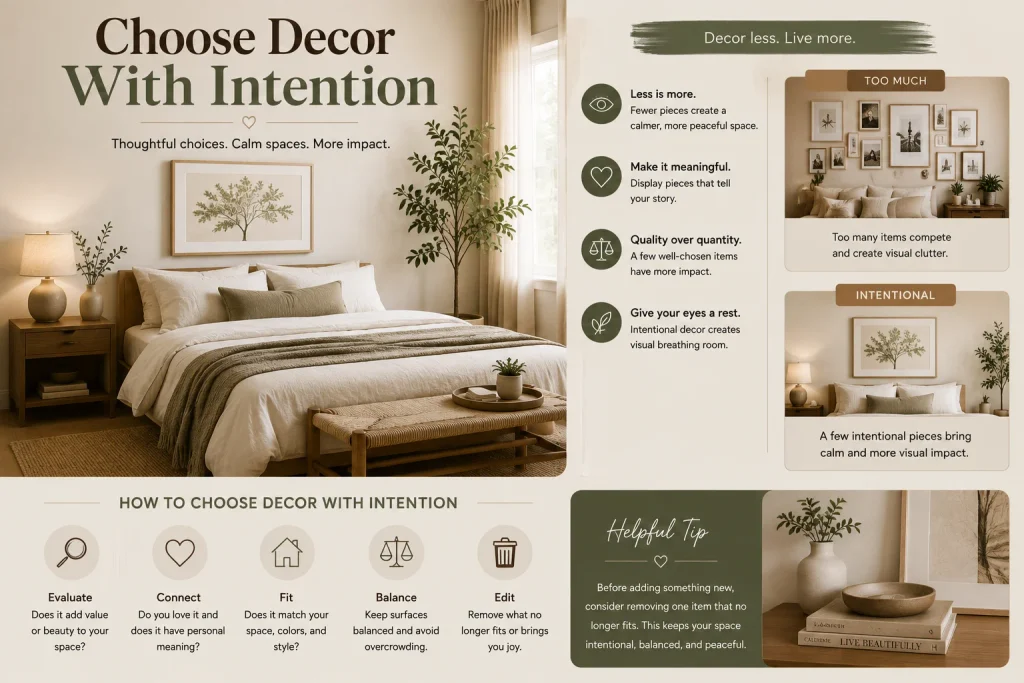
In a small space, every decorative object competes for visual attention, so it’s worth being selective about what you display. Choosing a few meaningful pieces, rather than filling every surface, keeps the room feeling calm instead of busy. This works because intentional decor gives your eye places to rest instead of constantly scanning for the next object. A single piece of artwork above the bed can have more visual impact than five smaller frames scattered across the wall. Tip: before adding a new decorative item, consider removing one that no longer fits your space or style, so the total amount of visual clutter stays balanced.
20. Use Foldable or Movable Furniture
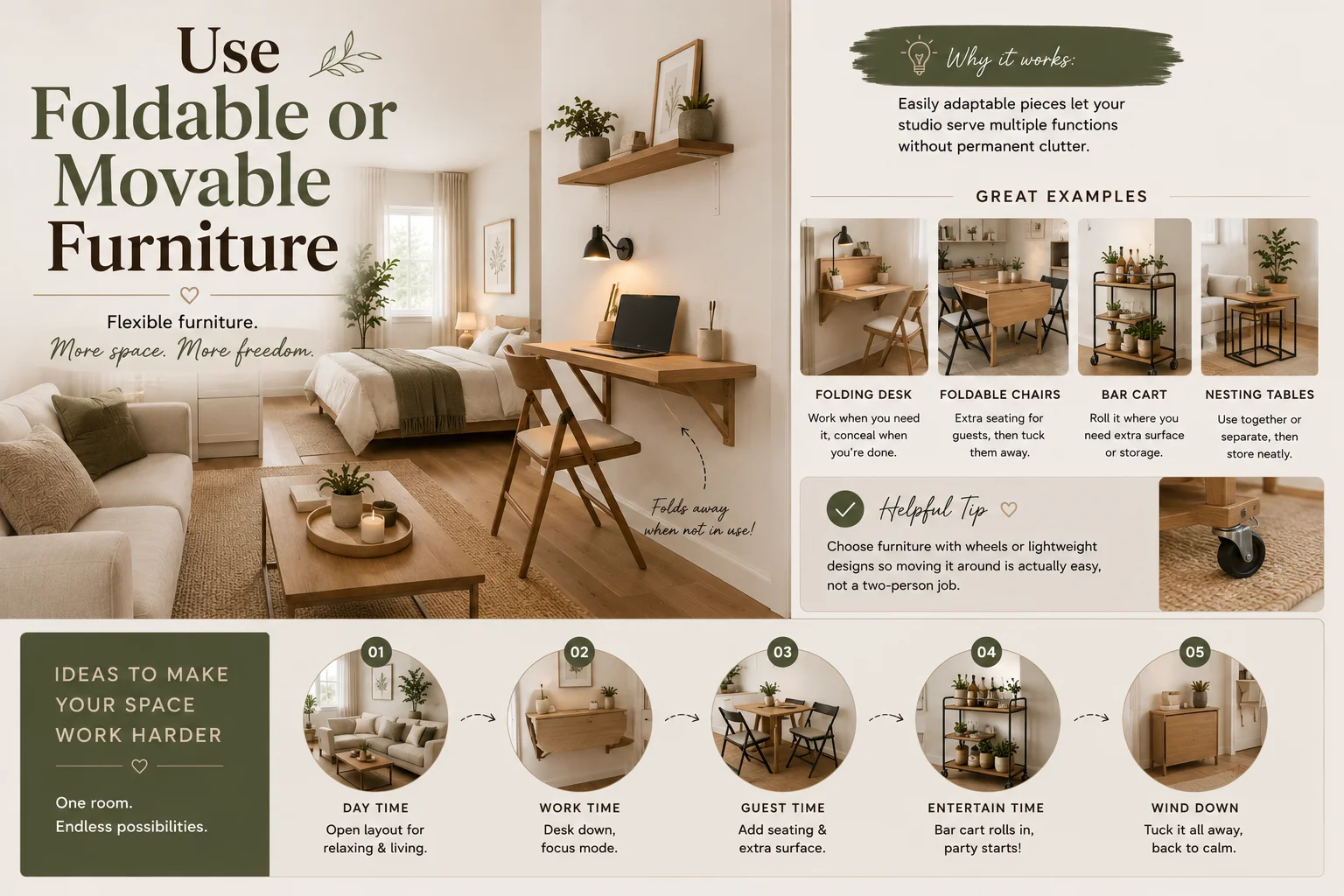
Furniture that folds away or moves easily gives you flexibility to change how your studio functions throughout the day. A folding chair that lives in a closet until guests arrive, or a bar cart that rolls between the kitchen and living area, lets one room serve several purposes without permanent clutter. This works especially well for entertaining, since you can create extra seating or surface space temporarily and then put it away. For example, a folding desk that mounts to the wall can disappear entirely when you’re done working for the day. Tip: choose furniture with wheels or lightweight materials so moving it around is actually easy, not a two-person job.
21. Add Personal Touches Without Creating Clutter
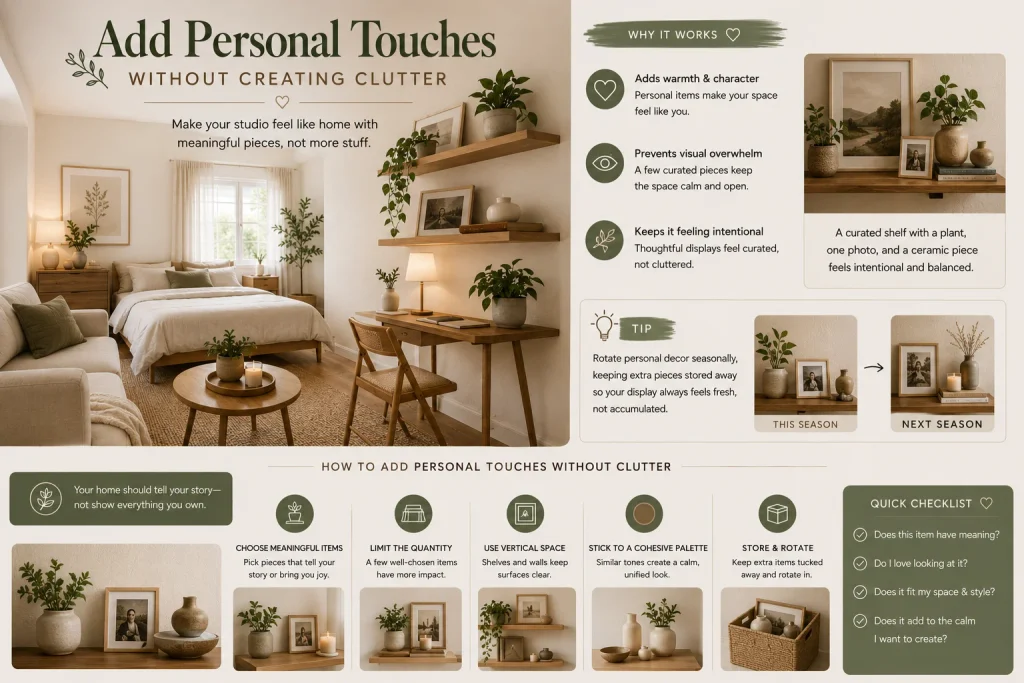
A studio apartment should still feel like your home, which means leaving room for personal photos, plants, or collected objects. The trick is choosing a few meaningful items rather than displaying everything you own. This works because personal touches add warmth and character, but too many small objects can quickly overwhelm an open floor plan. A curated shelf with a favorite plant, one framed photo, and a small ceramic piece feels intentional rather than cluttered. Tip: rotate personal decor seasonally, keeping extra pieces stored away, so your display always feels fresh instead of accumulated.
How to Create a Functional Studio Apartment Layout
A functional layout starts with clear pathways. Before placing furniture, map out how you’ll move between your front door, kitchen, bathroom, and bed, and keep those routes free of obstacles. Next, define your zones based on the room’s natural features, like windows, outlets, and closets, rather than forcing a layout that fights the space. Keep furniture proportional to the room; an oversized sectional or bed frame can eat up walking space fast, so measure both the furniture and the room before buying anything. Avoid blocking windows with tall pieces, since natural light affects how the whole apartment feels throughout the day. Think through your actual daily routine, like where you get dressed, work, and relax, and place furniture to support that flow. Larger items, such as your bed or sofa, generally work best against a solid wall, leaving the center of the room open for movement. Always maintain access to your storage areas, since a beautifully organized closet does no good if furniture blocks the door. Every studio is different, so the right layout depends on your room’s actual dimensions, windows, doors, and fixed features, not a one-size-fits-all formula.
Studio Apartment Room Divider Ideas
Room dividers help create separation in a studio without necessarily making the space feel closed off. Open shelving units are a popular choice because they add storage while still letting light pass through. Folding screens are lightweight, portable, and easy to move or remove entirely, making them a flexible option for renters. Curtains, hung from the ceiling or a tension rod, offer a soft, adjustable boundary that can be opened during the day. A tall bookcase placed perpendicular to a wall can double as both storage and a visual break between zones. Slatted wood or metal dividers add a modern look while still allowing airflow and light to move through the room. Simply angling a piece of furniture, like a sofa, can also define a boundary without adding a new object at all. Plants, especially tall varieties, offer a living, low-commitment way to soften a transition between areas. Partial partitions may work in some units, but always confirm with your landlord before installing anything permanent, since most rental agreements restrict structural changes.
Choose Furniture That Does More Than One Job
Multifunctional furniture is one of the most effective ways to reduce the number of individual pieces crowding a studio. A sofa bed lets your living area convert into a guest sleeping space without a dedicated bedroom. Storage ottomans work as extra seating, a footrest, and a hidden spot for blankets or clutter. An expandable dining table can seat two on a normal night and stretch to fit guests when needed, while nesting tables tuck away completely when not in use. Storage benches near the entry or bed add seating along with a place to stash shoes or linens. Where a landlord allows installation, a Murphy bed can free up an entire section of floor during the day. Folding desks that mount to the wall disappear when work is done, and convertible furniture, like a chair that unfolds into a bed, adds flexibility for infrequent needs. Before buying any of these pieces, think honestly about your daily habits, since multifunctional furniture only helps if you’ll actually use both of its functions.
Smart Storage Ideas for a Studio Apartment
Storage is one of the biggest challenges in a studio, but a mix of strategies can make a real difference. Under-bed storage, whether bins or a frame with built-in drawers, uses space that would otherwise sit empty. Vertical shelving takes advantage of wall height, which is often more available than floor space. Storage ottomans hide blankets or seasonal items in plain sight while doubling as extra seating. Over-door organizers work well in closets or bathrooms for shoes, accessories, or cleaning supplies. Baskets are a flexible, low-cost way to corral loose items on shelves or under furniture. Closed storage cabinets keep everyday clutter out of view, which is especially useful near a kitchenette. Floating shelves add display and storage without taking up floor space, while a small entryway console or hooks can catch bags, keys, and mail before they spread through the apartment. Drawer organizers help keep smaller items tidy inside dressers or kitchen drawers, and a storage bench by the door adds a practical landing spot. Reducing what’s visible on open surfaces can make an open-plan apartment feel far more organized, so aim for a mix of open storage for daily items and closed storage for everything else.
Best Colors for a Studio Apartment
A cohesive color palette helps a studio feel like one connected space rather than several disconnected areas. Warm white, cream, beige, and greige work well as base tones because they create a calm, neutral backdrop that doesn’t compete with furniture or decor. Soft gray offers a slightly cooler alternative that still feels versatile and easy to layer with other colors. Sage green and muted blue bring in gentle color without overwhelming a small room, and warm brown tones add depth through wood furniture or textiles. Using a consistent palette throughout the apartment creates visual continuity, since your eye can travel from the sleeping area to the living area without an abrupt color shift. That doesn’t mean the space has to stay entirely neutral: deeper colors can show up through an accent wall where your landlord allows it, statement furniture, artwork, textiles, rugs, or decorative accessories. A dark green velvet pillow or a bold piece of art can add personality without disrupting the overall flow.
Use Layered Lighting to Create a Cozy Studio
Good lighting does more than brighten a room; it helps define different zones throughout your studio. Ceiling lighting provides general illumination, but pairing it with floor lamps and table lamps adds warmth and lets you light specific areas independently. Wall-mounted lights, where your lease allows them, free up surface space while adding a decorative element. Task lighting, like a desk lamp or an under-cabinet light in the kitchen, supports specific activities without over-lighting the whole room. Ambient lighting, such as a dimmable floor lamp, sets a relaxed mood for evenings, while accent lighting, like a small lamp highlighting a bookshelf or plant, adds visual interest. Natural light should be a priority too, so avoid blocking windows with tall furniture or heavy curtains during the day. Turning on a lamp near your reading chair while leaving the desk lamp off signals to anyone in the room, including yourself, which zone is “active” at that moment. For renters, plug-in fixtures and battery-powered options are practical ways to add layered lighting without any wiring changes.
Choose the Right Furniture Scale
Furniture scale matters as much as furniture function in a studio apartment. A compact sofa, around 70 to 78 inches wide, generally fits better in small living areas than a standard-sized sectional. Narrow console tables and slim storage units provide surface space and storage without eating into walking room. A small dining table, sized for two to four people, is usually more practical than a full six-person set. Chairs with a slim profile and legs, rather than bulky upholstered arms, help keep sightlines open. Interestingly, filling a studio with many small furniture pieces can create just as much visual clutter as using a few oversized items, since the eye has too many objects to process at once. The goal is balance: a handful of appropriately scaled pieces, measured carefully against your actual room dimensions, rather than either extreme.
Create a Stylish Sleeping Area
A well-designed sleeping area feels separate from the rest of the studio, even without a wall. An area rug placed under and around the bed helps ground the space and mark its boundary. Curtains hung from the ceiling or a tension rod can wrap around the bed for a soft, enclosed feel that’s easy to open during the day. A room divider or tall bookcase placed at the foot of the bed adds another layer of separation while still allowing airflow. Lighting matters here too: a warm bedside lamp creates a calmer mood than the overhead fixture used in the rest of the room. Coordinated bedding in a color that complements your overall palette ties the sleeping area to the rest of the apartment. A small nightstand or shelf nearby keeps essentials within reach without needing extra floor space. Whatever method you choose, keep the sleeping area open enough to maintain good airflow and natural light, and never block a required exit or window meant for ventilation.
Studio Apartment Work-From-Home Ideas
Working from a studio apartment is manageable with the right setup. A compact desk, even one just 24 to 30 inches wide, can support a laptop and a few essentials without dominating the room. Wall-mounted or fold-down desks are especially useful since they disappear when the workday ends, freeing up floor space for other activities. Vertical organization, like a small shelf or pegboard above the desk, keeps supplies handy without cluttering the surface. Cable management tools, such as clips or a cable box, keep cords from becoming a tangled distraction. A dedicated task lamp reduces eye strain and adds a visual cue that this corner is for focused work. Whenever possible, position your desk away from your bed or main seating area, since physically separating work from relaxation makes it easier to mentally switch off at the end of the day.
Rental-Friendly Studio Apartment Decorating Ideas
Renters can still create a stylish, organized studio without making permanent changes. Removable wall hooks hold coats, bags, or artwork without leaving damage behind. Freestanding shelves and bookcases add storage and zoning without needing to be attached to the wall. Curtains and rugs are two of the easiest ways to add color, texture, and separation, and both can move with you to your next place. Portable lighting, like plug-in sconces or battery-operated lamps, adds warmth without any wiring work. Temporary room dividers, such as folding screens, offer privacy that can be adjusted or removed anytime. Decorative mirrors lean against walls rather than requiring mounting hardware, and peel-and-stick wallpaper or tile can add personality where your lease permits it. Portable storage carts and bins keep belongings organized without built-in cabinetry, and artwork in lightweight frames is simple to hang with removable strips. Always check your lease or ask your landlord before making any change that involves drilling, painting, or altering fixed surfaces.
Studio Apartment Decorating Ideas on a Budget
Decorating a studio doesn’t require a big budget, just some planning. Shopping secondhand at thrift stores, estate sales, or online marketplaces can turn up quality furniture at a fraction of retail cost. Multifunctional furniture, like a storage ottoman or sofa bed, reduces how many pieces you need to buy in the first place. Repurposing items you already own, such as turning a bookshelf on its side as a low console, can solve a storage problem for free. Updating textiles, like a new throw pillow cover or a bedspread, refreshes a room’s look without replacing furniture. Affordable artwork, including printable downloads or your own photography in inexpensive frames, adds personality for little cost. Plants, even small ones from a grocery store, bring life to a space without much expense. Improving organization, simply by grouping like items into baskets, can make an existing room feel more put-together immediately. Simple DIY projects, like painting an old side table, stretch a small budget further, and sometimes the most effective change is free: rearranging furniture you already have to better fit your zones.
How to Make a Studio Apartment Feel Cozy
Comfort in a studio comes from texture and warmth, not size. Soft textiles, like a knit throw or velvet pillows, add tactile warmth to a seating or sleeping area. Layering rugs, such as a smaller patterned rug over a larger neutral one, adds depth and visual interest underfoot. Warm lighting, especially lamps with soft, amber-toned bulbs, creates a relaxed atmosphere in the evening. Curtains in a heavier fabric add softness to windows while also helping with light control. Comfortable, well-chosen bedding makes the sleeping area feel inviting rather than purely functional. Natural materials, like a wood coffee table or a woven basket, bring warmth that pairs well with softer textiles. Plants add life and a sense of calm, even a single pothos on a shelf. Personal accessories, like a favorite mug collection or framed photos, make the space feel lived-in. Warm colors, from cream to terracotta accents, round out a cozy palette. The goal is comfort without crowding, so add these elements gradually and stop before the space starts to feel packed.
Studio Apartment Decorating Mistakes to Avoid
Even well-intentioned decorating can backfire in a studio. Buying oversized furniture is one of the most common mistakes; measure both your room and any doorways before purchasing anything large. Using too many unrelated colors can make the space feel chaotic, so stick to a cohesive palette instead. Ignoring vertical space wastes valuable storage potential, so add shelving before assuming you’ve run out of room. Skipping clear functional zones leaves the apartment feeling directionless, so define each area’s purpose early on. Blocking natural light with tall furniture or heavy curtains during the day makes a room feel dimmer than it needs to be. Overusing room dividers can chop the space into cramped sections, so use them selectively. Too much visible clutter on open shelves or counters adds visual noise, so prioritize closed storage for everyday items. Choosing decor over storage sounds appealing but backfires quickly, so balance both. Forgetting clear pathways makes daily movement frustrating, so map out walkways before finalizing furniture placement. Buying furniture without measuring, ignoring lighting needs, and trying to cram too many functions into one small area are also common pitfalls; solve each by planning first and shopping second.
Studio Apartment Decorating Checklist
- [ ] Define functional zones
- [ ] Measure the apartment before buying furniture
- [ ] Choose at least one multifunctional piece
- [ ] Use vertical storage
- [ ] Keep pathways clear
- [ ] Create a cohesive color palette
- [ ] Add layered lighting
- [ ] Balance open and closed storage
- [ ] Reduce unnecessary clutter
- [ ] Add personal touches
Frequently Asked Questions
1. How do I decorate a studio apartment?
Start by defining zones for sleeping, living, and working, then choose furniture that supports those zones without overcrowding the room. Use rugs and lighting to visually separate areas, stick to a cohesive color palette, and add storage before decor. Focus on function first, then layer in personal style through textiles, artwork, and accessories.
2. How can I separate my bed from the living area?
A curtain, room divider, or tall bookcase placed near the foot of the bed can create a visual boundary without blocking light or airflow. An area rug under the bed also helps mark the space as its own zone. Choose an option that can be adjusted or opened during the day.
3. What furniture is best for a studio apartment?
Look for multifunctional, appropriately scaled pieces, like a sofa bed, storage ottoman, or expandable dining table. Furniture with visible legs helps keep the room feeling open. Measure your space carefully and prioritize pieces that solve more than one need, since every item takes up valuable floor space.
4. How can I make a studio apartment feel more spacious?
Use a cohesive color palette, add mirrors to reflect light, and keep pathways clear of clutter. Choose furniture scaled to your room and avoid blocking windows. These strategies won’t change the actual square footage, but thoughtful layout and lighting can make the space feel more open and functional.
5. How can I add more storage to a studio apartment?
Use vertical shelving, under-bed bins, storage ottomans, and closed cabinets to add storage without taking up floor space. Floating shelves and over-door organizers help too. Balance open storage for everyday items with closed storage for anything you’d rather keep out of sight.
6. How can I decorate a studio apartment on a budget?
Shop secondhand, repurpose furniture you already own, and choose multifunctional pieces to limit new purchases. Update textiles, add affordable artwork, and use baskets for inexpensive organization. Rearranging your current furniture to better define zones can also improve the space without spending anything at all.
Make Every Square Foot Work for You
A great studio apartment isn’t about how many square feet you have; it’s about how intentionally you use them. The strategies that make the biggest difference are simple: define your zones, choose furniture that does double duty, add storage before decor, and keep your color palette connected from one end of the room to the other. These studio apartment decorating ideas work because they’re based on planning and function, not on expensive renovations or unrealistic makeovers. You don’t need to tackle everything at once. Pick one or two changes, like adding a rug to define your sleeping area or clearing your entryway, and build from there. With a little planning, your studio can feel just as stylish and comfortable as a much larger home.
SEO Title
Studio Apartment Decorating Ideas for Small Space Style
Meta Description
Discover 21 practical studio apartment decorating ideas for zoning, storage, furniture, and layout that make small spaces feel stylish and functional.
URL Slug
/studio-apartment-decorating-ideas/
Primary Keyword
studio apartment decorating ideas
Secondary Keywords
studio apartment ideas, studio apartment decor, small studio apartment ideas, studio apartment layout ideas, studio apartment design, studio apartment organization, studio apartment storage ideas, small apartment decorating ideas, tiny apartment ideas, studio apartment inspiration, modern studio apartment, cozy studio apartment, budget studio apartment decor, studio apartment furniture ideas, small space decorating ideas
Search Intent
Readers want practical, inspirational guidance on how to decorate and organize a studio apartment for both style and everyday function.
Pinterest Pin Titles
- 21 Studio Apartment Decorating Ideas That Actually Work
- Small Studio Apartment Layout Ideas for Every Zone
- How to Decorate a Studio Apartment on Any Budget
- Cozy Studio Apartment Ideas for a Stylish Small Space
- Smart Studio Apartment Storage Ideas for Renters
Pinterest Pin Descriptions
- Turn one open room into a home that works for sleeping, living, and everything in between. This guide covers 21 studio apartment decorating ideas for zoning your space, choosing multifunctional furniture, and adding storage without clutter. Perfect inspiration for first apartments, rentals, and small-space living.
- Not sure how to separate your bed from your living room without walls? These studio apartment layout ideas walk you through room dividers, rugs, and furniture placement that create clear zones in one open floor plan. Practical tips for renters and first-time apartment dwellers alike.
- Decorating a studio apartment doesn’t have to be expensive. Explore budget-friendly ideas like secondhand shopping, multifunctional furniture, and simple textile updates that make a small space feel put together. Realistic, renter-friendly tips for students and young professionals.
- Discover how to make a studio apartment feel warm and inviting with layered lighting, soft textiles, and a cohesive color palette. This guide shares practical ways to build coziness without overcrowding your small space, plus tips for choosing the right furniture scale.
- From under-bed bins to floating shelves, these studio apartment storage ideas help you organize a small space without sacrificing style. Learn how to balance open and closed storage, use vertical space, and keep clutter under control in any rental apartment.
Pinterest Keywords
studio apartment decor, studio apartment ideas, small apartment decorating, tiny apartment ideas, studio apartment layout, small space organization, apartment storage ideas, cozy studio apartment, modern studio apartment, budget apartment decor, rental apartment ideas, small living space ideas, studio apartment bedroom ideas, multifunctional furniture, small apartment inspiration
Image / Visual Content Plan
- Image Concept: A studio apartment with the bed, sofa, and desk each in a clearly marked zone using rugs and furniture placement. Recommended Section: Divide the Apartment Into Functional Zones Suggested Alt Text: Studio apartment layout showing separate zones for sleeping, living, and working
- Image Concept: A slatted wood room divider standing between a bed and a small living area, with light passing through the slats. Recommended Section: Studio Apartment Room Divider Ideas Suggested Alt Text: Slatted wood room divider separating a studio apartment bedroom from the living area
- Image Concept: A cozy sleeping nook with a ceiling-mounted curtain partially drawn around the bed and a warm bedside lamp lit. Recommended Section: Create a Stylish Sleeping Area Suggested Alt Text: Cozy studio apartment sleeping area with curtain divider and warm lighting
- Image Concept: A compact fold-down desk mounted to the wall, open and set up with a laptop and small task lamp. Recommended Section: Studio Apartment Work-From-Home Ideas Suggested Alt Text: Compact fold-down desk in a small studio apartment work-from-home corner
- Image Concept: A living area featuring a storage ottoman, a sofa bed, and a nesting side table arranged together. Recommended Section: Choose Furniture That Does More Than One Job Suggested Alt Text: Studio apartment living area with multifunctional storage ottoman and sofa bed
- Image Concept: A tall, narrow bookcase filled with baskets, books, and folded textiles reaching almost to the ceiling. Recommended Section: Use Vertical Storage Suggested Alt Text: Tall vertical bookcase used for storage in a small studio apartment
- Image Concept: A secondhand-sourced living room corner styled with a thrifted armchair, a small side table, and an affordable framed print above it. Recommended Section: Studio Apartment Decorating Ideas on a Budget Suggested Alt Text: Budget-friendly studio apartment corner styled with secondhand furniture and affordable decor
- Image Concept: A warm, layered living space with a floor lamp, table lamp, and string of soft accent lighting all glowing at once. Recommended Section: Use Layered Lighting to Create a Cozy Studio Suggested Alt Text: Layered lighting setup in a cozy studio apartment living area
- Image Concept: A small entryway console table with a tray for keys, a hook for bags, and a mirror above it. Recommended Section: Keep the Entryway Organized Suggested Alt Text: Organized studio apartment entryway with console table and wall hooks
- Image Concept: A wide shot of a full studio apartment showing a cohesive neutral color palette across the bed, sofa, rug, and curtains. Recommended Section: Best Colors for a Studio Apartment Suggested Alt Text: Studio apartment with a cohesive neutral color palette throughout the space
Featured Image
Featured Image Concept: A realistic, well-lit studio apartment shot from the entry, showing a clearly zoned sleeping area with a curtain divider, a small living area with a storage ottoman and sofa, a compact desk along one wall, warm layered lighting, a cohesive neutral and sage color palette, natural wood textures, and a few personal touches like a plant and framed photo, all styled without visible clutter.
Pinterest Text Overlay: 21 Studio Apartment Decorating Ideas for Maximum Style
Alt Text: Stylish and organized studio apartment with defined zones, multifunctional furniture, and warm lighting
Internal Linking Strategy
- Suggested Anchor Text: small living room layout ideas Suggested Future Article: Small Living Room Ideas Best Placement: Layout section
- Suggested Anchor Text: small bedroom decorating ideas Suggested Future Article: Small Bedroom Ideas Best Placement: Sleeping area section
- Suggested Anchor Text: more studio apartment storage solutions Suggested Future Article: Studio Apartment Storage Ideas Best Placement: Smart Storage section
- Suggested Anchor Text: apartment organization tips Suggested Future Article: Apartment Organization Ideas Best Placement: Entryway idea (Idea 18)
- Suggested Anchor Text: small space decorating strategies Suggested Future Article: Small Space Decorating Ideas Best Placement: Introduction or Layout section
- Suggested Anchor Text: budget home decor tips Suggested Future Article: Budget Home Decor Ideas Best Placement: Budget section
- Suggested Anchor Text: rental-friendly decorating options Suggested Future Article: Rental-Friendly Decorating Ideas Best Placement: Rental-Friendly section
- Suggested Anchor Text: cozy apartment styling ideas Suggested Future Article: Cozy Apartment Ideas Best Placement: Cozy section