
25 Kitchen Organization Ideas You’ll Wish You Tried Sooner
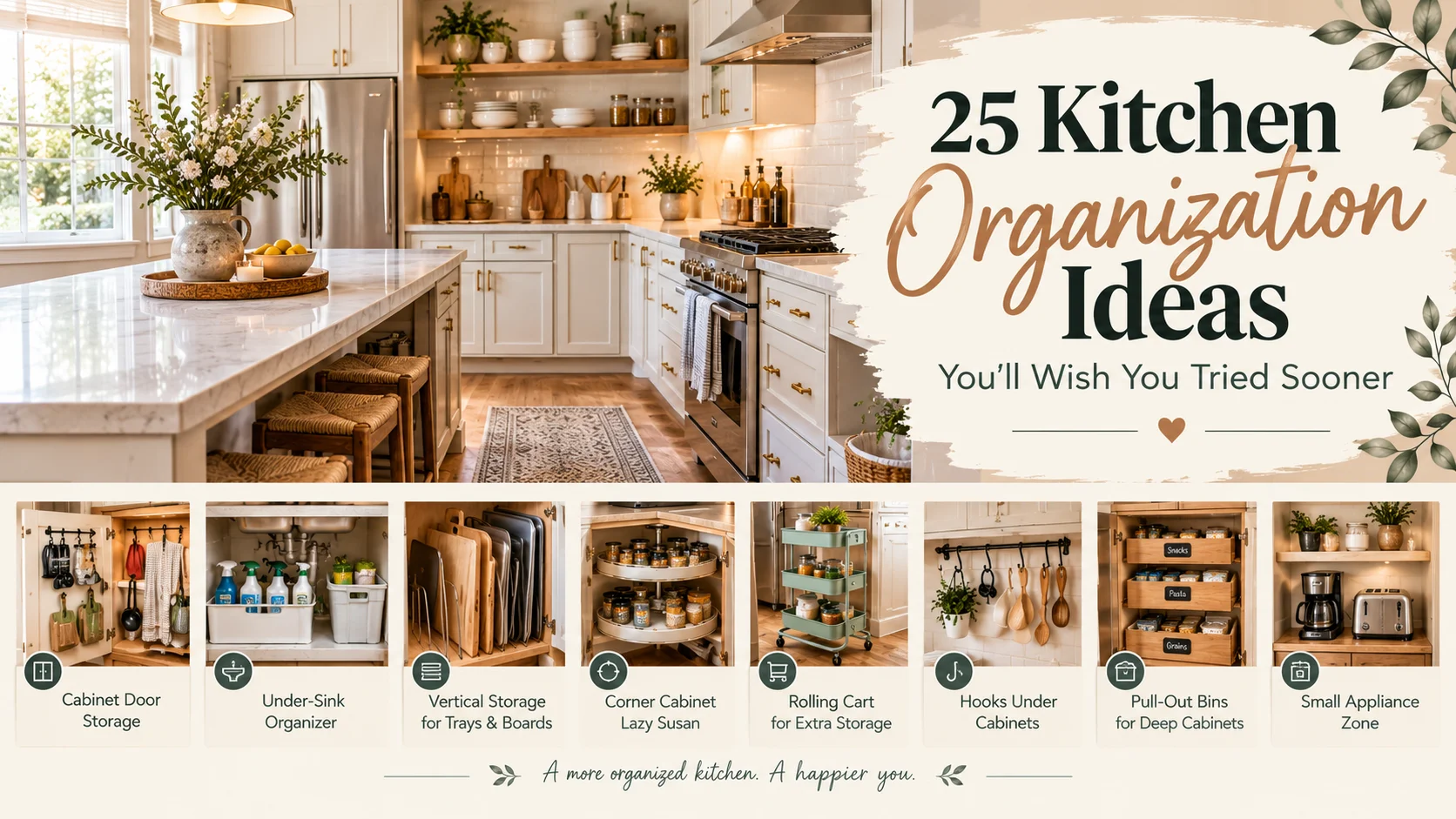
Do your counters seem to collect clutter no matter how many times you clear them off? Are you constantly digging through a junk drawer or a pantry shelf just to find the one thing you need? You’re not alone. Most kitchens don’t need a full remodel to feel calmer and more functional. They just need a few smart changes in how things are stored, grouped, and placed. These kitchen organization ideas are simple, budget-friendly, and easy to start today, whether you’re working with a tiny apartment kitchen or a spacious family kitchen with room to spare.
Why These Kitchen Organization Ideas Work
Struggling to figure out why your kitchen never feels “done”? It usually comes down to a few overlooked habits. Most kitchens waste vertical space, storing tall gaps of empty air above stacked plates or inside cabinets. Grouping similar items together, like all your baking tools or all your spices, cuts down on the time spent hunting for things. Keeping everyday items within arm’s reach means you’re not bending, stretching, or shuffling through five shelves just to grab a coffee mug. Reducing what sits on your counters gives your eyes a place to rest and makes the whole room feel bigger. Small changes to cabinets and drawers, like adding a divider or a bin, turn chaotic spaces into ones you can actually see into. None of this requires a renovation. It just requires a plan.
1. Declutter One Cabinet at a Time
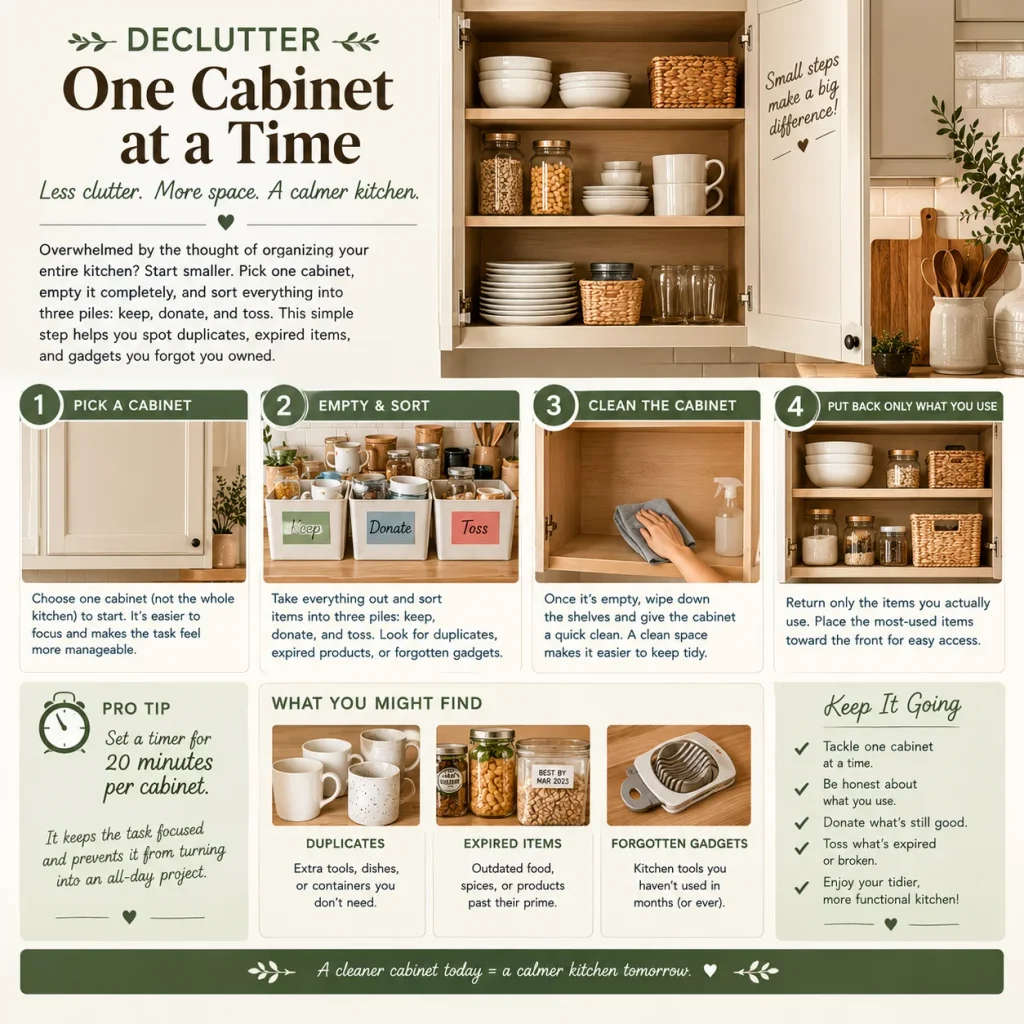
Overwhelmed just thinking about organizing your whole kitchen? Start smaller. Pick a single cabinet, empty it completely, and sort everything into three piles: keep, donate, and toss. This one small step often reveals duplicate items, expired products, or gadgets you forgot you owned. Once the cabinet is empty, wipe it down before putting anything back. Only return items you actually use, and place the most-used ones toward the front. This approach keeps the project from feeling impossible and gives you a quick win you can build on. A practical tip: set a timer for 20 minutes per cabinet so the task doesn’t stretch into an all-day event you keep putting off.
2. Add Shelf Risers
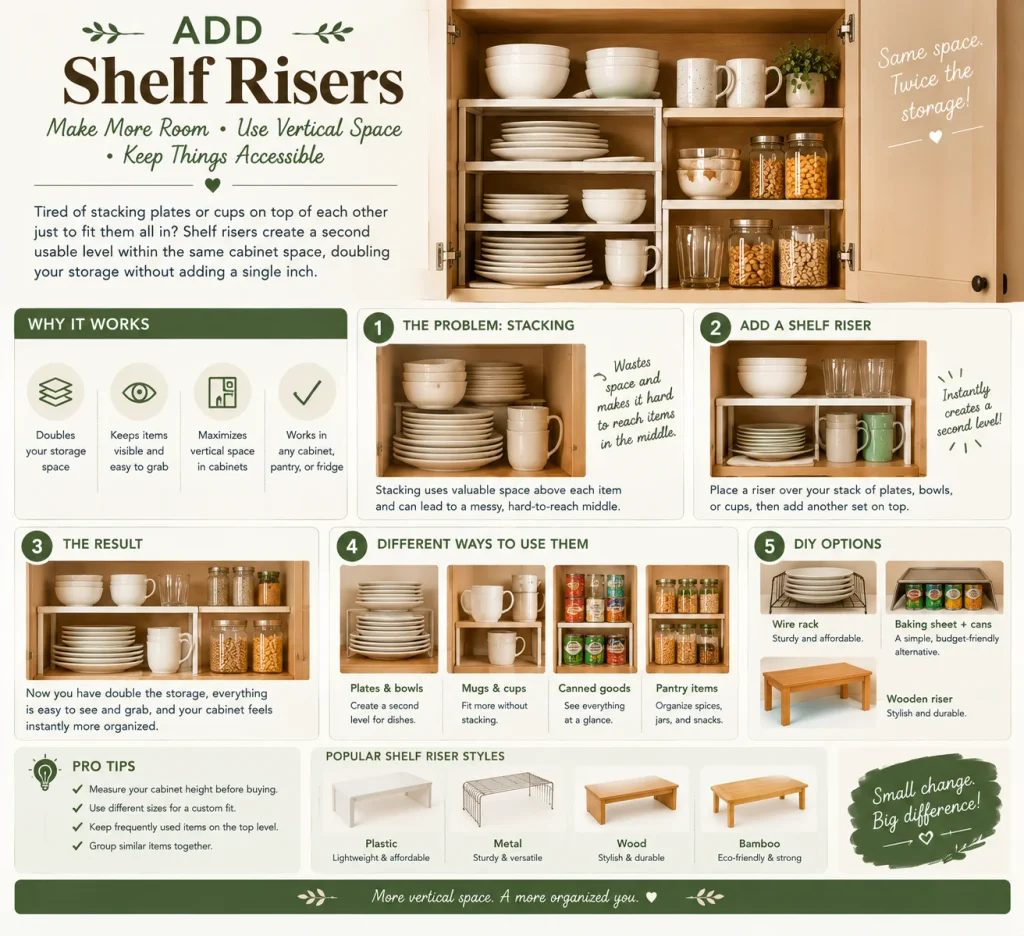
Tired of stacking plates or cups on top of each other just to fit them all in? Stacking wastes the empty space above each item and makes it hard to grab anything from the middle without a mini avalanche. Shelf risers solve this by creating a second usable level within the same cabinet space. Slide one over your stack of small plates, bowls, or canned goods, then place another set of items on top. This instantly doubles your storage without adding a single inch to your cabinets. If you don’t want to buy risers, sturdy wire racks or even overturned baking sheets propped on cans can work in a pinch.
3. Use the Inside of Cabinet Doors
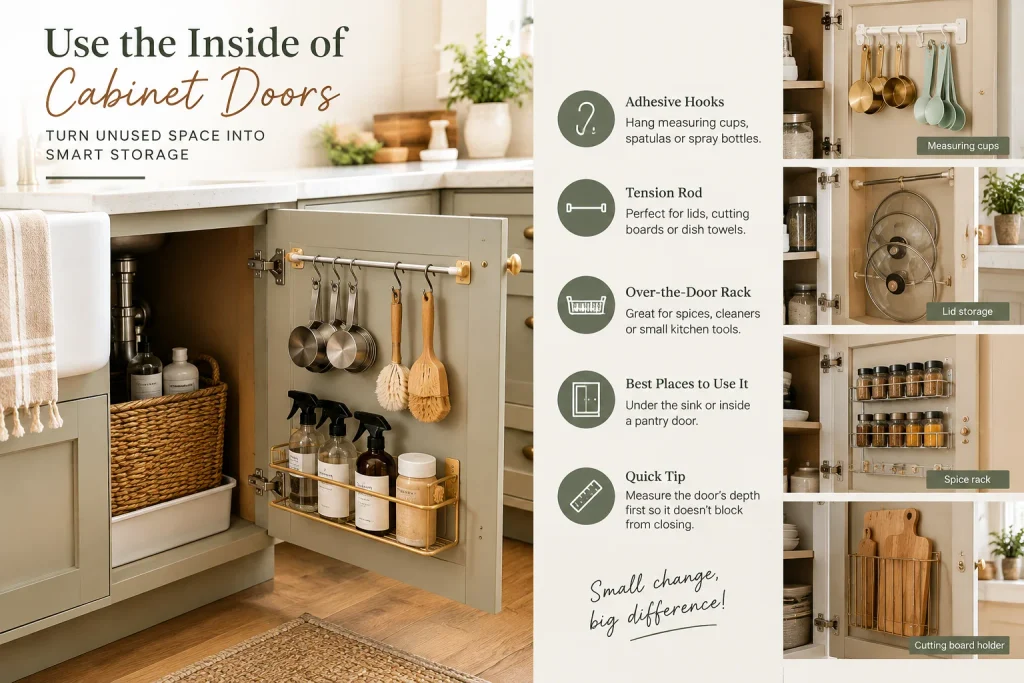
Wasting the flat, empty space inside your cabinet doors? That surface is one of the most overlooked spots in the whole kitchen. Adhesive hooks, a small tension rod, or a slim over-the-door rack can turn that dead space into real storage. Use it to hang measuring cups, spray bottles, cutting boards, or even lids that never seem to have a home. This works especially well under the sink or inside a pantry door. Because most of these solutions use adhesive or tension mounts, they’re renter-friendly and leave no marks. A quick tip: measure the door’s depth first so anything you hang doesn’t block the cabinet from closing.
4. Install a Pull-Out Pantry
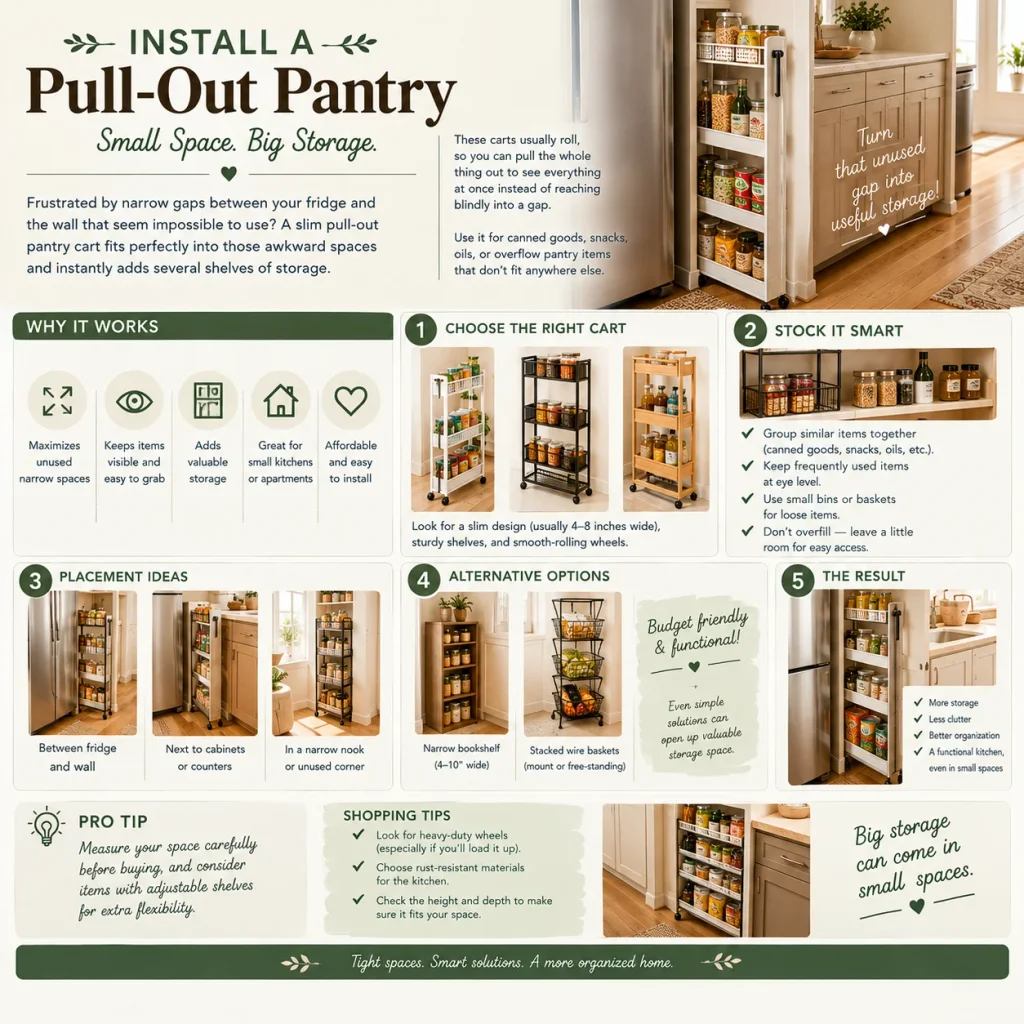
Frustrated by narrow gaps between your fridge and the wall that seem impossible to use? A slim pull-out pantry cart fits perfectly into those awkward spaces and instantly adds several shelves of storage. These carts usually roll, so you can pull the whole thing out to see everything at once instead of reaching blindly into a gap. Use it for canned goods, snacks, oils, or overflow pantry items that don’t fit anywhere else. It’s a great option for small kitchens that don’t have a dedicated pantry closet. If a rolling cart isn’t in the budget, a narrow bookshelf or even stacked wire baskets can serve the same purpose.
5. Organize Under the Kitchen Sink
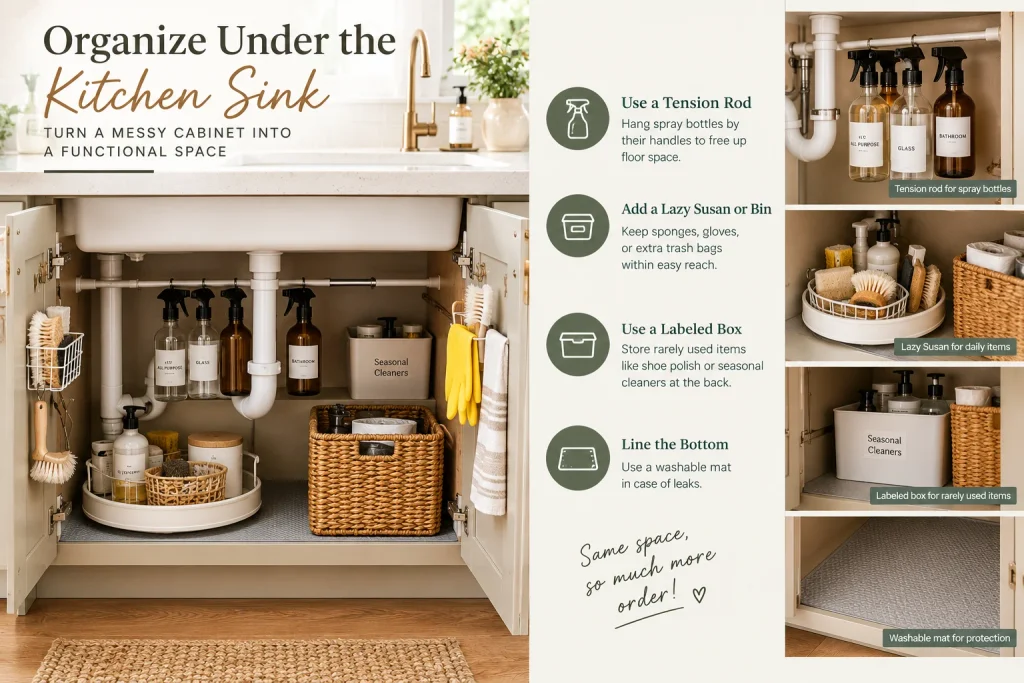
Does opening the cabinet under your sink feel like a game of Tetris gone wrong? Pipes, cleaning supplies, and random items tend to pile up here with no real system. Start by adding a tension rod across the back to hang spray bottles by their handles, freeing up floor space below. Use a small bin or lazy Susan for items like sponges, gloves, or extra trash bags. Anything you rarely use, like shoe polish or seasonal cleaners, can go in a labeled box toward the back. This keeps everyday supplies easy to grab while still fitting everything in. Tip: line the bottom with a washable mat in case of leaks.
6. Add Drawer Dividers
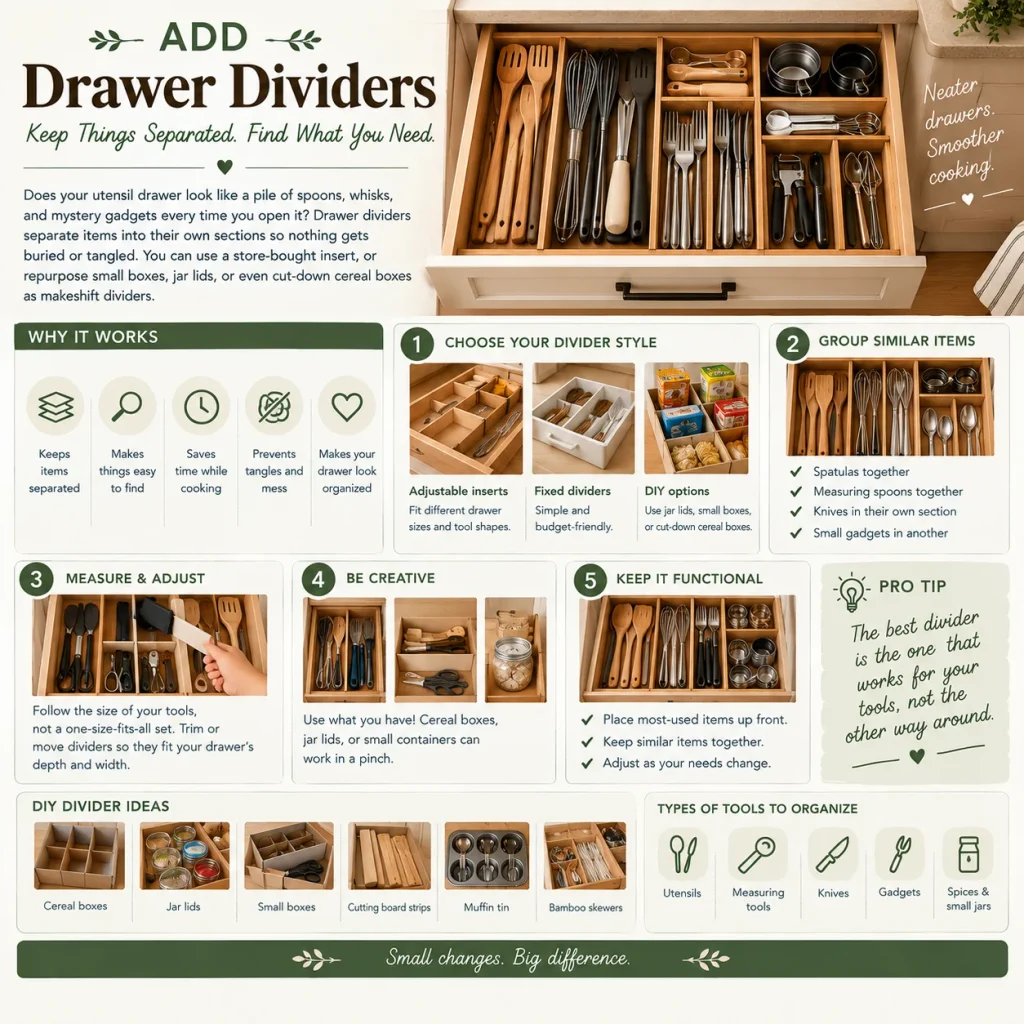
Does your utensil drawer look like a pile of spoons, whisks, and mystery gadgets every time you open it? Drawer dividers separate items into their own sections so nothing gets buried or tangled. You can use a store-bought insert, or repurpose small boxes, jar lids, or even cut-down cereal boxes as makeshift dividers. Group similar tools together, like all your spatulas in one section and measuring spoons in another. This makes it much faster to find what you need mid-recipe. A helpful tip: adjust the dividers to fit your specific tools rather than forcing a one-size-fits-all layout, since kitchen drawers vary a lot in depth and width.
7. Store Cutting Boards Vertically
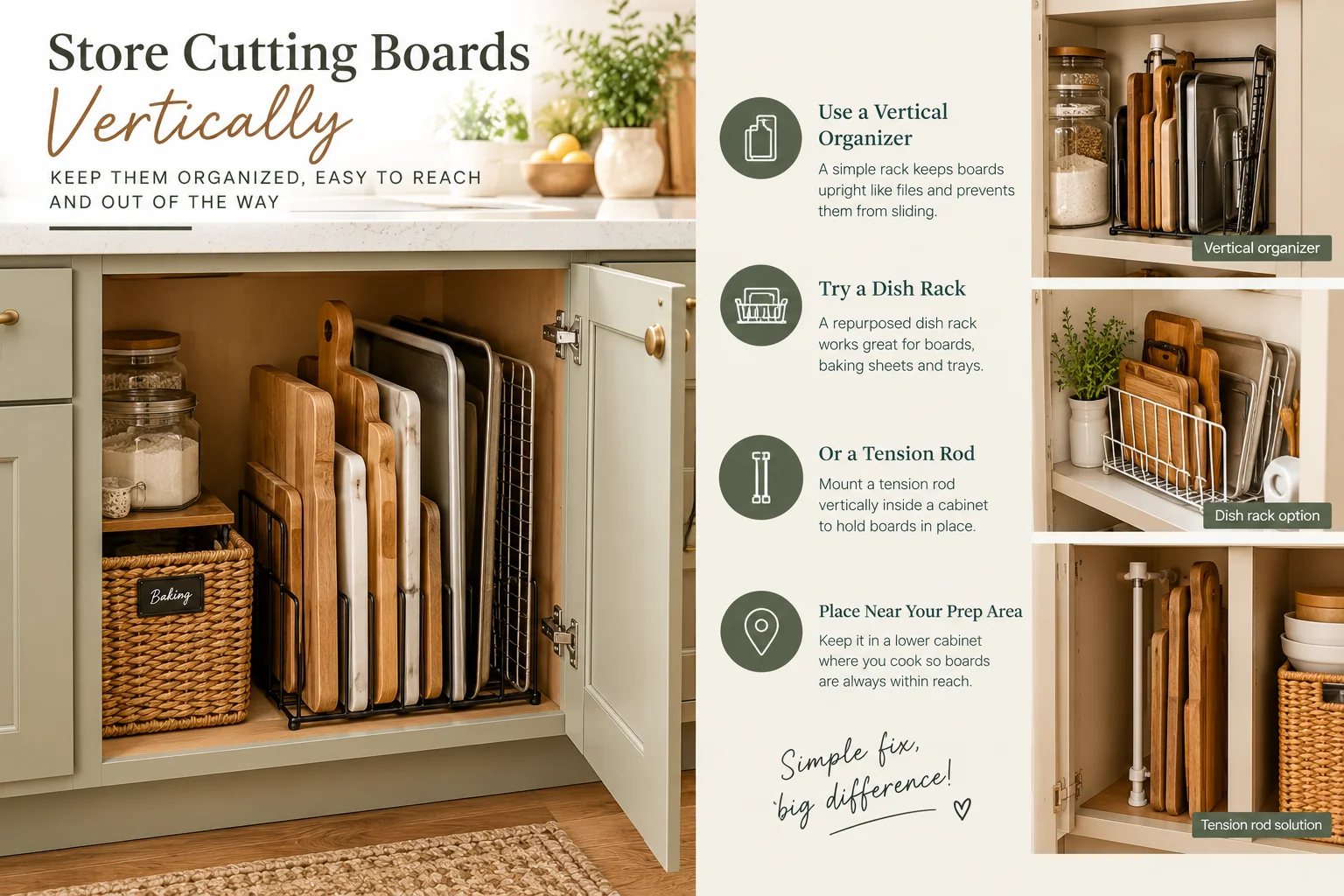
Not sure where to keep your cutting boards without them sliding around or taking over a shelf? Storing them flat usually means they end up stacked under other items, making them hard to reach. A simple vertical organizer, whether store-bought or a repurposed dish rack, lets you slide boards in like files in a cabinet. This works for baking sheets and trays too. Place the organizer in a lower cabinet near your prep area so boards are easy to grab while cooking. If you don’t have an organizer, a tension rod mounted vertically inside a cabinet can hold boards upright just as well.
8. Create a Dedicated Spice Drawer
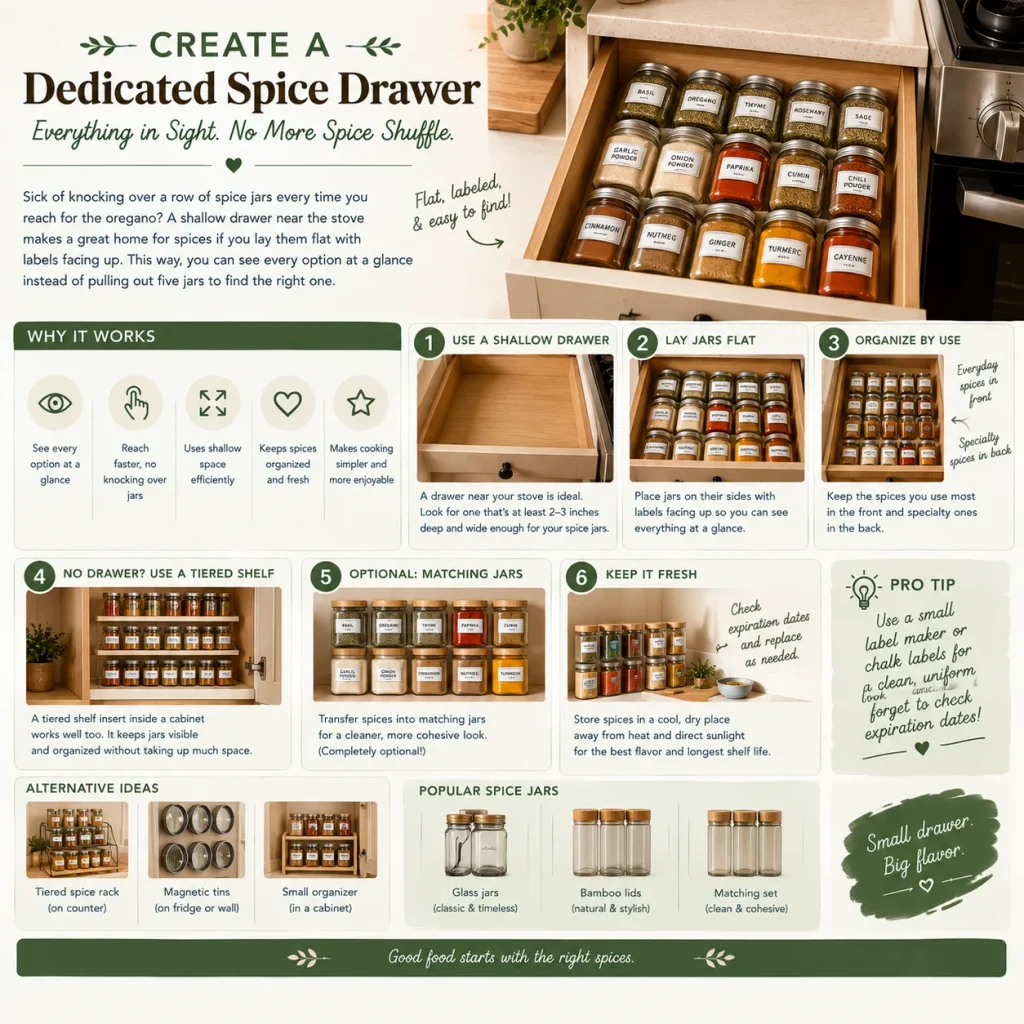
Sick of knocking over a row of spice jars every time you reach for the oregano? A shallow drawer near the stove makes a great home for spices if you lay them flat with labels facing up. This way, you can see every option at a glance instead of pulling out five jars to find the right one. If a drawer isn’t available, a tiered shelf insert inside a cabinet works well too. Keep spices you use often toward the front and specialty ones toward the back. A quick tip: transfer spices into matching small jars if you want a cleaner look, but this step is optional and purely visual.
9. Use Clear Pantry Containers
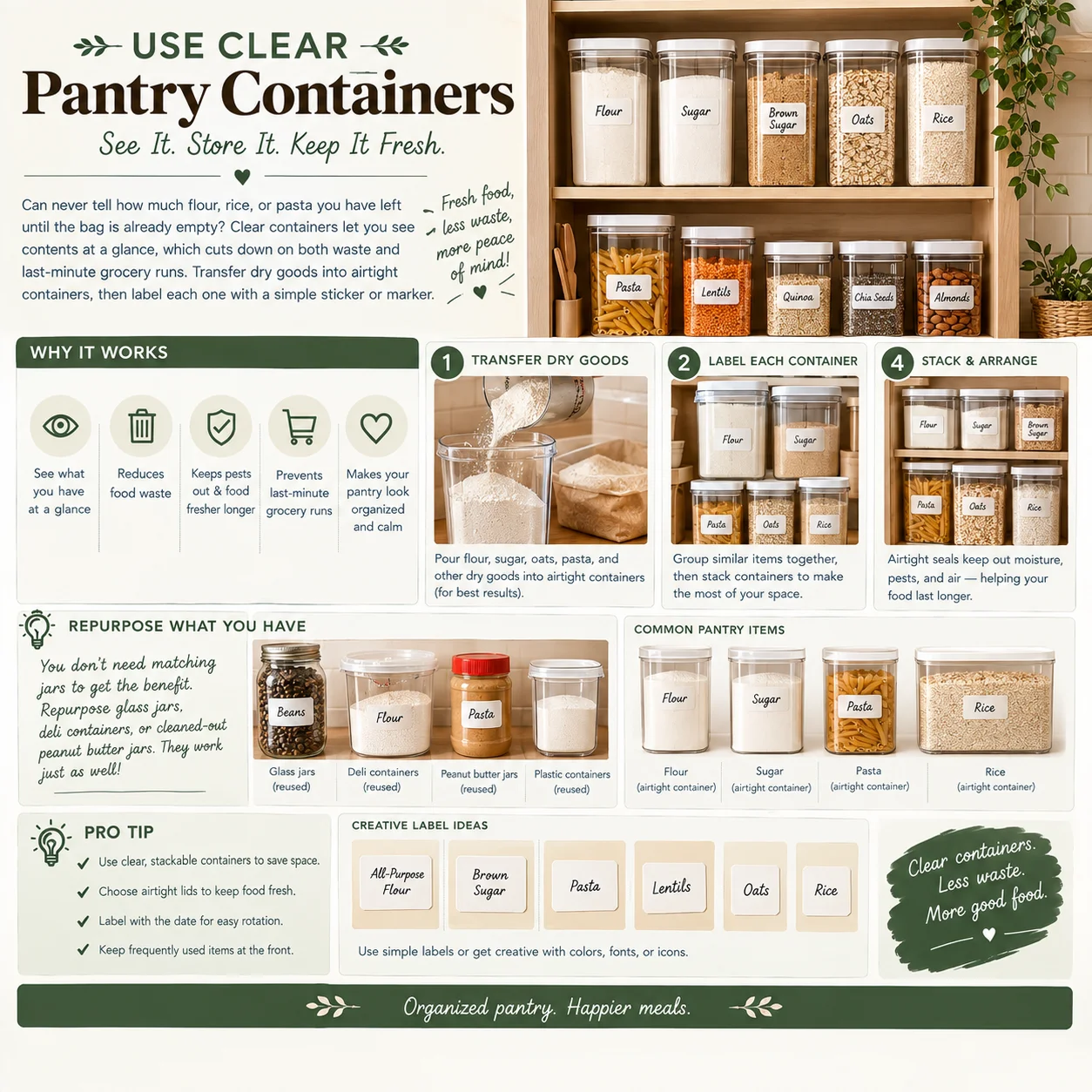
Can never tell how much flour, rice, or pasta you have left until the bag is already empty? Clear containers let you see contents at a glance, which cuts down on both waste and last-minute grocery runs. Transfer dry goods like flour, sugar, oats, and pasta into airtight containers, then label each one with a simple sticker or marker. This also keeps pests out and food fresher for longer. You don’t need matching designer jars to get the benefit. Repurposed glass jars, plastic deli containers, or even cleaned-out peanut butter jars work just as well as anything bought specifically for pantry organization.
10. Add Lazy Susans to Corner Cabinets
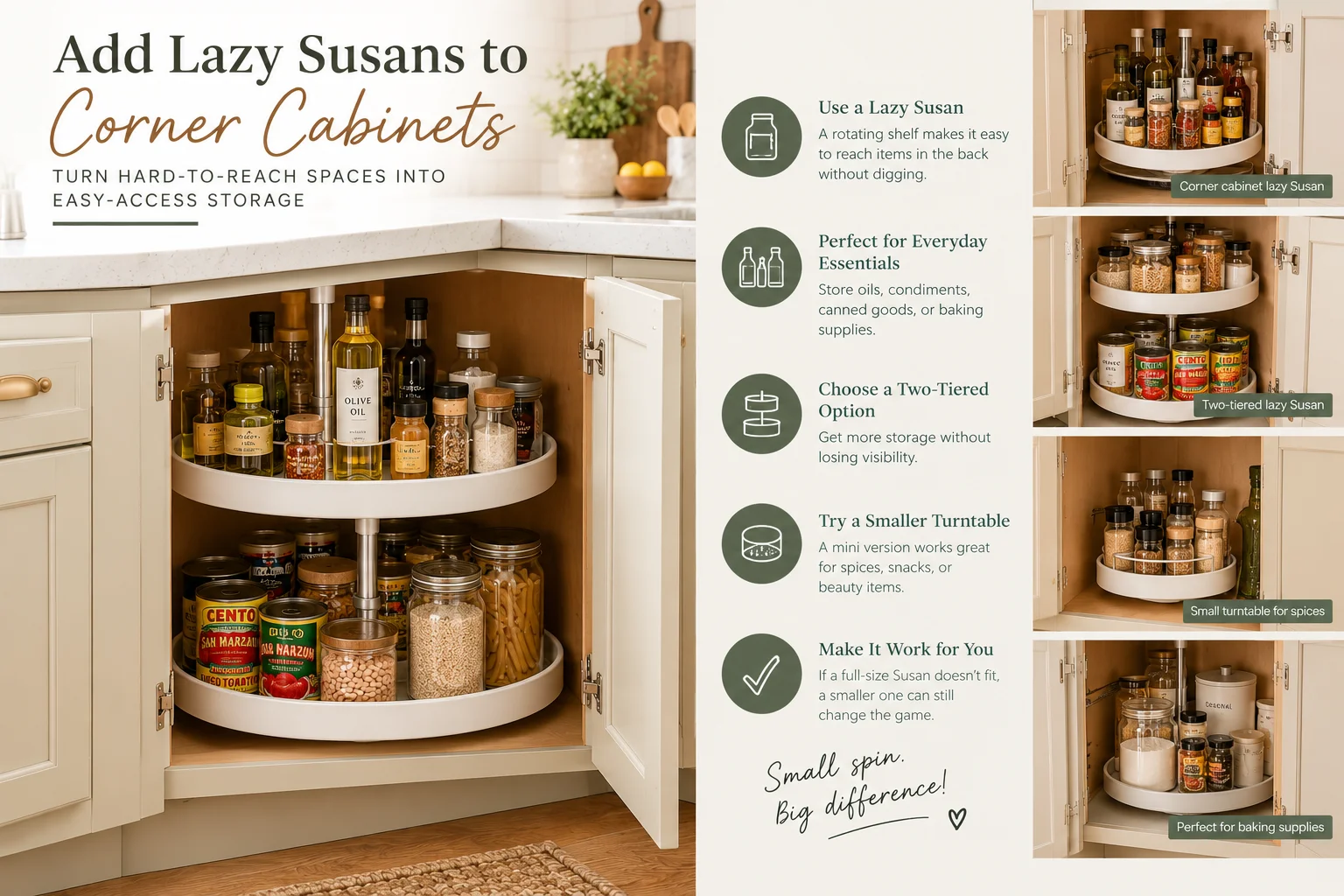
Does your corner cabinet feel like a black hole where items disappear forever? Corner spaces are notoriously hard to access, especially in the back. A lazy Susan solves this by letting you spin the whole shelf instead of reaching in blindly. Use one for oils, condiments, canned goods, or baking supplies. Two-tiered versions can hold even more without sacrificing visibility. If a full lazy Susan doesn’t fit your cabinet, a smaller turntable, the kind sold for makeup or spices, can do the same job on a smaller scale. This idea alone can make a previously unusable cabinet suddenly practical again.
11. Create a Coffee or Tea Station
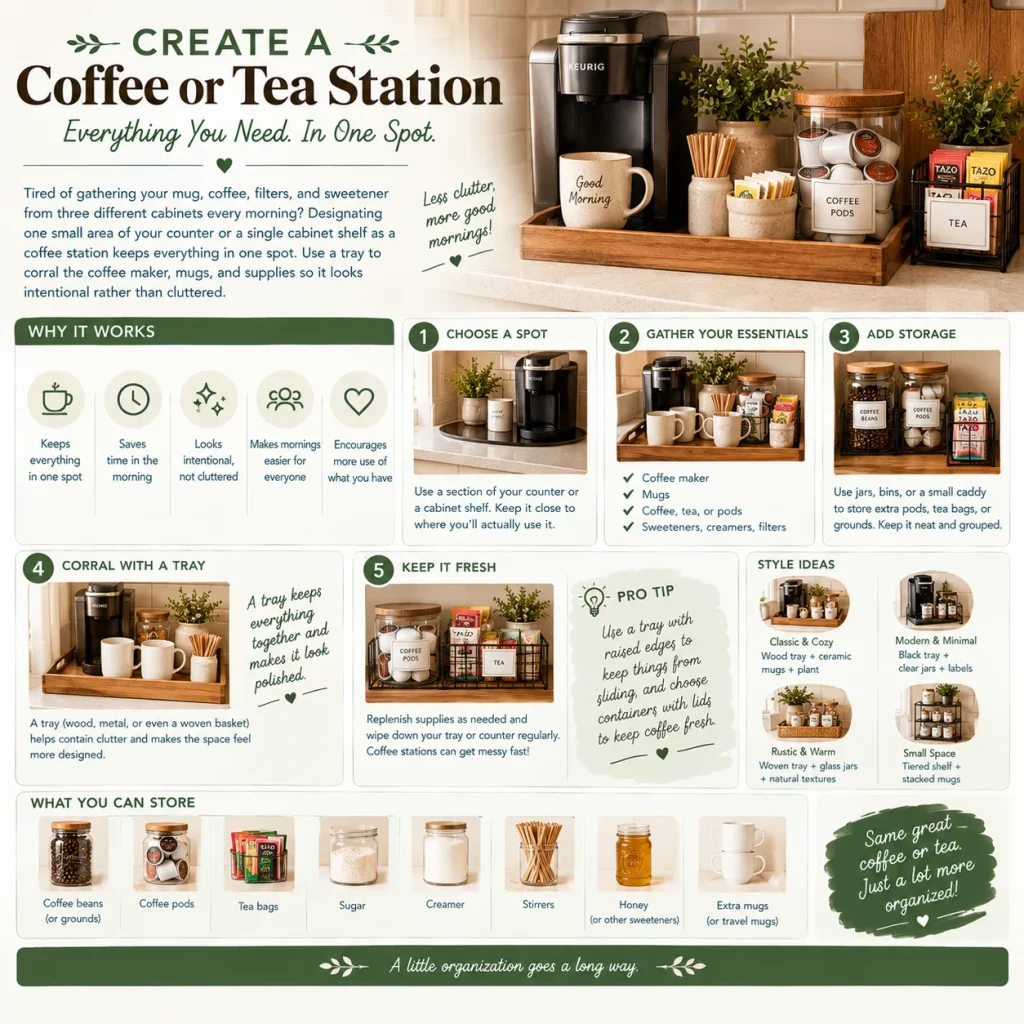
Tired of gathering your mug, coffee, filters, and sweetener from three different cabinets every morning? Designating one small area of your counter or a single cabinet shelf as a coffee station keeps everything in one spot. Use a tray to corral the coffee maker, mugs, and supplies so it looks intentional rather than cluttered. Store extra coffee pods, tea bags, or grounds in a small bin nearby. This is especially helpful in households where mornings are rushed and everyone needs quick access to the same items. A simple tip: keep the tray easy to wipe down, since coffee stations tend to get messy fast.
12. Use a Rolling Kitchen Cart
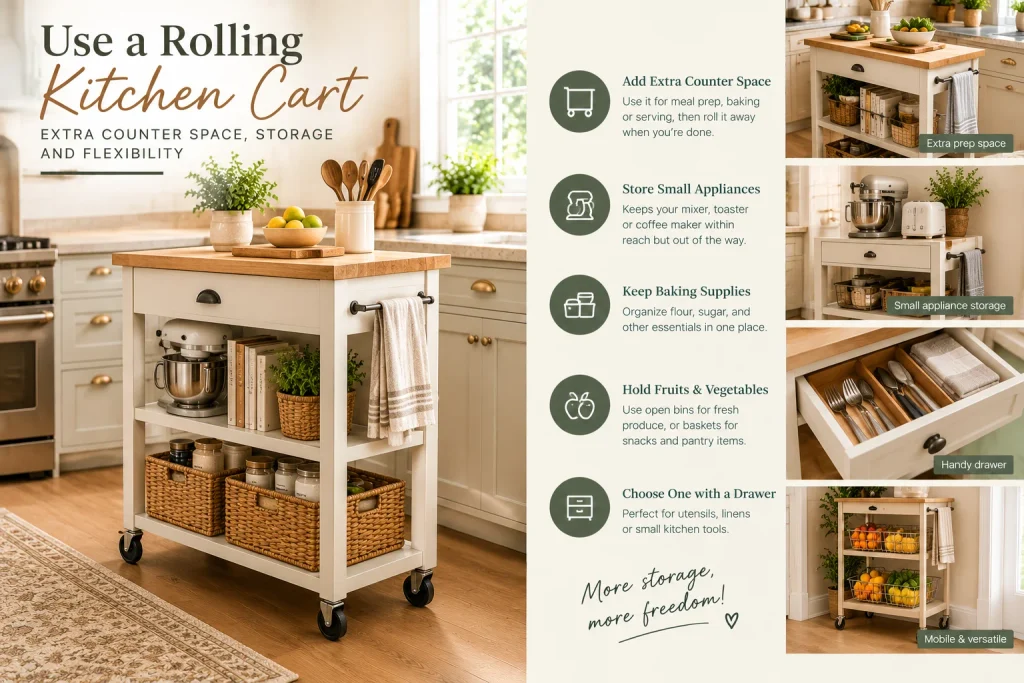
Short on counter or cabinet space but still need somewhere to prep food or store extra items? A rolling cart adds flexible storage that can move wherever it’s needed. Use it as extra counter space when cooking, then roll it against a wall when you need the floor space back. It works well for storing small appliances, baking supplies, or even fruits and vegetables in open bins. Because it’s on wheels, it’s an especially good option for renters who can’t install permanent shelving. A helpful tip: choose a cart with at least one drawer so you have a spot for utensils or linens too.
13. Add Hooks Under Cabinets
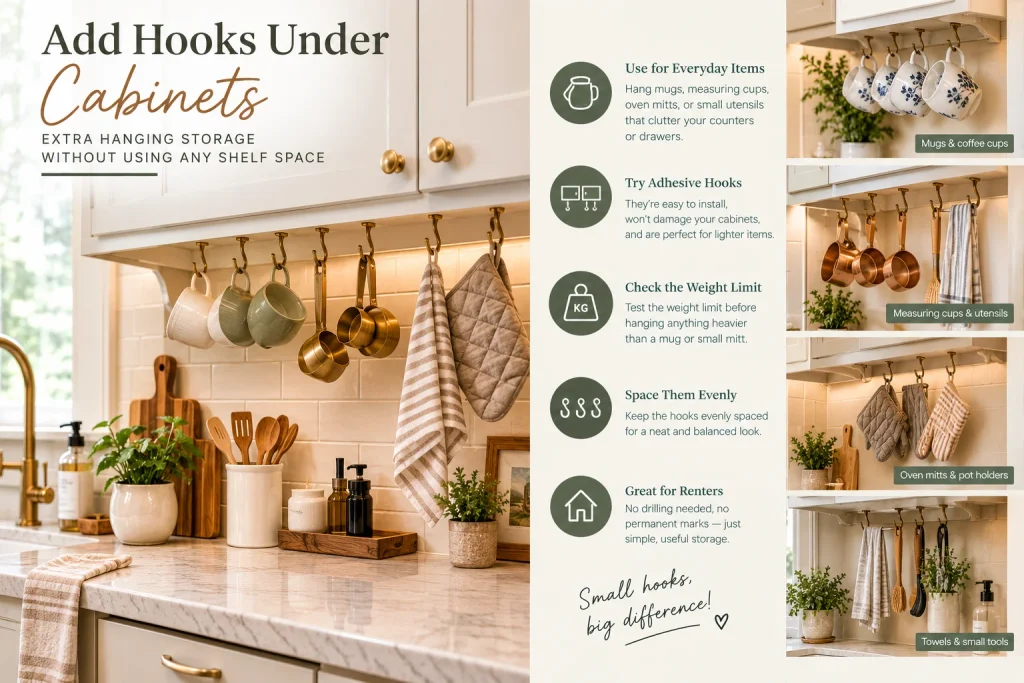
Wondering what to do with mugs, oven mitts, or small utensils that clutter your counters or drawers? Adding small hooks to the underside of your upper cabinets creates extra hanging storage without using any drawer or shelf space. This spot is often completely empty and easy to overlook. Use it for coffee mugs, measuring cups, or even a small towel. Adhesive hooks work fine for lighter items and won’t damage cabinets, making them a solid renter-friendly choice. A quick tip: space the hooks evenly and test the weight limit before hanging anything heavier than a mug or small mitt.
14. Organize Baking Supplies Together
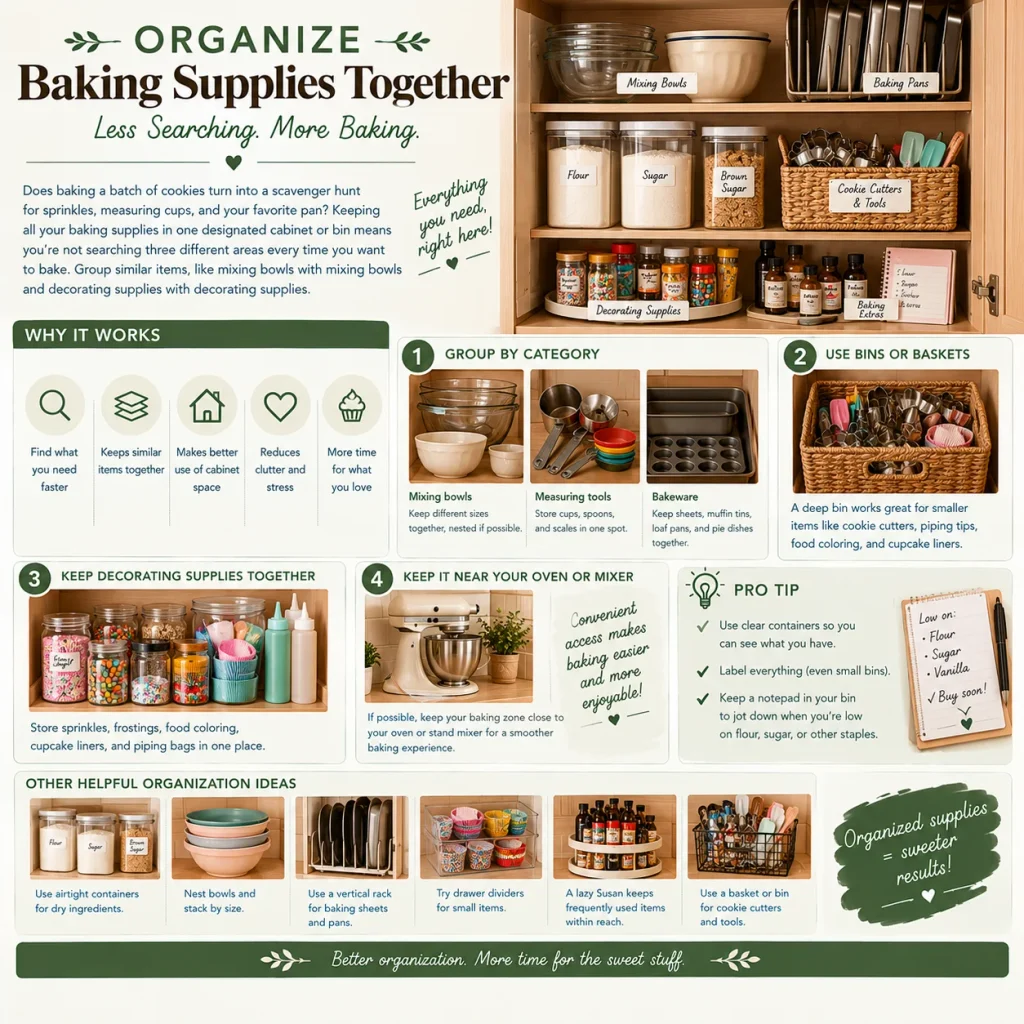
Does baking a batch of cookies turn into a scavenger hunt for sprinkles, measuring cups, and your favorite pan? Keeping all your baking supplies in one designated cabinet or bin means you’re not searching three different areas every time you want to bake. Group similar items, like mixing bowls with mixing bowls and decorating supplies with decorating supplies. A deep bin or basket works well for holding smaller items like cookie cutters or piping tips so they don’t scatter. Store this zone near your oven or stand mixer if possible. Tip: keep a small notepad in the bin to jot down when you run low on flour or sugar.
15. Create a Dedicated Food Storage Area
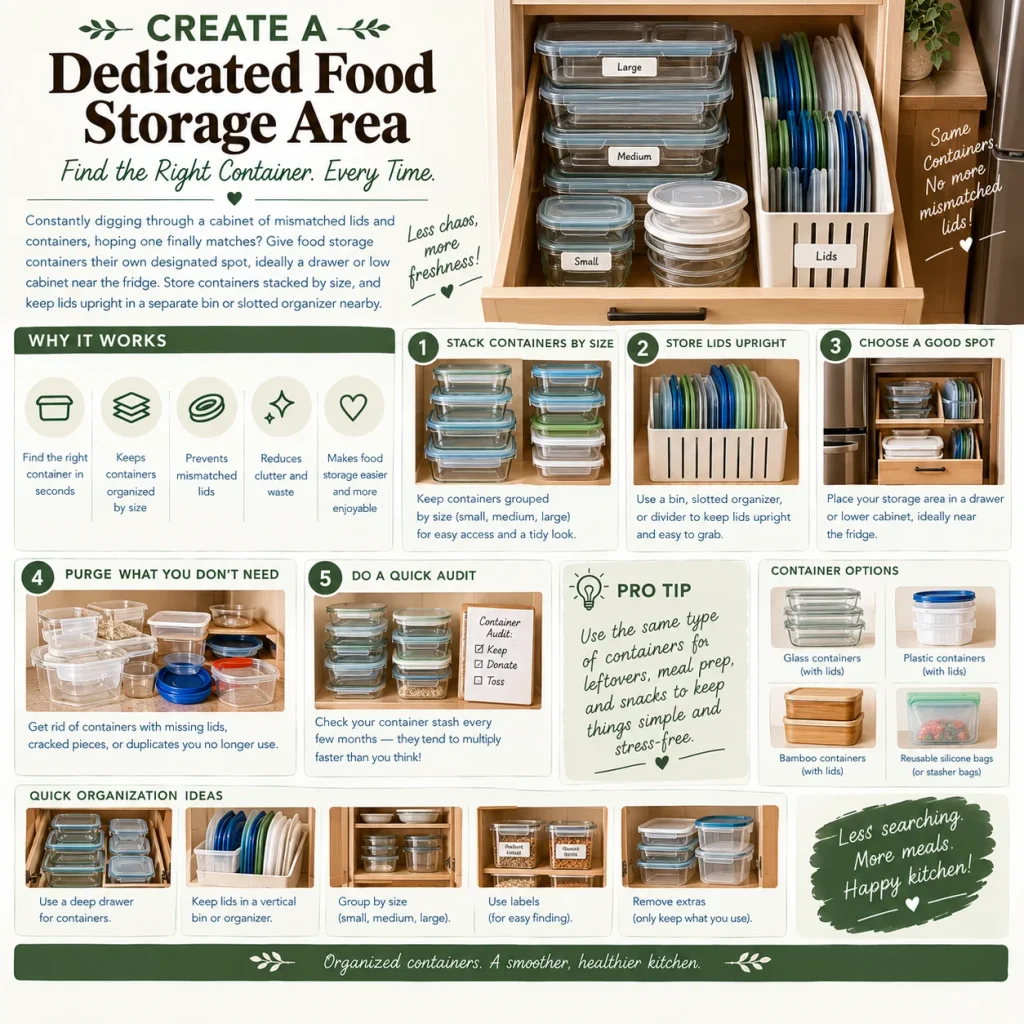
Constantly digging through a cabinet of mismatched lids and containers, hoping one finally matches? Give food storage containers their own designated spot, ideally a drawer or low cabinet near the fridge. Store containers stacked by size, and keep lids upright in a separate bin or slotted organizer nearby. This makes it much faster to find a matching set instead of pulling out five containers before finding the right lid. If space allows, get rid of any containers with missing lids or extras you no longer need. A helpful tip: do a quick container audit every few months, since these tend to multiply over time.
16. Use Vertical Space for Trays and Baking Sheets
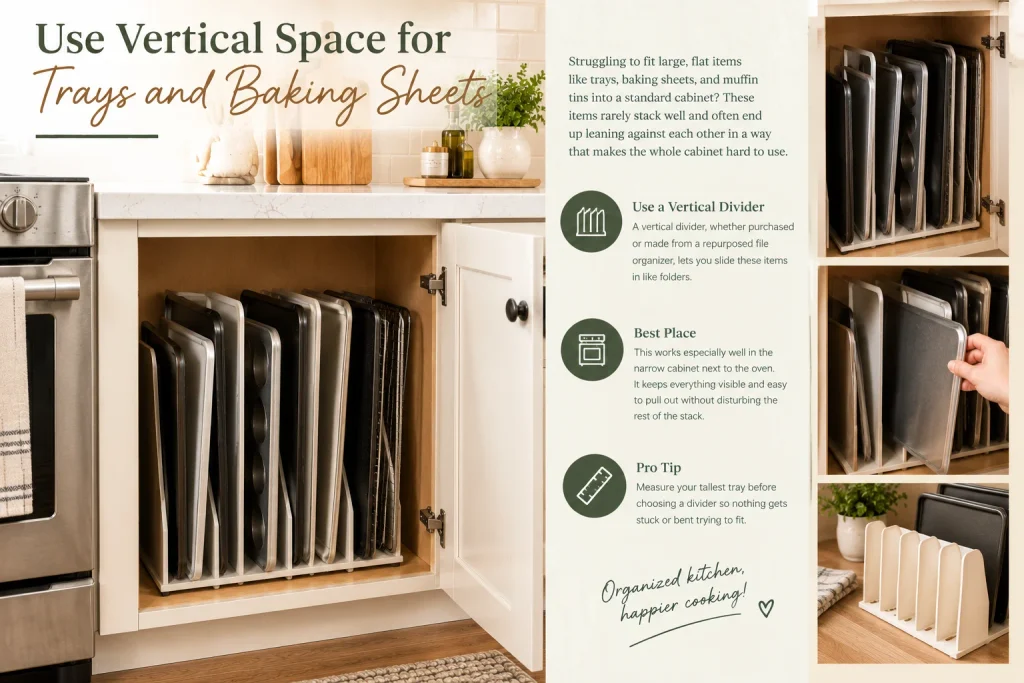
Struggling to fit large, flat items like trays, baking sheets, and muffin tins into a standard cabinet? These items rarely stack well and often end up leaning against each other in a way that makes the whole cabinet hard to use. A vertical divider, whether purchased or made from a repurposed file organizer, lets you slide these items in like folders. This works especially well in the narrow cabinet next to the oven. It keeps everything visible and easy to pull out without disturbing the rest of the stack. Tip: measure your tallest tray before choosing a divider so nothing gets stuck or bent trying to fit.
17. Keep Everyday Dishes Within Easy Reach
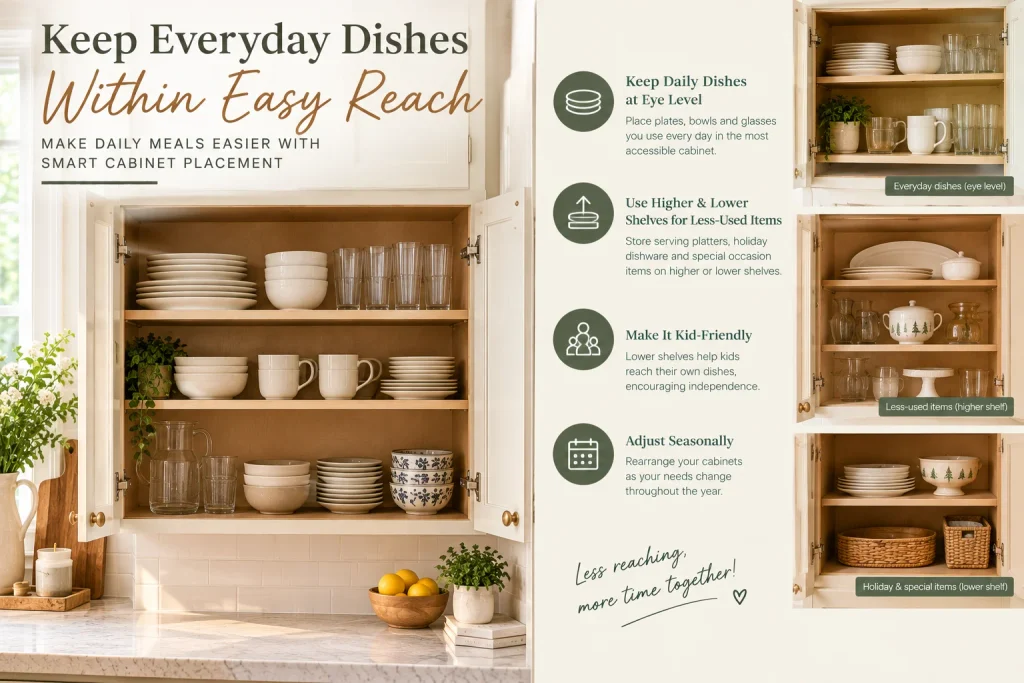
Does setting the table always involve a step stool or an awkward stretch to the top shelf? The dishes you use daily, like everyday plates, bowls, and glasses, should live in the most accessible cabinet, usually one at eye level or just below. Reserve higher or lower shelves for items you use less often, like serving platters or holiday dishware. This small shift in placement can save a surprising number of daily trips and frustrations. It’s especially useful in households with kids, since younger family members can reach lower shelves on their own. A quick tip: rearrange this seasonally if your daily-use items change.
18. Add Bins to Deep Cabinets
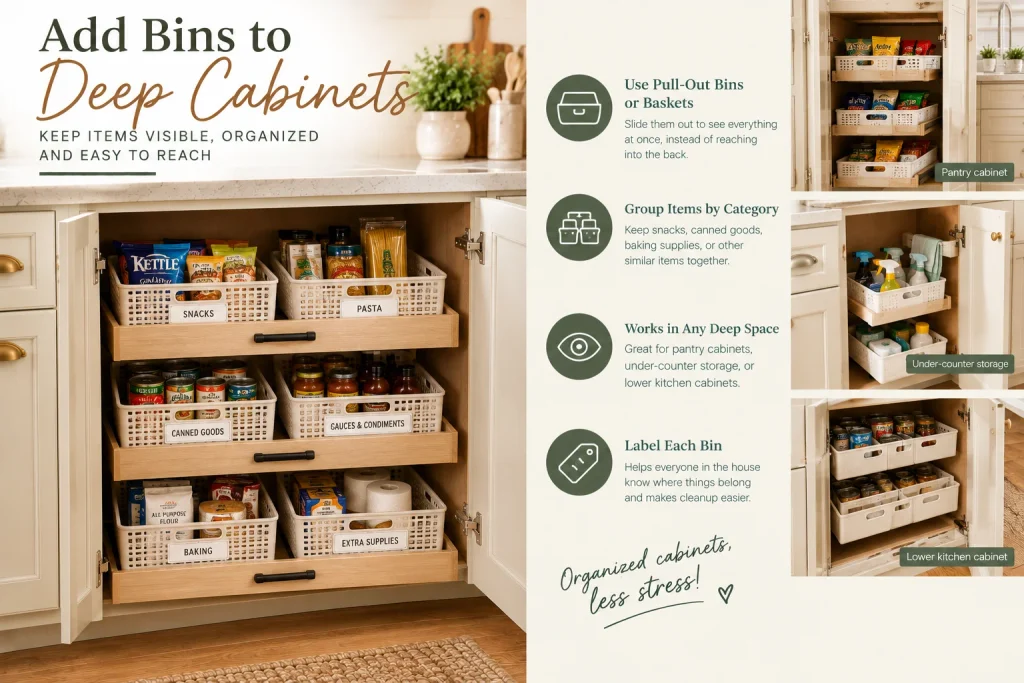
Do items get pushed to the back of a deep cabinet and basically disappear until your next big cleanout? Deep cabinets are useful for storage but terrible for visibility. Adding pull-out bins or simple baskets creates sections you can slide out entirely, rather than crouching down and reaching blindly. Group items by category, like snacks in one bin and canned goods in another, so you’re not shuffling through a single messy pile. This works well for pantry cabinets, under-counter storage, or lower kitchen cabinets in general. A helpful tip: label each bin so everyone in the house knows where things belong and, more importantly, where to put them back.
19. Create a Small Appliance Storage Zone
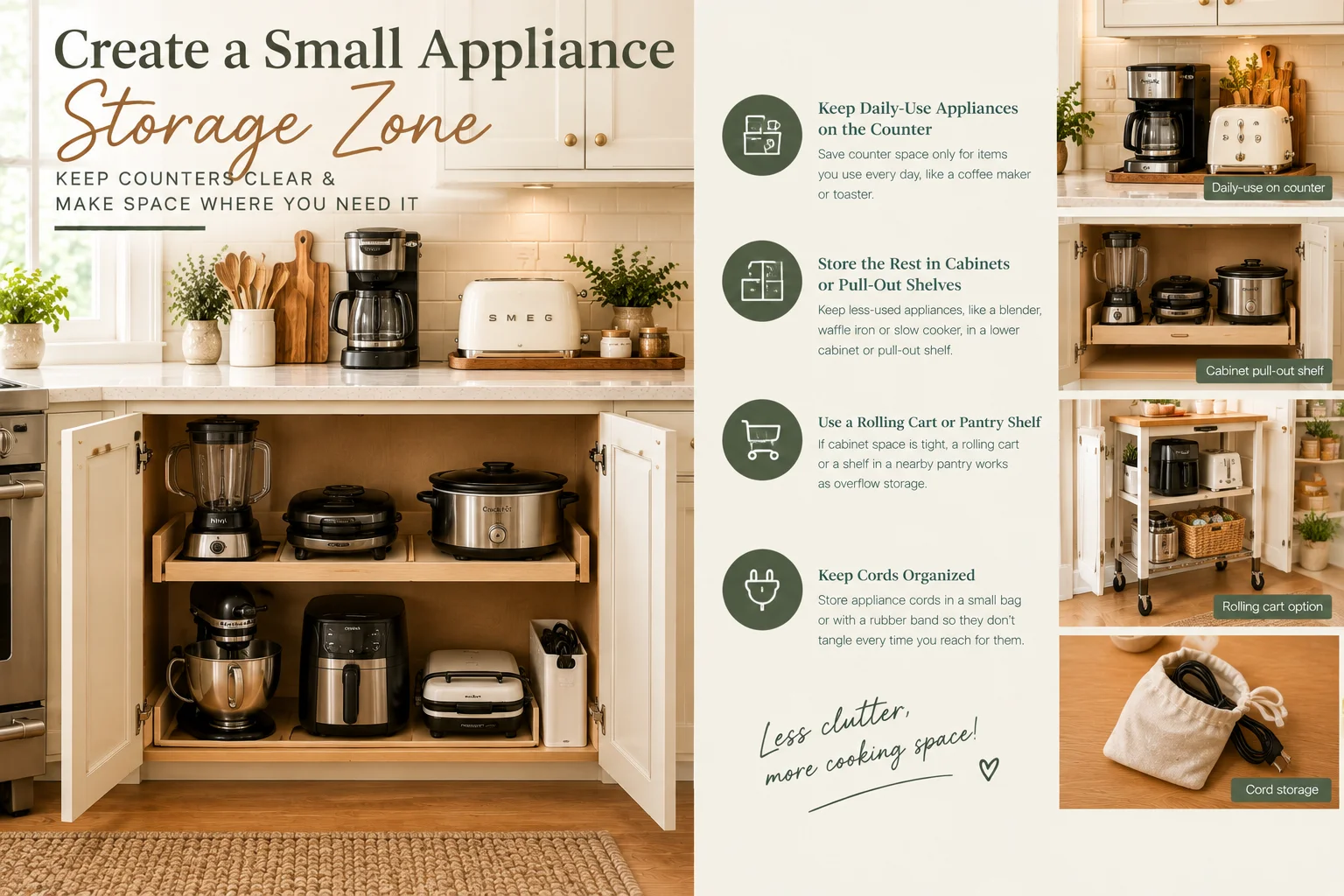
Do your counters stay cluttered because every small appliance you own is sitting out, even the ones you barely use? Not every appliance needs a permanent spot on the counter. Reserve counter space only for appliances used daily, like a coffee maker or toaster, and store the rest, like a blender, waffle iron, or slow cooker, in a lower cabinet or on a pull-out shelf. If cabinet space is tight, a rolling cart or a shelf in a nearby pantry can work as overflow storage. This single change can dramatically reduce visual clutter. Tip: store appliance cords in a small bag or rubber band so they don’t tangle every time you reach for them.
20. Organize Kitchen Towels and Linens
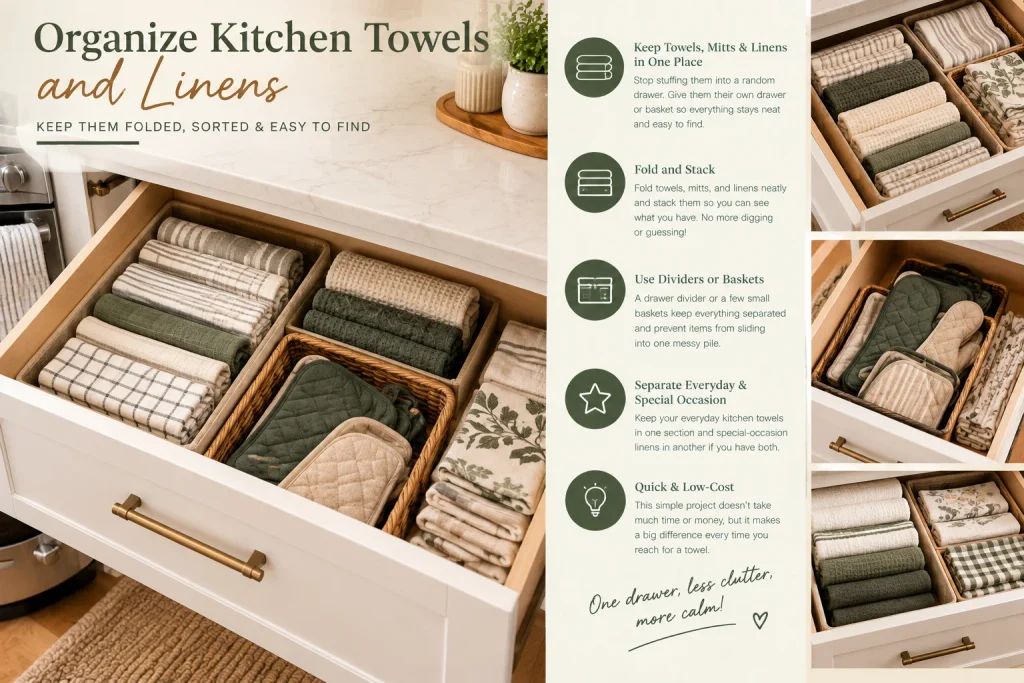
Struggling to find a clean towel because they’re stuffed into a random drawer with oven mitts, potholders, and stray rubber bands? Give towels, mitts, and linens their own drawer or small basket, folded and stacked so you can see what you have. Separate everyday towels from special-occasion linens if you have both. A drawer divider or even a couple of small baskets inside the drawer can keep everything from sliding into one messy pile. This is a quick, low-cost project that makes a noticeable difference every time you reach for a towel. Tip: keep one drawer for towels only, since mixing them with tools or gadgets leads right back to clutter.
21. Use Wall Space for Utensils
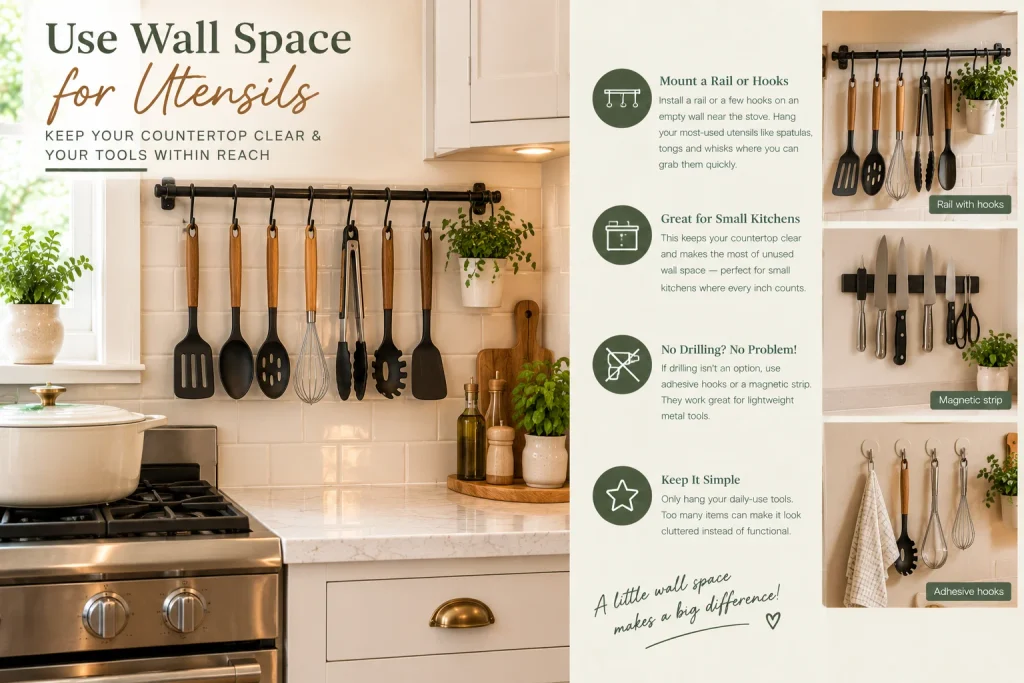
Is your countertop crowded with a big utensil crock that takes up more room than it should? Mounting a rail or a few hooks on an empty wall near the stove gives your most-used utensils a home that’s off the counter entirely. Hang spatulas, tongs, and whisks where you can grab them mid-cooking without turning around. This works especially well in small kitchens where every inch of counter space matters. If drilling isn’t an option, adhesive hooks or a magnetic strip can hold lightweight metal tools just as effectively. A helpful tip: keep this display limited to daily-use tools only, or it can start to look cluttered instead of functional.
22. Create a Family-Friendly Snack Station
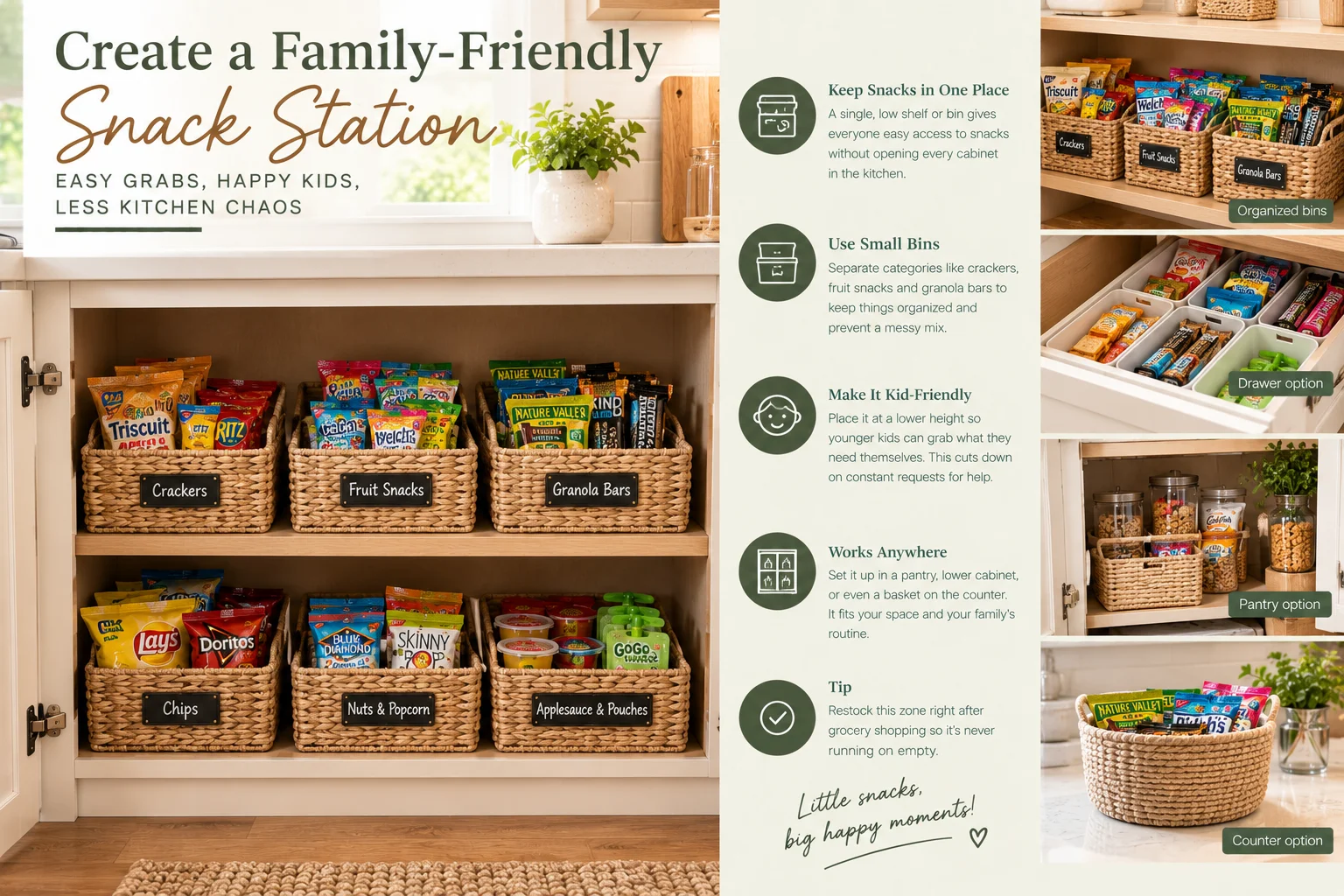
Tired of answering “where are the snacks?” ten times a day? A single, low shelf or bin dedicated to snacks lets kids and family members grab what they need without opening every cabinet in the kitchen. Use small bins to separate categories, like crackers, fruit snacks, and granola bars, so the shelf doesn’t turn into a jumbled mess. Placing this at a lower height means younger kids can serve themselves, which cuts down on constant requests for help. This idea works well in a pantry, a lower cabinet, or even a dedicated basket on the counter. Tip: restock this zone right after grocery shopping so it’s never running on empty.
23. Make a Dedicated Cleaning Supply Zone
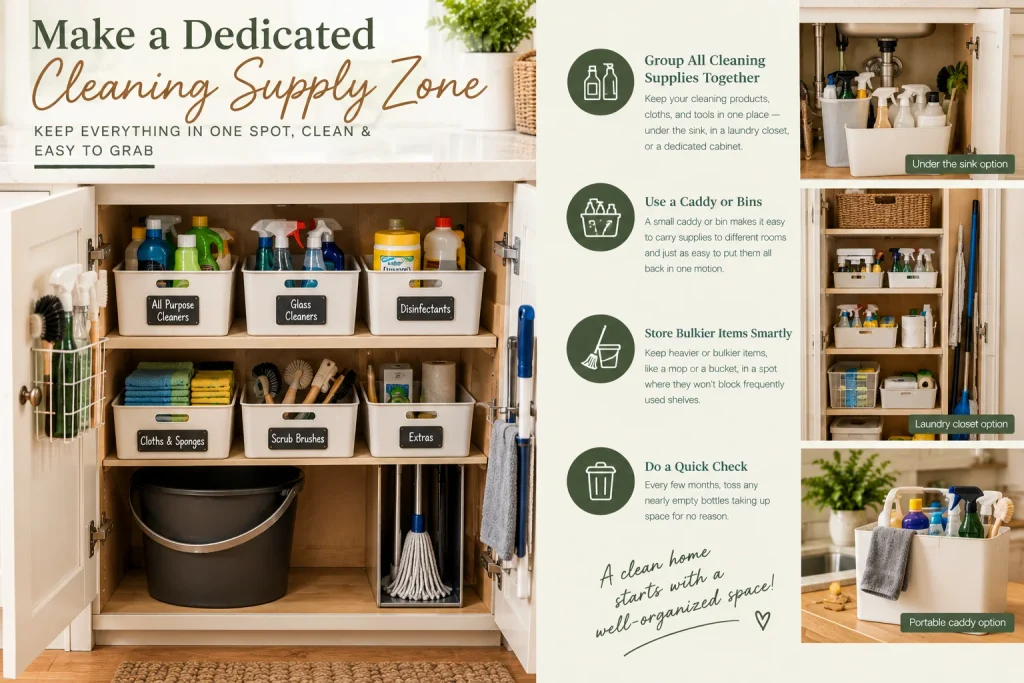
Does it feel like cleaning supplies are scattered across three different cabinets, none of which make sense? Group all your cleaning products, cloths, and tools into one spot, whether that’s under the sink, in a laundry closet, or a designated cabinet. A small caddy or bin makes it easy to carry supplies to different rooms and just as easy to put them all back in one motion. Keep heavier or bulkier items, like a mop or a bucket, in a spot where they won’t block frequently used shelves. A practical tip: do a quick check every few months and toss any nearly empty bottles taking up space for no reason.
24. Keep Countertops Intentionally Minimal
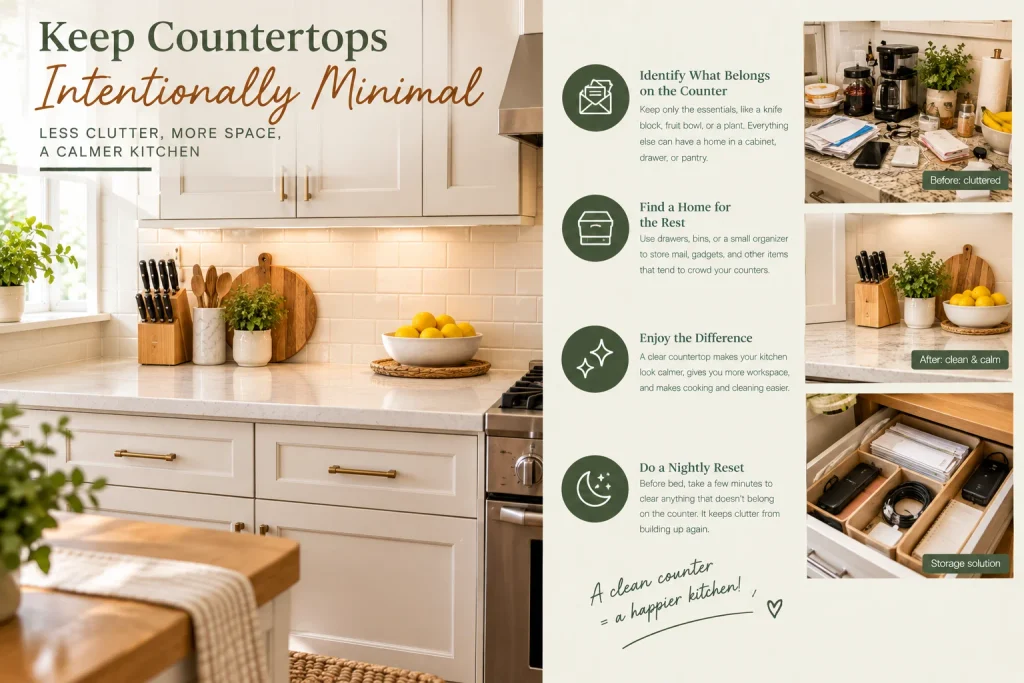
Does your kitchen counter always look cluttered no matter how often you clean it? Countertop clutter often builds up gradually, one mail pile or spare gadget at a time, until the whole surface feels crowded. Choose only a few items that truly need to live on the counter, like a knife block or fruit bowl, and find a home elsewhere for everything else. A clear counter not only looks calmer, it also gives you more actual workspace when you’re cooking. This is one of the simplest, most visible changes you can make in a kitchen. Tip: do a nightly “counter reset,” clearing off anything that landed there during the day.
25. Give Every Frequently Used Item a Home
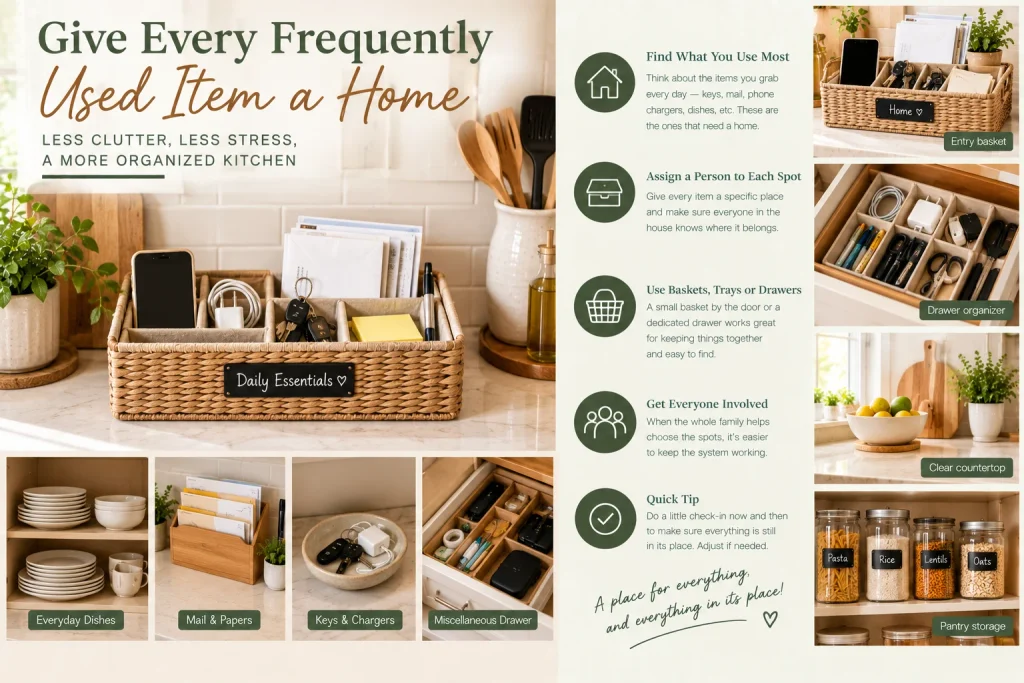
Do certain items always seem to end up “somewhere random” because they never had an actual assigned spot? If an item doesn’t have a specific home, it will always end up cluttering a counter, drawer, or random shelf. Walk through your kitchen and make sure your most frequently used items, keys, mail, phone chargers, everyday dishes, all have one consistent spot. This might mean adding a small basket by the door or a designated drawer for miscellaneous daily items. Once everyone in the house knows where things belong, it becomes much easier to keep the whole space tidy. Tip: involve the whole household in choosing these spots so the system actually sticks.
Small Kitchen Organization Tips That Make a Big Difference
Working with a small kitchen and feel like there’s just no extra space to gain? The key is looking up, not just around. Vertical space, shelves, wall-mounted racks, the inside of cabinet doors, is often the most underused area in a small kitchen. Cutting down on duplicate items, like three sets of measuring cups or five spatulas, frees up real space without sacrificing function. Keeping counters as clear as possible makes a small room feel noticeably bigger. Multi-purpose storage, like a cart that doubles as prep space, gets more use out of every square foot. Corners, narrow gaps beside appliances, and the backs of doors all hold potential storage most people walk past every day. Small kitchens don’t need less stuff necessarily, they need a system that makes the most of every available inch.
Budget-Friendly Kitchen Organization Ideas
Think organizing your kitchen means an expensive shopping trip? It doesn’t have to. Before buying anything, declutter first, since you might already have enough space once unused items are cleared out. Repurpose what you already own: cardboard boxes, old jars, egg cartons, and shoeboxes can all work as makeshift dividers or bins. Inexpensive baskets from a dollar store often work just as well as pricier organizers. Adhesive hooks cost very little and solve a surprising number of storage problems without any tools. Reusing glass jars for spices or dry goods gives you clear storage for free. Simple labels, even handwritten ones on masking tape, help keep an organized system working long after the initial setup. The goal isn’t buying more, it’s using what you have more intentionally.
Kitchen Organization Mistakes to Avoid
Jumping straight into buying bins and baskets before figuring out what you actually need? This is one of the most common mistakes, since organizers bought before decluttering often end up empty or the wrong size. Another mistake is storing rarely used items, like holiday dishes, in your most convenient cabinets, pushing daily items out of easy reach. Overfilling containers defeats their purpose, since you can’t see or access what’s inside. Ignoring vertical space wastes a huge amount of potential storage in most kitchens. Overly complicated systems, ones with too many steps or categories, tend to fall apart within a few weeks because they’re hard to maintain. Finally, holding onto duplicate items “just in case” adds clutter without adding any real value.
A Simple 10-Minute Kitchen Reset
Want a routine that keeps your kitchen from sliding back into chaos? Try this short reset at the end of each day.
- Clear the counters. Put away anything that landed there during the day, from mail to loose gadgets.
- Empty the dish rack. Put clean dishes away so the rack is ready for tomorrow’s dishes.
- Wipe down surfaces. A quick wipe of counters and the stovetop takes less than a minute.
- Check one drawer or shelf. Straighten just one small area rather than the whole kitchen.
- Take out the trash if it’s full. This prevents overflow and lingering odors overnight.
- Reset your stations. Return the coffee station, snack bin, or cleaning caddy to their proper spots.
This routine takes about ten minutes but prevents the kind of buildup that turns into a weekend-long cleaning project.
Frequently Asked Questions About Kitchen Organization
How do I organize a small kitchen?
Focus on vertical space first, using shelf risers, wall hooks, and the inside of cabinet doors. Reduce duplicate items, keep counters as clear as possible, and choose furniture or storage pieces that serve more than one purpose.
What is the best way to organize kitchen cabinets?
Start by decluttering one cabinet at a time, then group similar items together. Place daily-use items at eye level, use bins or dividers in deep or awkward spaces, and reserve higher or lower shelves for items used less often.
How can I keep my kitchen counters clutter-free?
Limit what’s allowed to stay on the counter permanently, and give everything else a specific home elsewhere. A nightly counter reset, where you put stray items away before bed, helps prevent clutter from building back up.
How do I organize a kitchen without spending much money?
Declutter before buying anything, since you may already have enough space. Repurpose jars, boxes, and containers you already own, and look for inexpensive baskets or adhesive hooks instead of pricier organizing systems.
What should I store in lower kitchen cabinets?
Lower cabinets work well for heavier items like pots, pans, small appliances, and bulk pantry goods. Bins or pull-out baskets help organize these deeper spaces so items don’t get lost or hard to reach.
How can I keep my kitchen organized long-term?
Give every item a specific home so nothing ends up “somewhere random.” Build a quick daily reset habit, revisit your systems every few months, and adjust storage as your household’s needs change over time.
Make Your Kitchen Easier to Live In
Feeling like your kitchen will never quite get there? It doesn’t have to happen overnight. Kitchen organization ideas work best when you start small and build momentum, one drawer, one cabinet, or one countertop at a time. Pick the idea from this list that solves your biggest daily frustration first, whether that’s a chaotic junk drawer or a pantry where nothing has a home. As one area starts working better, you’ll likely find the motivation to tackle the next. An organized kitchen isn’t about perfection. It’s about making the space easier to use every single day, one small change at a time.