
If your living room feels tight the moment you walk in, you’re not imagining it. Small rooms can feel cramped fast, especially when furniture is too big, storage is limited, or the layout fights against the space instead of working with it. The good news is that you don’t need a renovation to fix this. With the right small living room ideas, you can change how open and comfortable the room feels just by rethinking furniture placement, color, lighting, and a few key decor choices.
This guide walks through 21 practical ideas covering furniture, color, lighting, storage, and styling. Each one is easy to apply, whether you’re renting an apartment, working around an odd floor plan, or just trying to get more out of a compact space. By the end, you’ll have a clear plan for making your living room feel more open, more functional, and more like a room you actually want to relax in.
How Can I Make a Small Living Room Look Bigger?
Start with furniture that’s scaled to the room, not the showroom. Keep at least one clear walking path, and pull furniture slightly away from walls when possible so the room can breathe. Stick to light, cohesive wall and furniture colors, and add one well-placed mirror to bounce light around. Layer your lighting with lamps and sconces instead of relying on a single overhead fixture, and cut back on decorative clutter that competes for attention. Use vertical space with shelves and tall curtains, choose sofas and chairs with visible legs, add multifunctional storage pieces, and make sure your rug is sized to anchor the seating area rather than float in the middle of it.
21 Small Living Room Ideas to Make Your Space Look Bigger
1. Choose a Sofa That Actually Fits the Room
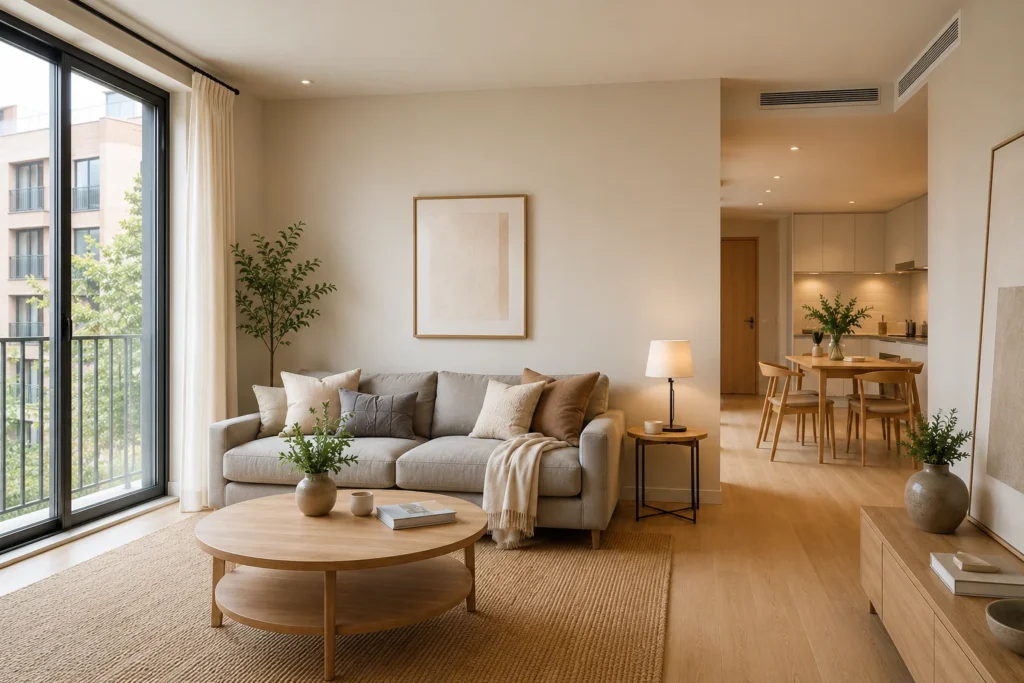
Oversized sofas are one of the biggest reasons small living rooms feel cramped. A sofa that’s too deep or too long eats up floor space and makes everything around it feel squeezed. Before you shop, measure your room and map out how much clearance you need for walking and other furniture. A loveseat, apartment-size sofa, or slim-arm design usually works better than a standard three-seat couch in a tight space. Look for a depth of around 32 to 34 inches instead of 38-plus. Styling tip: choose a sofa with a slightly raised profile so it doesn’t visually dominate the wall behind it.
2. Add Chairs Instead of a Bulky Sectional
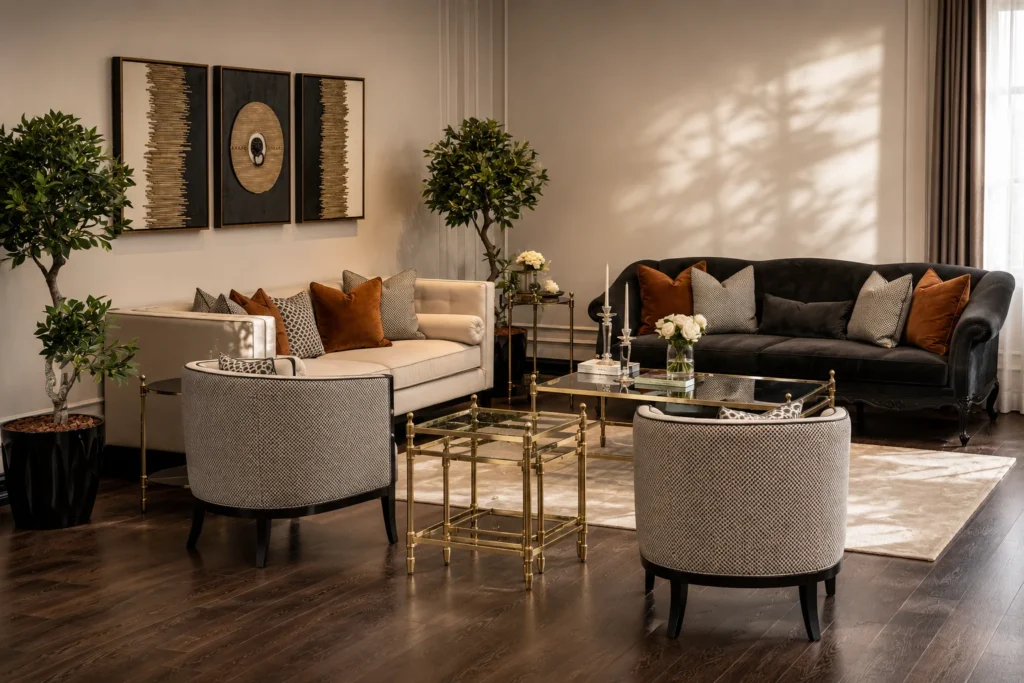
Sectionals look great in showrooms, but in a small room they often block pathways and make the space feel like one giant piece of furniture. A sofa paired with one or two compact accent chairs gives you flexible seating without the visual weight. You can also rearrange chairs easily for movie nights, guests, or a different layout down the road. Choose armless or slim-arm chairs to keep things light. Styling tip: pick chairs in a slightly different fabric or color than the sofa so the seating area feels layered instead of matched-and-heavy.
3. Furnish With Exposed Legs
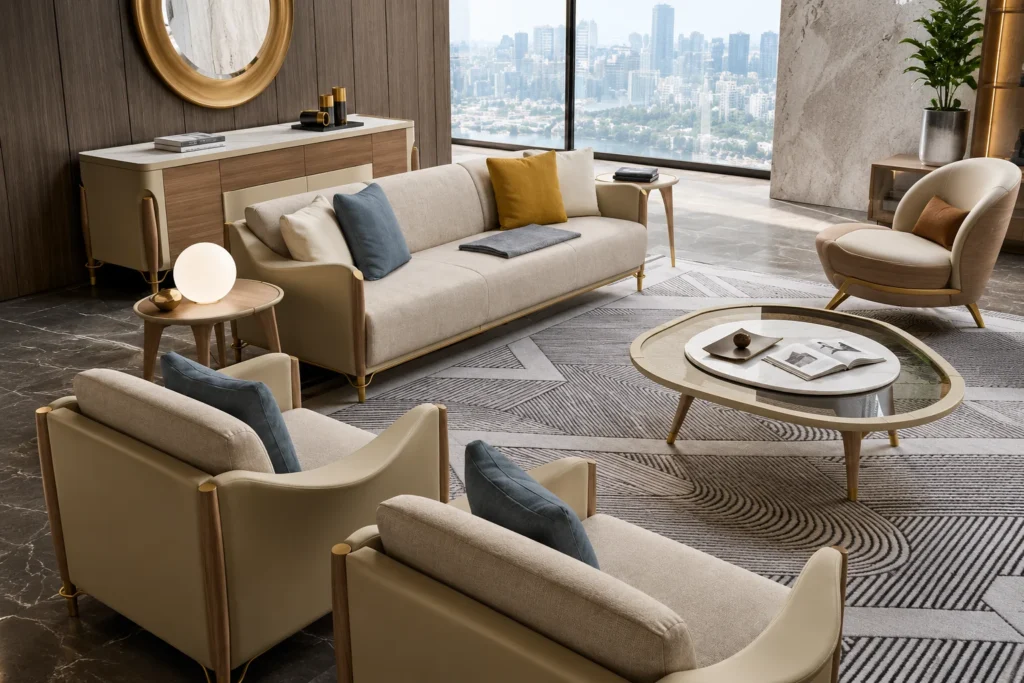
Furniture that sits flush to the floor, like skirted sofas or boxy cabinets, blocks sightlines and makes a room feel more solid and closed-in. Pieces with visible wood or metal legs let your eye travel underneath them, which reads as more open space even though the actual floor area hasn’t changed. This works for sofas, chairs, console tables, and media stands alike. Look for leg heights of at least four inches. Styling tip: match leg finishes across pieces, like all warm wood or all black metal, so the room feels intentional rather than mismatched.
4. Create One Open, Unobstructed Layout
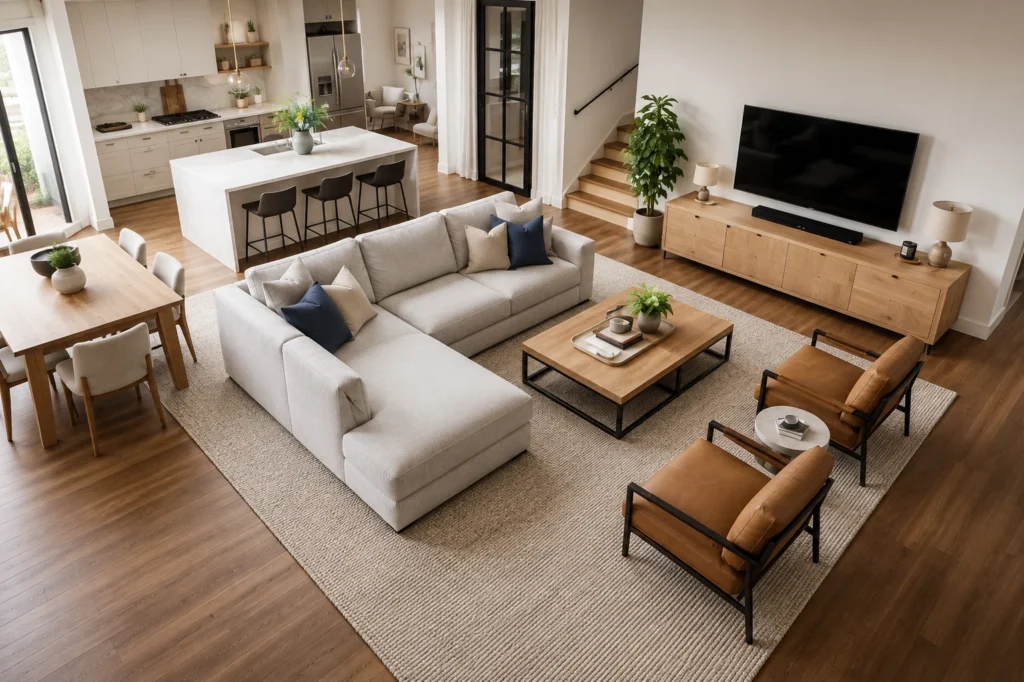
A layout with too many pieces angled in different directions makes a small room feel chaotic. Instead, plan your furniture around a single, clear traffic path, usually from the entry to the main seating area. Keep large pieces along the walls or in efficient groupings rather than floating randomly. Walk through the room after arranging furniture to see if you bump into anything. Styling tip: use painter’s tape on the floor to map out furniture placement before you move anything heavy.
5. Leave Breathing Room Around Furniture
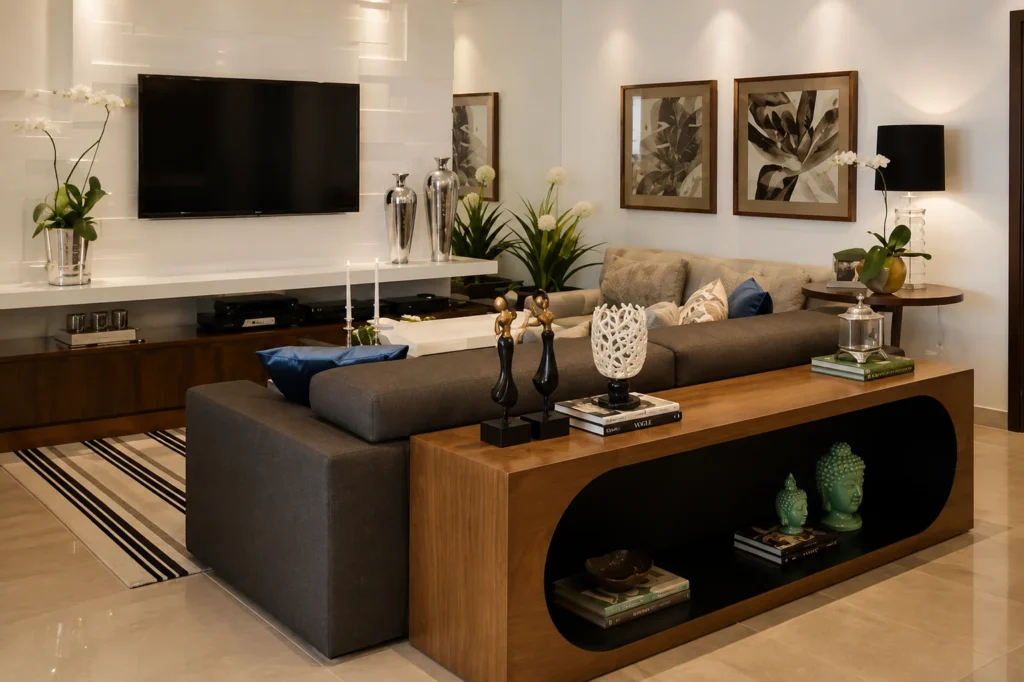
It’s tempting to push every piece against the wall to “save space,” but a few inches of breathing room between furniture and walls can actually make a room feel more spacious. Tight, wall-hugging arrangements can look cramped and awkward. Try floating your sofa an inch or two off the wall, or leaving a small gap between a chair and a bookshelf. Even small gaps create a sense of ease. Styling tip: use a narrow console or plant to fill the gap so it doesn’t look accidental.
6. Choose Multifunctional Furniture
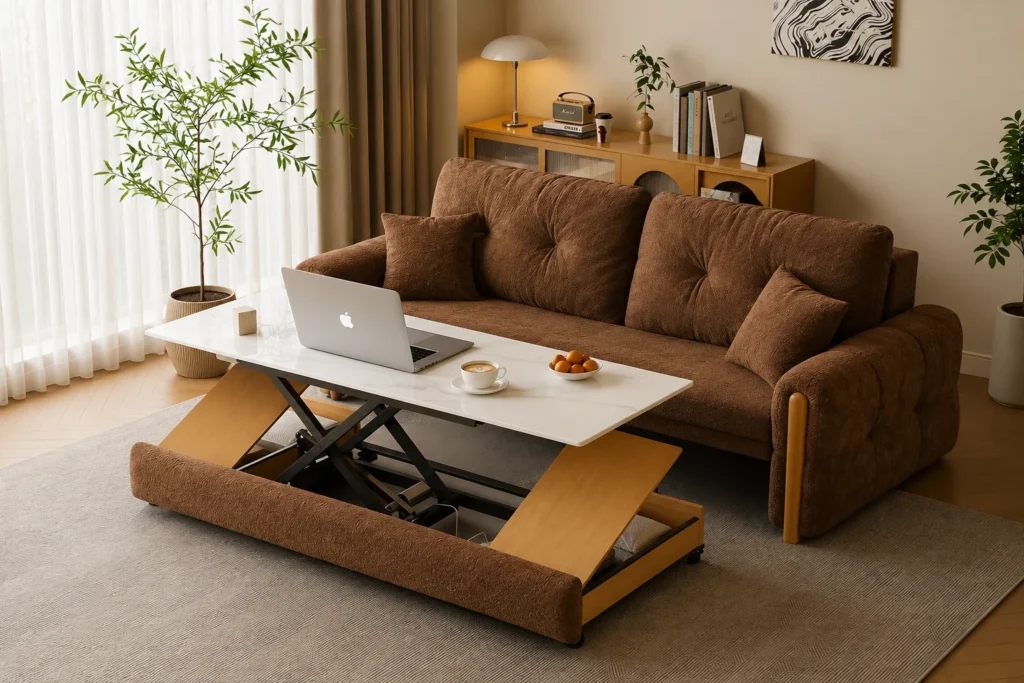
In a small living room, every piece should earn its spot. A coffee table with storage, a sofa bed for guests, or a bench that doubles as extra seating and storage all help you do more with less. This cuts down on the number of separate pieces you need, which keeps the room from feeling overloaded. Look for furniture designed specifically for small spaces rather than trying to retrofit oversized pieces. Styling tip: choose one hero multifunctional piece rather than trying to make every item do double duty, which can start to look busy.
7. Add a Storage Ottoman Instead of a Coffee Table
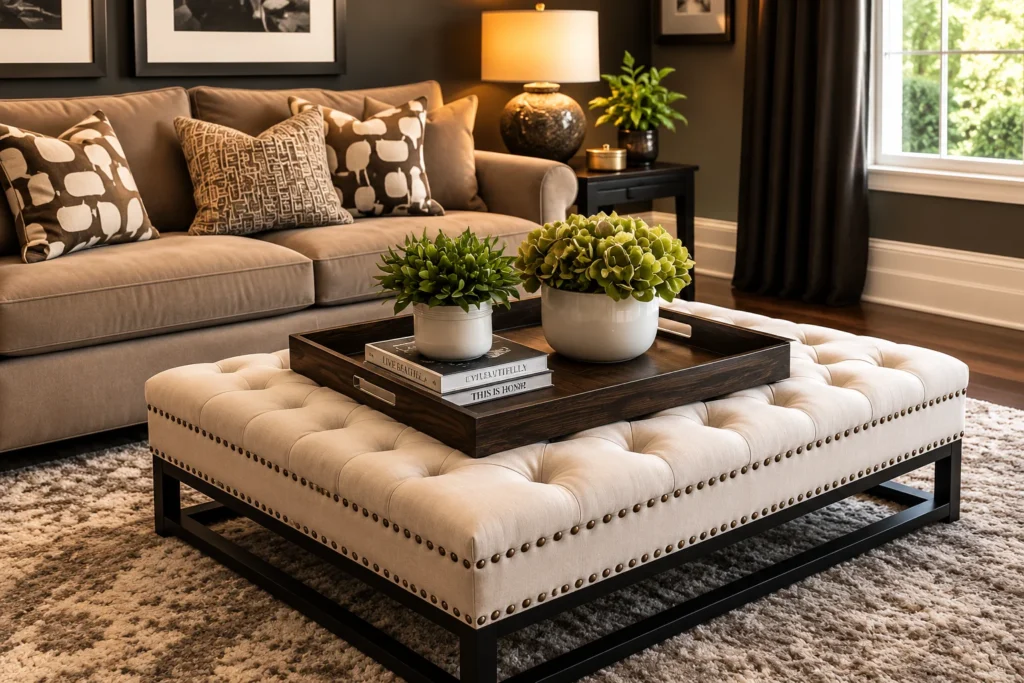
A storage ottoman can replace a traditional coffee table while giving you a place to stash blankets, remotes, or magazines out of sight. It also works as extra seating when you have guests over. Choose one with a flat top so it’s still useful as a surface, and pick a size proportional to your sofa, usually about two-thirds the length. Styling tip: top it with a large tray so you still have a stable spot for drinks or a stack of books.
8. Use Nesting Tables Instead of One Large Table
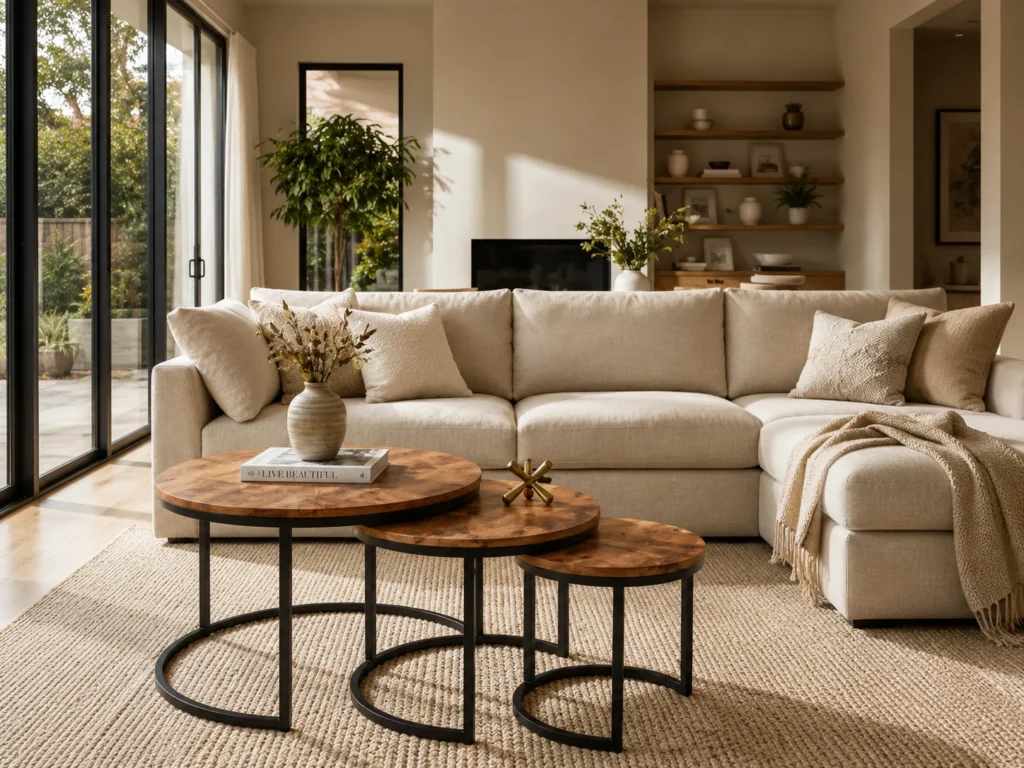
A single oversized coffee table can visually anchor the room in a heavy way. Nesting tables offer more flexibility since you can pull them apart when you need extra surface space and tuck them together the rest of the time. This is especially useful in narrow living rooms where a bulky table blocks movement. Choose two or three tables in graduated sizes. Styling tip: keep the top table simple and styled, and let the smaller tables underneath stay mostly clear for function.
9. Stick to Light, Cohesive Wall Colors
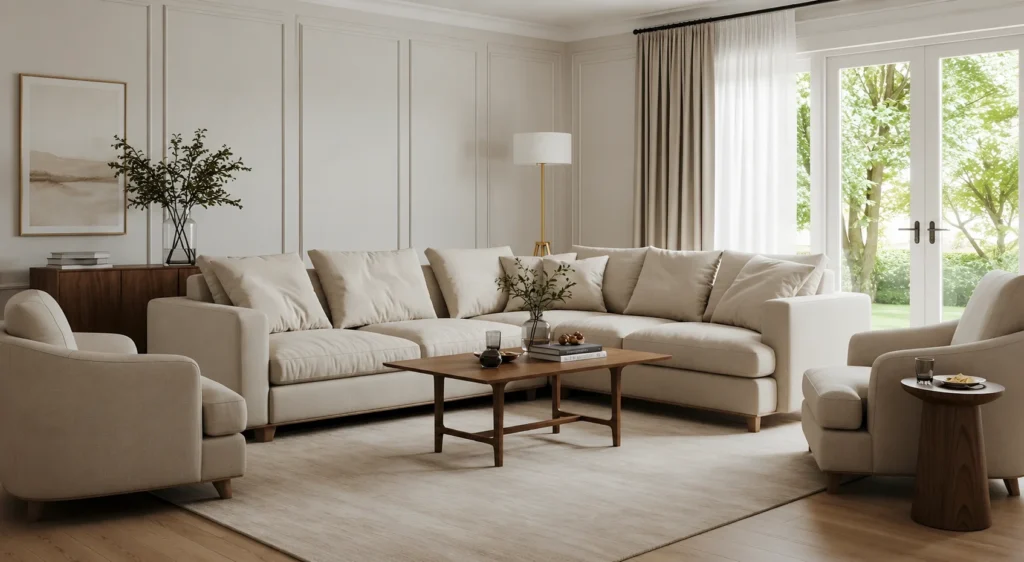
Dark, saturated walls can make a small room feel like it’s closing in, especially with low natural light. Soft, warm neutrals like warm white, cream, or light greige reflect more light and make walls feel like they recede rather than press inward. Cohesive color also helps the eye move smoothly across the room instead of stopping at contrast points. This doesn’t mean the room has to feel bland. Styling tip: pick a wall color with warm undertones if the room gets limited sunlight, since cooler whites can feel sterile in low light.
10. Match Wall and Trim Tones
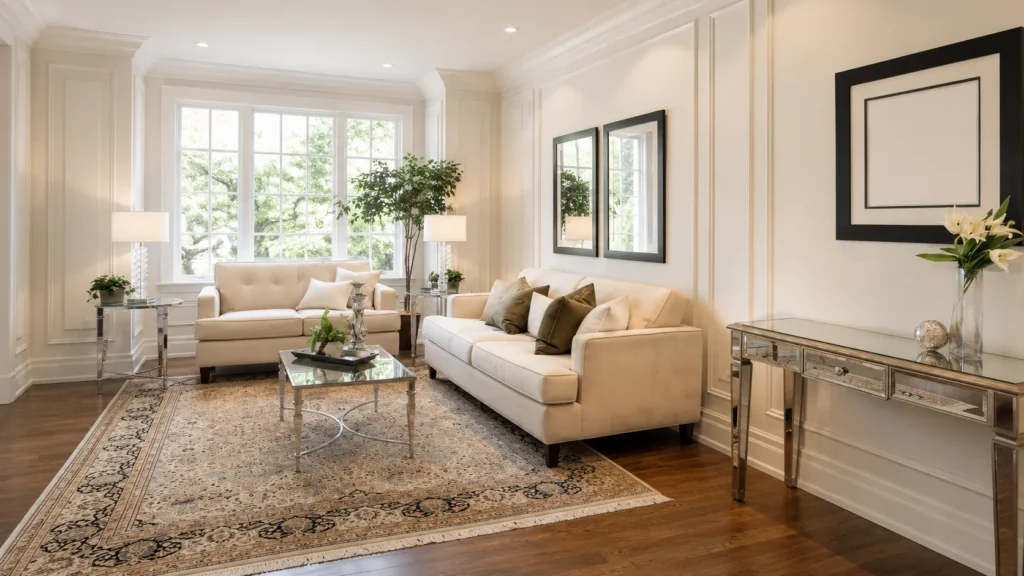
Bold contrast between walls and trim, like white trim against dark walls, draws a hard visual line that can make a room feel chopped up and smaller. Painting trim in a similar tone to the walls, or just a shade lighter, removes that visual break and lets the walls flow into the ceiling and doorways more seamlessly. This is a small change with a noticeable effect. Styling tip: use a slightly lower sheen on the walls and a slightly higher sheen on the trim so there’s still subtle definition without hard contrast.
11. Add a Strategically Placed Mirror
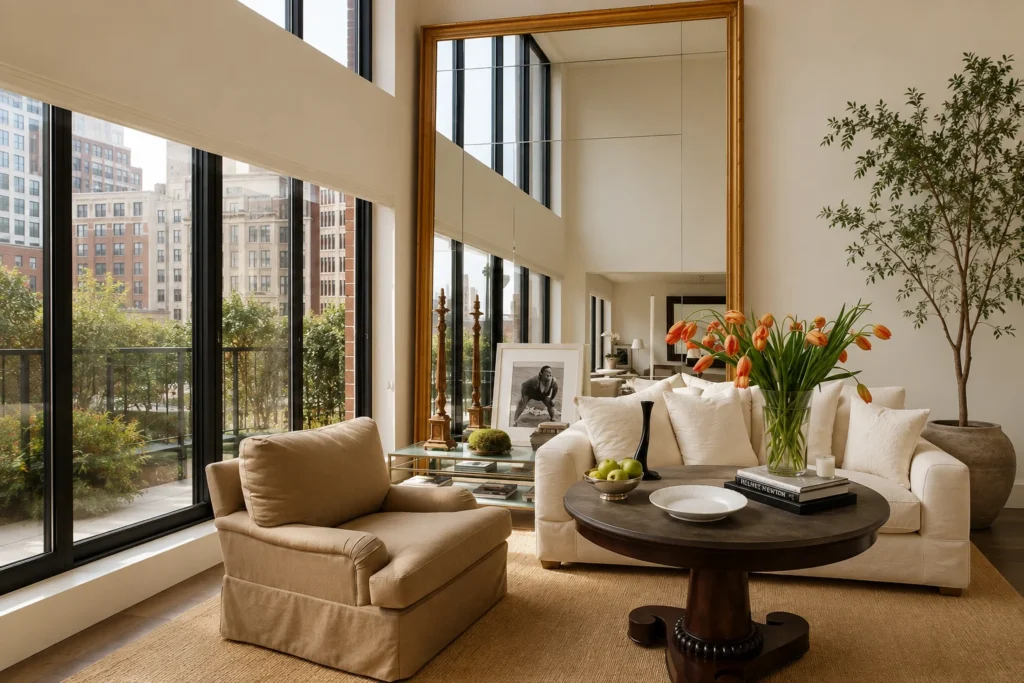
A well-placed mirror reflects light and views, which can make a room feel like it extends beyond its actual walls. Position a mirror across from a window to bounce natural light deeper into the room, or across from an attractive feature like artwork or a plant. Avoid placing mirrors directly across from clutter, since they’ll reflect that too. One larger mirror usually works better than several small ones scattered around. Styling tip: lean an oversized mirror against the wall instead of hanging it for an easy, low-commitment update.
12. Draw the Eye Upward With Wall Space
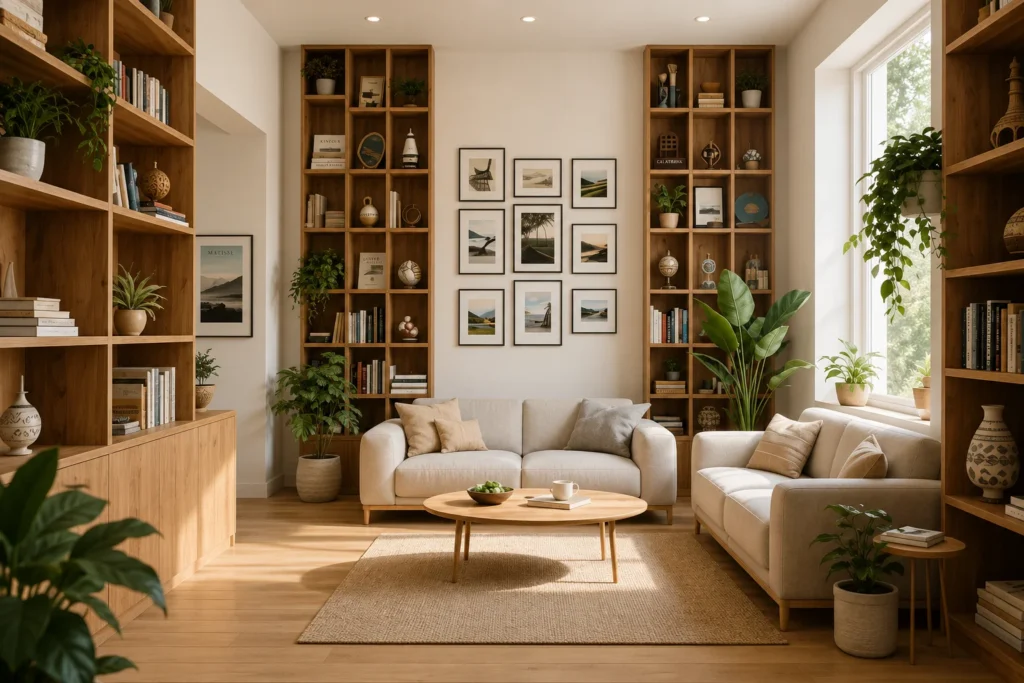
Small rooms often have plenty of unused vertical space, even when the floor feels packed. Hanging artwork slightly higher than eye level, adding a tall bookshelf, or using vertical stripes in decor can draw the eye upward and make ceilings feel taller. This shifts attention away from the limited floor area. Styling tip: leave at least a few inches of blank wall space above furniture so the vertical elements don’t feel cramped against the ceiling.
13. Install Floating Shelves
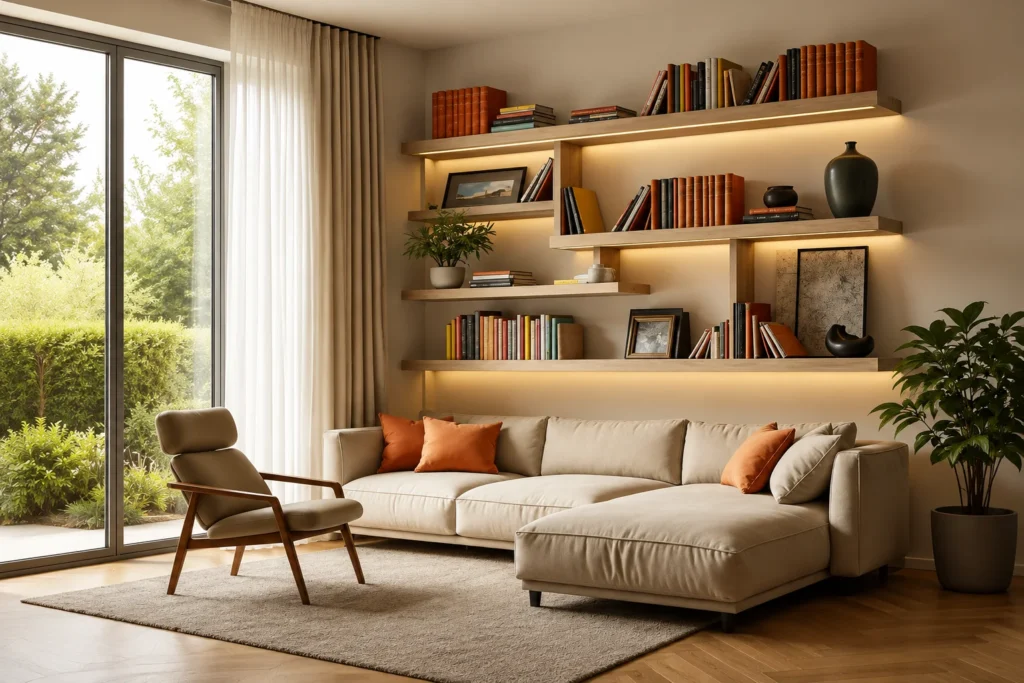
Floating shelves add storage and display space without taking up any floor area, which makes them one of the most efficient upgrades for a small living room. Use them for books, plants, or a few curated decor pieces instead of a bulky bookshelf. Keep spacing between shelves generous so they don’t look stacked and heavy. Styling tip: leave about a third of each shelf empty so the display feels curated rather than crowded.
14. Hang Curtains Closer to the Ceiling
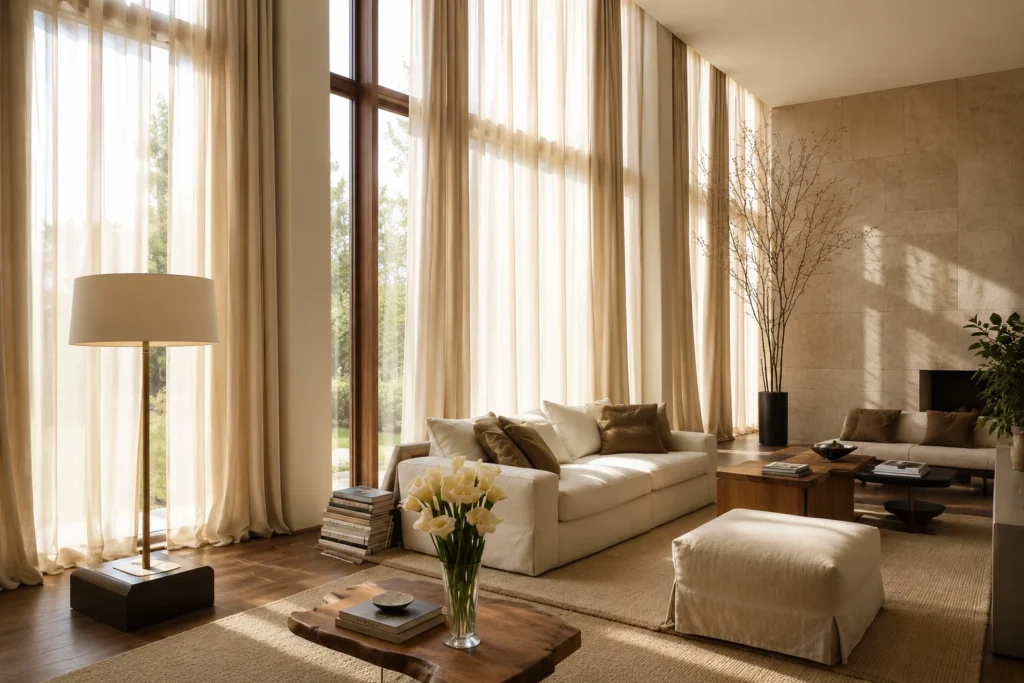
Curtains hung right above the window frame can make the window, and the whole wall, feel shorter. Mounting curtain rods closer to the ceiling and letting the curtains fall to the floor draws the eye upward and creates the illusion of higher ceilings and a taller room. This is one of the easiest, lowest-cost changes on this list. Styling tip: choose curtains in a color close to your wall color so they extend the wall visually instead of interrupting it.
15. Choose a Properly Sized Area Rug
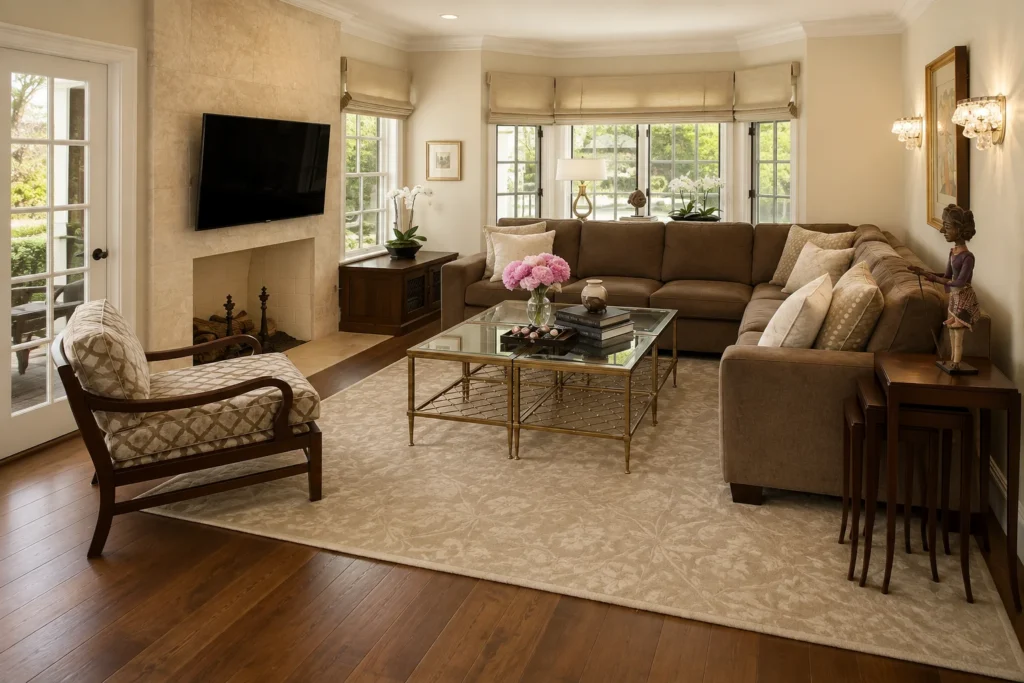
A rug that’s too small can make a seating area look like it’s floating in the middle of an empty room, which actually emphasizes how little space you have. A rug that’s sized so at least the front legs of your sofa and chairs sit on it helps anchor the layout and makes the room feel more grounded and intentional. Avoid rugs so large they leave almost no floor showing around the edges. Styling tip: measure your seating area first, then shop for a rug rather than guessing a size and hoping it fits.
16. Layer Your Lighting
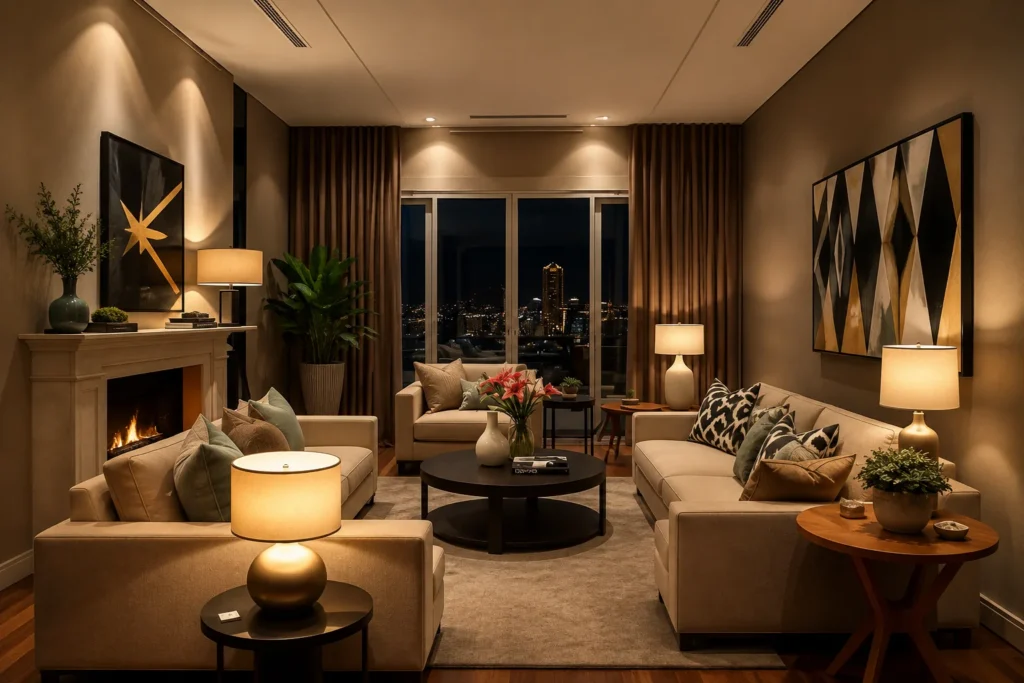
Relying on a single overhead light leaves corners dark and flattens the whole room. Layering light with a floor lamp, a table lamp, and maybe a wall sconce creates depth and makes the space feel larger because different areas are lit at different levels. This also makes the room feel warmer and more inviting in the evening. Styling tip: use warm white bulbs (around 2700K to 3000K) for a cozy glow instead of cooler, office-style lighting.
17. Cut Back on Visual Clutter
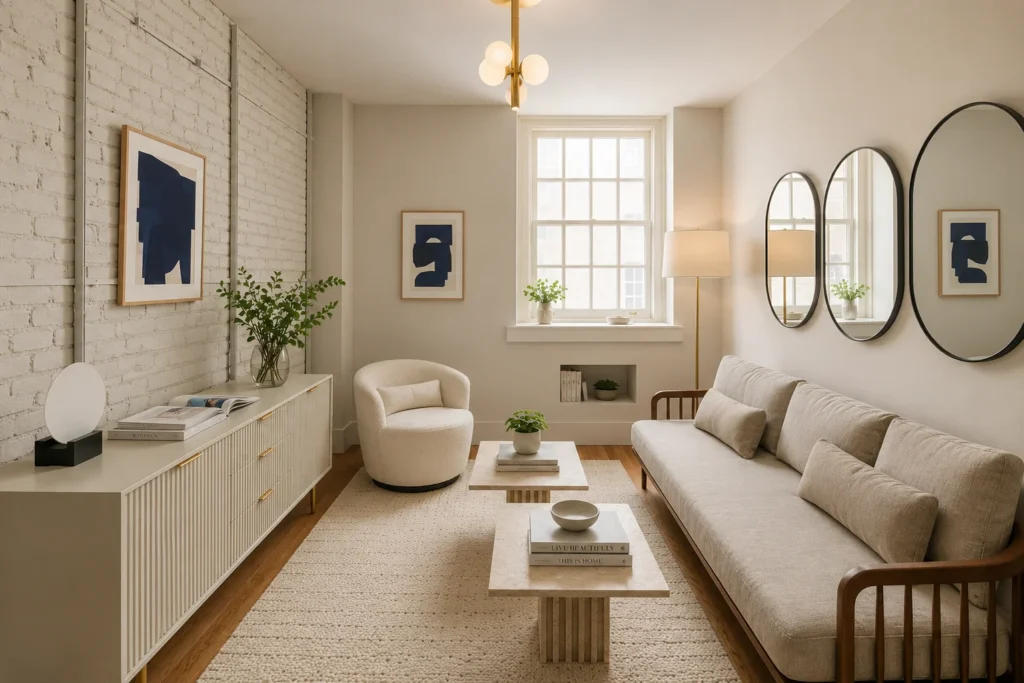
A room can be small in square footage but still feel more cramped than it needs to because of visual clutter, like too many decorative objects, mismatched picture frames, or piles of everyday items left out. Paring down what’s on display gives the eye places to rest, which makes the whole room read as calmer and more spacious. This doesn’t mean going bare, just being selective. Styling tip: try the “one in, one out” rule for decor so surfaces don’t slowly refill with clutter.
18. Choose Visually Lightweight Furniture
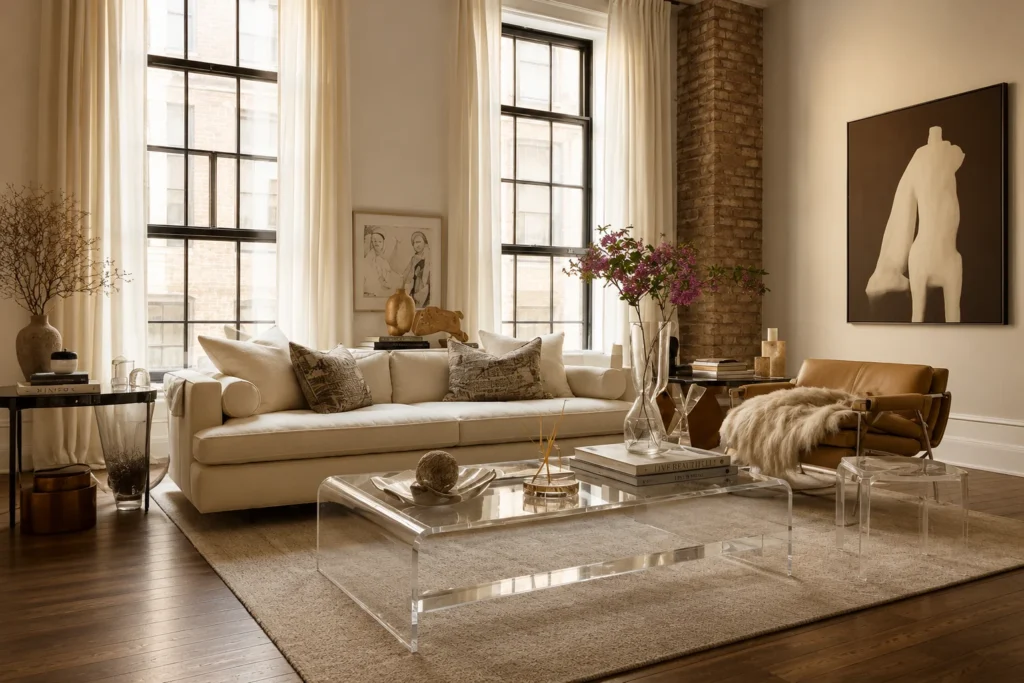
Furniture with a lot of visual “weight,” like chunky upholstered pieces or solid wood cabinets, can make a small room feel denser. Mixing in a few visually lighter pieces, like a glass-top table, an open-frame chair, or acrylic accents, lets more of the floor and wall show through. This creates a sense of openness without sacrificing function. Styling tip: use one or two lightweight pieces as an accent rather than furnishing the whole room this way, which can start to feel cold.
19. Build One Simple Focal Point
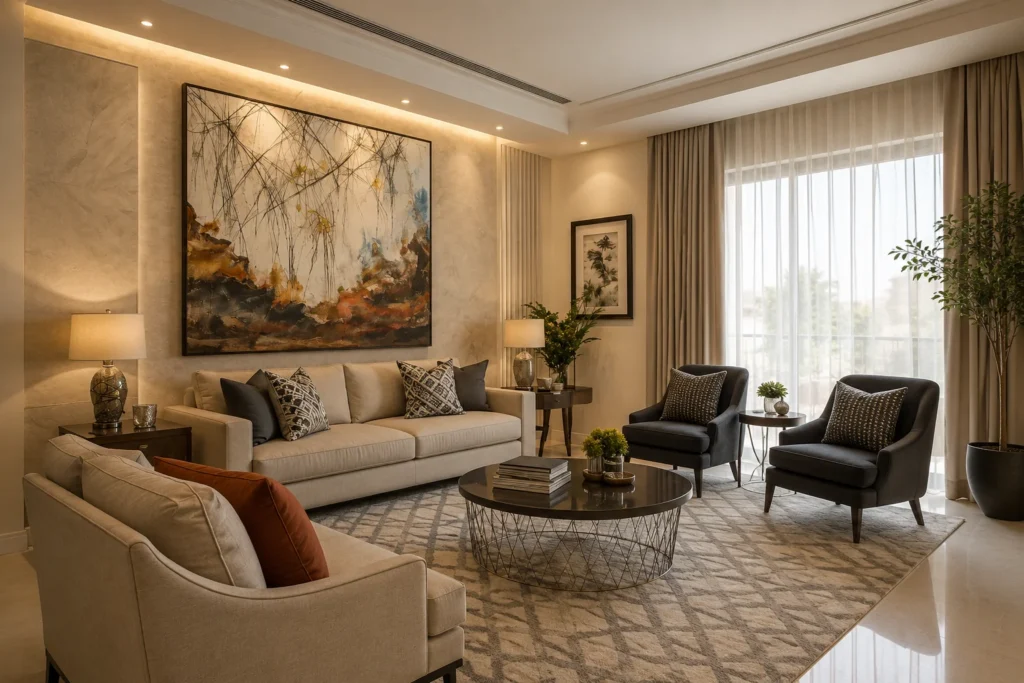
When every wall competes for attention, a small room can feel busy and disorganized. Choosing one focal point, like a piece of artwork, a media console, or a well-styled shelf, gives the eye somewhere to land and makes the rest of the room feel more organized by comparison. Arrange your furniture to support that focal point rather than fighting it. Styling tip: keep the walls near your focal point simpler so it doesn’t get visually crowded out.
20. Use Smart, Hidden Storage Solutions
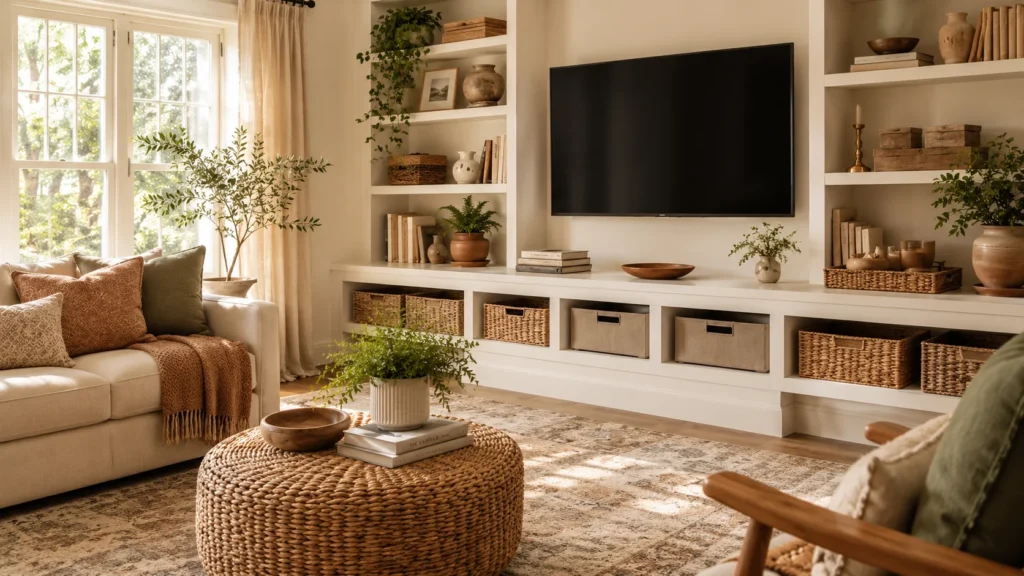
Visible clutter is one of the fastest ways to make a small room feel smaller than it is. Baskets, closed cabinets, and under-furniture storage let you keep everyday items handy without leaving them out in the open. A media console with doors, a bench with a lift-top seat, or woven baskets tucked under a console table all work well. Styling tip: group loose items like remotes, chargers, and mail into one labeled basket so they have a consistent home instead of drifting around the room.
21. Add Cozy Touches Without Overcrowding
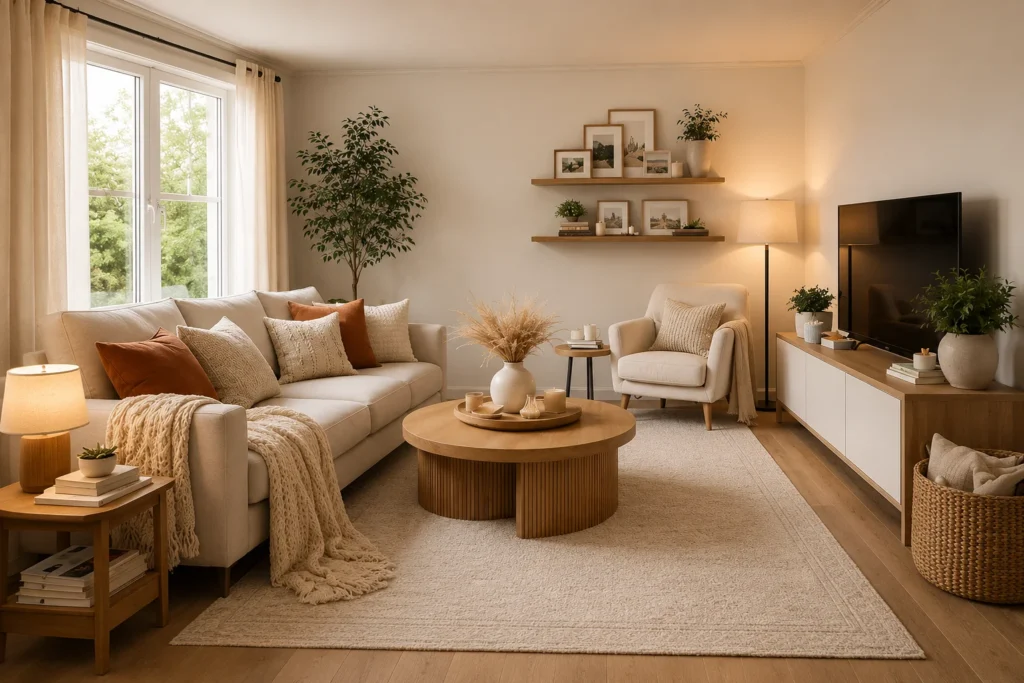
A small living room shouldn’t feel sparse and uninviting just because it’s compact. Throw pillows, a soft blanket, a plant, and a few personal touches add warmth without taking up real floor space. The key is restraint: choose a handful of pieces you love rather than filling every surface. This keeps the room feeling both open and lived-in. Styling tip: stick to two or three throw pillows per sofa cushion so the seating area still feels inviting to sit in, not just look at.
Best Colors for a Small Living Room
Color plays a big role in how open or closed a room feels. Warm white, cream, beige, soft gray, greige, pale blue, soft sage, and light taupe all reflect light well and give walls a sense of recession rather than closing in around you. These tones also create a calm backdrop that doesn’t compete with furniture or decor, which helps the whole room feel more cohesive and less busy.
That doesn’t mean you have to avoid darker or bolder colors altogether. You can bring in richer tones through an accent wall, patterned pillows, framed artwork, curtains, a rug, or a single statement chair. This gives you contrast and personality without darkening the entire room. A simple formula that works well: pair a light neutral wall with a similarly light or mid-tone sofa, a rug that ties the two together, and one bolder accent color repeated in two or three smaller spots, like pillows and artwork. No single color guarantees a bigger-looking room, but a cohesive, light-forward palette consistently reads as more open.
How to Choose Furniture for a Small Living Room
Furniture scale matters more in a small room than almost any other factor. An oversized sofa or a deep sectional can make even a decent-sized room feel packed, while appropriately scaled pieces leave room to move and breathe. Look for a sofa with a shallower depth, armchairs sized for the room rather than a great room, and a coffee table proportioned to your seating area, not the biggest one available.
Furniture with exposed legs helps too, since it lets light and floor show through underneath. Multifunctional pieces, like a storage ottoman or a sofa bed, let you get more use out of less furniture. Slim-profile pieces, like a narrow console table instead of a bulky sideboard, also help. In an apartment, this might mean a loveseat and one accent chair instead of a full sofa set. In a traditional home with a smaller secondary living room, it might mean choosing a modest sectional over a grand one. Either way, the goal is furniture that fits the room instead of furniture the room has to accommodate.
Small Living Room Layout Tips That Improve Flow
The right layout depends on your room’s shape and how you use the space, but a few arrangements tend to work well in small rooms. A sofa paired with two compact chairs creates a balanced conversation area without much bulk. A sofa with a single accent chair works well in narrower rooms. L-shaped seating can work in a corner if you choose a compact sectional rather than an oversized one, and a one-sofa minimalist arrangement is often the most breathing-room-friendly option for very tight spaces.
Whatever layout you choose, keep walking paths open and avoid placing furniture where it blocks doorways or windows. Give the room a clear focal point, whether that’s a TV, a window with a good view, or a piece of art, and arrange seating to support it rather than compete with it. Leave a little breathing room around the edges of the layout instead of pushing every piece flush to the walls, and use corners for functional pieces like a reading chair or a slim bookshelf instead of leaving them empty or overloaded.
How to Use Mirrors to Make a Living Room Feel Larger
Mirrors work well in a small living room because they reflect light and views, which can make the room feel like it continues beyond its actual walls. Positioning a mirror to reflect a window is one of the most effective placements, since it bounces natural light deeper into the room throughout the day. Mirrors that reflect an attractive feature, like a piece of art or a plant, add a similar sense of depth.
A larger mirror generally has more impact than several small ones, which can start to feel scattered or busy. Both leaning and wall-mounted mirrors work well; leaning mirrors are easier to reposition and great for renters, while wall-mounted mirrors feel more permanent and polished. Avoid overdoing it. One or two well-placed mirrors will do more for the room than covering multiple walls, which can start to feel like a funhouse rather than a bright, open space.
Lighting Tricks for a Small Living Room
Good lighting does a lot of the heavy lifting in making a small room feel bigger. Start by making the most of natural light: keep window treatments simple and avoid blocking windows with furniture. From there, layer in artificial lighting instead of relying on one overhead fixture. A floor lamp in a reading corner, a table lamp near the sofa, and a wall sconce or two can light different zones of the room at different heights, which adds depth and dimension.
Accent lighting, like a small lamp highlighting a shelf or plant, adds warmth without much cost. The goal is to avoid dark corners, since shadowed areas make a room feel smaller and less finished. A mix of ceiling, table, and floor-level light sources creates a more three-dimensional feel than a single bright overhead light, which tends to flatten the room and highlight its limits rather than soften them.
Small Living Room Storage Ideas That Reduce Clutter
Storage is one of the most practical ways to keep a small living room feeling open. Storage ottomans and benches give you a place to stash blankets and everyday items while doubling as seating or a table. Built-in storage, if you have it or can add simple shelving units, makes use of wall space instead of the floor. Floating shelves and baskets offer flexible, low-cost storage for books, media, and miscellaneous items.
A media console with closed cabinets keeps electronics and cords out of view, and vertical storage, like a tall narrow bookshelf, takes advantage of wall height instead of floor footprint. Multifunctional furniture, like a coffee table with a lower shelf or hidden compartment, adds storage without adding bulk. Just as important as adding storage is decluttering regularly. Go through decor and everyday items every few months and set aside anything you’re not actually using, since even good storage fills up eventually.
How to Make a Small Living Room Look Bigger on a Budget
You don’t need a big budget to make a small living room feel more spacious. Start with what you already have: rearranging furniture into a more open layout costs nothing and can make an immediate difference. Decluttering surfaces and donating items you no longer use is another free change with a real impact.
From there, small purchases go a long way. Swapping heavy curtains for lighter ones, adding an affordable mirror, or repositioning lamps you already own can shift how the room feels without a big investment. Changing pillow covers is a low-cost way to refresh the color palette. Secondhand furniture, especially pieces with exposed legs or a slim profile, can be found for a fraction of retail prices and often fits small spaces better than mass-produced big-box pieces. DIY artwork, even something as simple as a framed print or a piece of fabric stretched over a canvas, adds a focal point without a big price tag. None of these changes require a renovation, just a willingness to rework what you have.
How to Make a Small Living Room Cozy Without Making It Feel Crowded
Cozy and cluttered are not the same thing, even though it’s easy to blur the line in a small room. The key is balance: leave some blank space on shelves and walls so the eye has somewhere to rest, then layer in soft textures like a knit throw, a couple of pillows, and a plush rug to add warmth. A plant or two brings life to the room without taking up much space, and one or two pieces of meaningful art or personal photos add character.
A simple formula to follow: one focal point, two to three pillows per seating spot, one soft throw, one or two plants, and a handful of personal accessories displayed with intention rather than crammed onto every surface. This gives the room warmth and personality while still leaving enough visual breathing room to feel open rather than packed.
Small Living Room Decorating Mistakes to Avoid
Oversized furniture is one of the most common mistakes; solve it by measuring your room and choosing appropriately scaled pieces before you shop. Too much furniture is another issue, since every extra piece adds visual weight, so stick to only what you need for daily use and entertaining. Blocking windows with furniture cuts off natural light, so keep windows clear or use sheer curtains that don’t obstruct the view.
Blocking walking paths forces awkward movement through the room; plan a clear route before finalizing your layout. Too many small decorative objects create visual noise, so edit down to a few meaningful pieces. Poor lighting, especially relying on a single overhead fixture, leaves the room feeling flat and dim; add lamps and layered light instead. A wrong-size rug, whether too small or too large, disrupts the sense of proportion, so measure your seating area first. Too many competing colors make a room feel busy; stick to a cohesive palette with a few intentional accents. Heavy curtains can weigh down a room and block light; choose lighter fabrics that still offer privacy. Finally, ignoring vertical space wastes an entire dimension of the room; add shelving or tall decor to draw the eye upward.
Small Living Room Makeover Checklist
- [ ] Measure the room
- [ ] Review furniture scale
- [ ] Clear walking paths
- [ ] Remove unnecessary clutter
- [ ] Improve lighting
- [ ] Use vertical space
- [ ] Review the color palette
- [ ] Add one strategic mirror
- [ ] Check rug size
- [ ] Add only useful decor
Frequently Asked Questions
1. How can I make my small living room look bigger?
Focus on appropriately scaled furniture, an open layout with clear walking paths, light and cohesive colors, layered lighting, and one well-placed mirror. Reducing clutter and using vertical space with shelves or tall curtains also makes a noticeable difference without any construction involved.
2. What color makes a small living room look bigger?
Light, warm neutrals like cream, warm white, soft gray, or greige tend to make walls feel like they recede rather than close in. There’s no single universal color, but a cohesive, light-forward palette consistently helps a room feel more open than dark, high-contrast color schemes.
3. What furniture is best for a small living room?
Look for appropriately scaled sofas and chairs, pieces with exposed legs, and multifunctional furniture like storage ottomans. Slim-profile tables and consoles also help, since they take up less visual space than bulky, boxy pieces while still offering the storage and function you need.
4. Does a mirror make a small living room look bigger?
A well-placed mirror can help by reflecting natural light and attractive views, which adds a sense of depth to the room. It works best positioned across from a window. One larger mirror is usually more effective than several small ones scattered around the space.
5. How can I make a small living room cozy without clutter?
Use a simple formula: one focal point, a few pillows per seating spot, one soft throw, a plant or two, and a handful of personal touches. Leave some blank space on shelves and walls so the room still feels open rather than packed with items.
6. How can I decorate a small living room on a budget?
Rearrange furniture into a more open layout, declutter surfaces, and swap heavy curtains for lighter ones. Adding an affordable mirror, changing pillow covers, shopping secondhand for slim-profile furniture, and making simple DIY artwork are all low-cost ways to refresh the space.
Make Your Small Living Room Feel Bigger and Better
A cramped-feeling living room usually comes down to a handful of fixable issues: furniture that’s too big, colors that close the room in, clutter that competes for attention, and lighting that leaves the space flat. Once you address those with the small living room ideas covered here, from scaled-down furniture and exposed legs to layered lighting and a well-placed mirror, the room starts to feel noticeably more open and easier to live in.
You don’t have to tackle everything at once. Start with two or three changes, like decluttering a surface, rehanging your curtains higher, or adding one mirror, and build from there. A small room can still be a stylish, comfortable room. It just needs choices that work with its size instead of against it.
SEO Information
SEO Title: 21 Small Living Room Ideas to Make Your Space Look Bigger
Meta Description: Discover 21 practical small living room ideas to make your space look bigger with smart furniture, color, lighting, and storage tips.
URL Slug: /small-living-room-ideas/
Primary Keyword: small living room ideas
Secondary Keywords:
- small living room decorating ideas
- small living room design
- small living room decor
- small living room layout ideas
- how to make a small living room look bigger
- small living room furniture ideas
- small apartment living room ideas
- narrow living room ideas
- cozy small living room
- small living room storage ideas
- small space living room ideas
- living room organization ideas
- small living room makeover
- minimalist small living room
- small living room on a budget
Search Intent: Readers are searching for practical, inspirational guidance on furniture, color, lighting, and storage choices that make a small living room feel more open and functional.
Pinterest Optimization
5 Pinterest Pin Titles
- 21 Small Living Room Ideas That Actually Make It Look Bigger
- Small Apartment Living Room Ideas for a More Open Feel
- How to Make a Small Living Room Look Bigger (Without Renovating)
- Small Living Room Layout Ideas That Improve Flow
- Cozy Small Living Room Ideas That Still Feel Spacious
5 Pinterest Pin Descriptions
- Struggling with a cramped living room? These 21 small living room ideas cover furniture scale, layout, color, and lighting tricks that make any space feel more open. Learn simple, budget-friendly changes you can start today.
- Small apartment living room ideas that go beyond “just declutter.” From exposed-leg furniture to layered lighting and the right rug size, this guide walks through practical ways to make your space feel bigger and more functional.
- Wondering how to make a small living room look bigger without a renovation? This guide breaks down furniture placement, color choices, mirror tricks, and storage solutions that create a more open, comfortable room.
- Not sure how to lay out a small living room? These layout ideas cover open furniture arrangements, clear walking paths, and focal points that help a compact space feel bigger and easier to move through.
- A small living room can still feel cozy without feeling crowded. This guide shares a simple styling formula for balancing soft textures, personal touches, and open space so your room feels warm, not cluttered.
Pinterest Keywords
- small living room ideas
- small living room decor
- small apartment living room
- narrow living room ideas
- small living room layout
- cozy small living room
- small living room makeover
- small living room storage ideas
- minimalist small living room
- small living room on a budget
- small space furniture ideas
- how to make a room look bigger
- living room organization ideas
- small living room furniture
- neutral small living room
Image / Visual Content Plan
Image Concept: Bright small living room with a light neutral sofa and sheer curtains letting in natural light Recommended Section: Introduction Suggested Alt Text: Bright small living room with light neutral sofa and natural light
Image Concept: Small living room with a large leaning mirror reflecting a window Recommended Section: Mirror section Suggested Alt Text: Small living room with leaning mirror reflecting natural light
Image Concept: Small apartment living room with a loveseat and one accent chair Recommended Section: Furniture section Suggested Alt Text: Small apartment living room with loveseat and accent chair
Image Concept: Close-up of exposed wood legs on a sofa and coffee table Recommended Section: Idea 3, exposed legs Suggested Alt Text: Sofa and coffee table with exposed wood legs in small living room
Image Concept: Small living room layout with clear walking path and open furniture arrangement Recommended Section: Layout section Suggested Alt Text: Small living room layout with open furniture arrangement
Image Concept: Floating shelves styled with books and a plant above a console table Recommended Section: Storage section Suggested Alt Text: Floating shelves with books and plant in small living room
Image Concept: Neutral small living room with warm white walls and matching trim Recommended Section: Color section Suggested Alt Text: Neutral small living room with warm white walls and trim
Image Concept: Cozy small living room corner with a throw blanket, pillows, and a reading lamp Recommended Section: Cozy but spacious section Suggested Alt Text: Cozy small living room corner with throw blanket and reading lamp
Image Concept: Small living room with layered lighting from a floor lamp, table lamp, and sconce Recommended Section: Lighting section Suggested Alt Text: Small living room with layered lamp and sconce lighting
Image Concept: Storage ottoman used as a coffee table topped with a tray in a small living room Recommended Section: Idea 7, storage ottoman Suggested Alt Text: Storage ottoman used as coffee table in small living room
Featured Image
Featured Image Concept: A bright, airy small living room with a light neutral sofa, exposed-leg furniture, a large leaning mirror reflecting the window, and simple, uncluttered styling.
Pinterest Text Overlay: 21 Small Living Room Ideas to Make Your Space Look Bigger
Alt Text: Bright small living room styled to look bigger with light colors and a mirror
Internal Linking Strategy
Suggested Anchor Text: cozy living room ideas Suggested Future Article: Cozy Living Room Ideas Best Placement: Cozy but spacious section
Suggested Anchor Text: modern living room ideas Suggested Future Article: Modern Living Room Ideas Best Placement: Furniture section
Suggested Anchor Text: neutral living room color palettes Suggested Future Article: Neutral Living Room Ideas Best Placement: Color section
Suggested Anchor Text: living room wall decor ideas Suggested Future Article: Living Room Wall Decor Best Placement: Idea 12, vertical wall space
Suggested Anchor Text: small apartment decorating tips Suggested Future Article: Small Apartment Decor Best Placement: Introduction
Suggested Anchor Text: small space storage solutions Suggested Future Article: Small Space Storage Ideas Best Placement: Storage section
Suggested Anchor Text: budget home decor ideas Suggested Future Article: Budget Home Decor Ideas Best Placement: Budget section
Suggested Anchor Text: cozy home aesthetic tips Suggested Future Article: Cozy Home Aesthetic Best Placement: Conclusion